
You’re reading this comparison of the best order management software because:
- You sell on several marketplaces and your own website, and logging in to each seller portal every day no longer works.
- Orders are getting cancelled because stock on one channel did not update after a sale on another.
- You are adding warehouses, stores, B2B buyers or quick commerce, and your current system was built for a simpler operation.
- Your shortlist is full of tools that claim the same features, and you want to know which one fits the way you sell.
You are in the right place. We compared 10 order management systems using what each vendor publishes about its own product, so you can see where each one fits and what to ask before you decide.
A note on transparency: this guide is published by Unicommerce, and we are on the list. The information of all the companies is taken as mentioned in their respective websites and publicly available sources.
What features to look for in an order management system
Most order management systems promise the same basics. The differences show up in how much of the order lifecycle they automate and how well they handle exceptions. Use these 12 features as a checklist when you compare tools.
| Feature | What to Look For | Why It Matters |
|---|---|---|
| Multichannel Order Aggregation | Orders from marketplaces, D2C websites, B2B buyers, quick commerce and stores in one queue, covering both forward and return flows. | Teams stop switching between seller portals, and no order is missed. |
| Real-Time Inventory Sync and Reservation | One stock pool that updates with every sale, inward movement and return, with reservation rules for each channel. | Prevents overselling, double allocation and stockout cancellations. |
| Rule-Based Order Routing | Automatic allocation based on customer proximity, SLA, stock availability and split-order rules across warehouses, dark stores and retail stores. | Lowers shipping costs and delivery times while protecting SLAs during sale peaks. |
| Purchase Order Ingestion and Validation | Purchase orders accepted through API, EDI or email, with checks on SKU, price, MRP, EAN and tax before acceptance. | Avoids PO rejections, low fill rates and penalties from B2B and quick commerce buyers. |
| Omnichannel Fulfilment | Support for ship-from-store, click and collect, and POS integration. | Makes store inventory available for online sales and enables faster deliveries. |
| Documents and Statutory Compliance | Bulk invoices, shipping labels and pack slips, plus GST e-invoices and e-way bills, with courier allocation and manifest generation. | Enables faster dispatch and reduces compliance gaps during courier handover. |
| Quick Commerce Support | Direct integrations with quick commerce platforms, dark store appointment scheduling and automated ASNs (Advance Shipping Notices). | Reduces gate rejections and waiting times at dark stores. |
| Cancellation and Modification Handling | Cancellations synchronized across every channel, with the ability to stop orders even after packing. | Saves packaging, outbound freight and return freight costs on orders that should never ship. |
| Returns Management | Customer returns and courier returns (RTO) matched to the original order, with quality control (QC) status recorded on arrival. | Speeds up refunds and gets sellable stock back on the shelf sooner. |
| ERP and Accounting Integration | Automatic posting of sales, returns and inventory adjustments, with tax ledgers mapped correctly. | Shortens month-end closing and keeps books audit-ready. |
| B2B Bulk Order Processing | Multi-box packing, box-wise pack slips, gate passes and B2B-specific invoice formats. | Moves bulk orders through the warehouse without slowing down B2C dispatch. |
| Scale, Security and Support | Proven order-processing volumes, security certifications, role-based access controls and support during major sale events. | Keeps the system reliable when order volumes multiply. |
No business needs all 12 on day one. A marketplace seller may start with aggregation, inventory sync and documents, then add routing, B2B and store fulfilment as the business grows.
How we evaluated each order management system
We read each vendor’s order management page and integration list, then compared each product against the feature checklist above. For every tool we noted the channels it covers, the business type it is built for, its clear strengths and the gaps a buyer should ask about.
We did not run hands-on tests of the products. Where a vendor does not publish a detail, we have mentioned that wherever required.
Best Order Management Software – A Comparison Table
| Software | Best For | Channels It Covers | Standout Capability |
|---|---|---|---|
| Unicommerce | Brands, sellers and retailers that want one system from early growth to enterprise scale. | Marketplaces, D2C websites, B2B, quick commerce and retail stores. | Full order lifecycle in one system, from PO validation and smart routing to returns and ERP posting. |
| EasyEcom | Enterprise retailers selling across India, the US, the UK and the Middle East. | Marketplaces, storefronts, quick commerce and B2B across regions. | Multi-region, multi-entity order control on one screen. |
| Increff | Fashion and lifestyle brands with stores, warehouses and marketplaces. | D2C, marketplaces, stores and B2B. | Full inventory exposure with no channel buffers. |
| Vinculum | Brands that sell stock before it arrives. | Marketplaces, webstores, quick commerce and stores across India, SEA and MEA. | Back order and back-to-back order workflows. |
| Ginesys OMS | Retailers already running Ginesys ERP or POS. | Marketplaces, webstores and Ginesys-run stores. | Store, ERP and online inventory in one retail suite. |
| Base | Small and mid-sized online sellers who want heavy automation. | Marketplaces, online stores, phone and in-person orders. | Rule-based automatic actions and a pick-and-pack assistant. |
| Zoho Inventory | Small businesses using Zoho Books or Zoho CRM. | A shortlist of marketplaces and carts, plus offline sales orders. | Sales and purchase orders tied to accounting. |
| Cin7 | Product businesses that also manufacture or sell wholesale. | E-commerce platforms, marketplaces, EDI and POS. | Manufacturing and B2B ordering alongside order management. |
| Anchanto | Enterprise brands, retailers and 3PLs selling across Asia Pacific. | Marketplaces, webstores, social commerce, POS and retail stores. | Catalogue, listing and promotions management alongside orders. |
| OMSGuru | Marketplace sellers with small operations teams. | Indian marketplaces and offline orders. | Bulk label, invoice and manifest processing. |
Details are taken from each vendor’s website in October 2026.
1. Unicommerce: best for managing omnichannel distribution
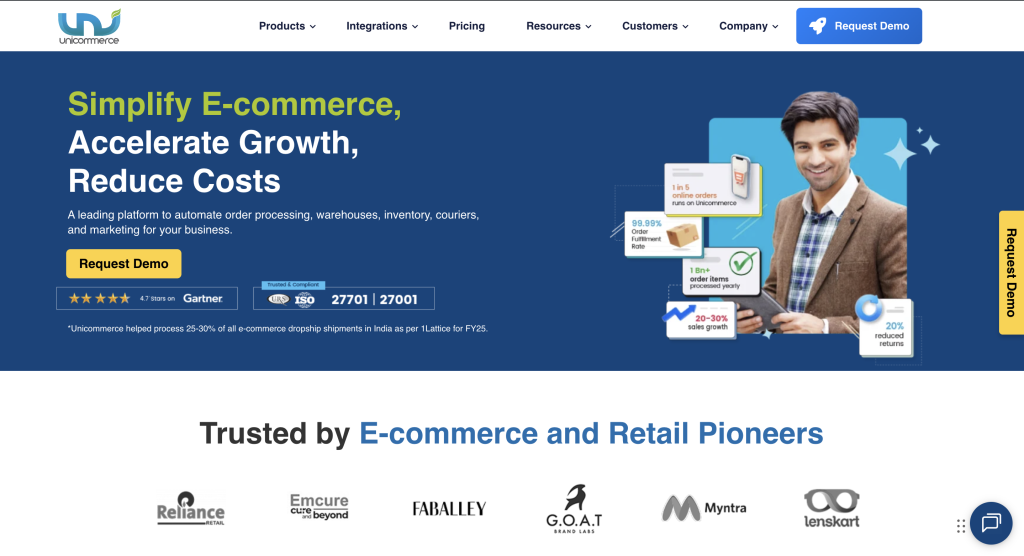
Unicommerce’s omnichannel order management system brings forward and reverse order flows from 145+ sales channels into a single control tower. It then automates each step that follows: validation, inventory reservation, routing, documentation, dispatch, returns and accounting entries. It is part of Uniware, a suite that also includes warehouse management, inventory management, payment reconciliation (UniReco) and video-based claim proof (UniCapture).
Unicommerce reports 8,000+ live clients, an annual transaction run-rate above 115 crore and 290+ integrations. According to 1Lattice, it helped process 25 to 30% of all e-commerce dropship shipments in India in FY25.
Key features
- Centralised multichannel order aggregation. Orders from marketplaces (Amazon, Flipkart, Myntra, Meesho, Ajio), D2C websites (Shopify, WooCommerce, Magento), B2B channels and quick commerce land in one live queue. Teams see order volumes, channel run rates, average selling price and fulfilment status without opening separate seller portals.
- Automated PO ingestion and hygiene checks. Purchase orders arrive through API, EDI or parsed email. The system validates SKU codes, prices, MRPs, EANs and tax details against catalogue rules before the order is accepted. Unicommerce reports up to 90% faster PO processing and fewer PO rejections and penalties.
- Intelligent order routing with Smart Fill. Rules route each order to a warehouse, 3PL dark store or retail store based on customer proximity, SLA, stock and split-order logic. Smart Fill matches open demand to live inventory and filters out stock close to expiry (FEFO). Unicommerce reports fill rates of 99% and above.
- Real-time inventory sync and stock reservation. Stock updates across all connected channels whenever inventory is inward, reserved or sold. Channel-specific reservation rules lock stock at order placement, which Unicommerce says cuts stockout-related cancellations by up to 25%.
- Omnichannel fulfilment. Online demand connects to 12,300+ physical stores and to POS systems such as Ginesys, Wondersoft, GoFrugal and QueueBuster. Ship-from-store, click and collect, Myntra Omni and Nykaa Omni are supported, so stores work as local fulfillment points.
- Bulk documents and statutory compliance. Invoices, shipping labels, pack slips and ASNs are generated in bulk in channel-compliant formats. GST e-invoices and e-way bills are created through the government portals, and 122+ courier partners are integrated for allocation and manifest closure. Unicommerce reports 2x faster warehouse dispatch.
- Quick commerce operations. API and EDI connections with Blinkit, Zepto, Swiggy Instamart, BigBasket and Flipkart Minutes. Appointment scheduling books delivery slots at dark stores, and ASNs are pushed automatically once boxes are packed, which reduces gate rejections and truck waiting time.
- Post-packing cancellation control. Cancellations and modifications sync from every channel in real time. A cancelled order can be blocked even after the box is packed, before manifest closure, so it never leaves the warehouse.
- Returns and reverse logistics. Customer-initiated returns and courier returns (RTO) are both handled. The system integrates with Return Prime and Clickpost RMS, generates reverse AWBs, matches each incoming parcel to its original order on scan, and marks it Received, Pending QC or Missing.
- ERP and accounting integrations. SAP, NetSuite, Oracle, Logic ERP, Tally and Ginesys receive sales, return, cancellation and inventory adjustment vouchers automatically, with CGST, SGST, IGST, UTGST, cess and TCS ledgers mapped.
- B2B bulk order processing. Multi-box packing, box-wise pack slips, gate passes, custom B2B invoice templates and e-way bills for high-value orders. Unicommerce reports dispatching 2,500+ shipments in under 10 minutes.
Ideal for: Growing D2C brands, marketplace sellers and enterprises that run marketplace, B2B, quick commerce and store orders on one inventory, with GST compliance and ERP posting built in.
Why it stands out
- It covers the full order lifecycle. PO validation, routing, statutory documents, cancellations, returns and ERP posting sit in one system, so teams avoid stitching separate tools together.
- It handles the difficult edge cases. PO hygiene checks, dark store appointment scheduling and post-packing cancellation blocks address problems that cause penalties and wasted freight.
- It serves every selling model together. Marketplace, D2C, B2B, quick commerce and store orders run on the same inventory and the same rules.
What to consider
- The feature set is broad. Agree with the vendor which modules you need at your current stage, so the rollout stays focused.
- It does not include manufacturing or production planning. Businesses that need those functions pair it with an ERP.
- As with any OMS, confirm that each of your channels, couriers and POS systems is on the current integration list.
2. EasyEcom: best for multi-region enterprise retail
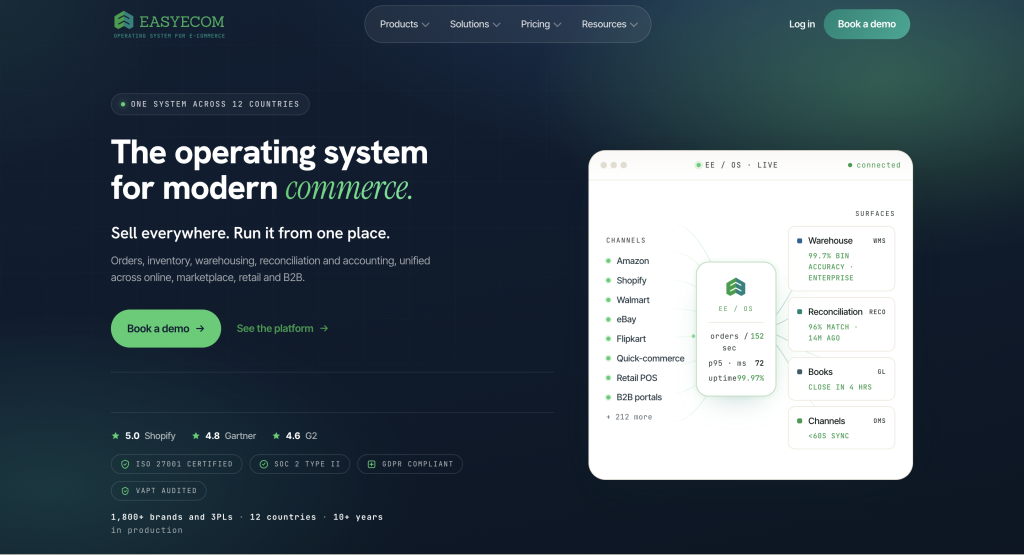
EasyOMS is EasyEcom’s multichannel order management system. It positions itself as a real-time control screen for every order, with one stock pool shared by marketplaces, storefronts and B2B. EasyEcom reports 1,800+ brands across 12 countries and says the platform is load-tested for 10 million orders a day.
Key features
- Fast inventory sync. Stock updates across channels in under 60 seconds, with virtual inventory rules per channel.
- Automatic routing and splitting. Orders go to the nearest warehouse with stock, split across fulfilment centres when needed, and get the least-cost compliant carrier.
- B2B and B2C in one queue. Wholesale orders with bills of lading, PO validity and ship-by windows run in the same workflow as retail orders.
- Multi-region and multi-entity. Several legal entities and currencies run on one system, with marketplace connections such as Walmart, Target, Zalando, Noon, Flipkart and Myntra.
- Returns management. Returns are graded on receipt, restocked or quarantined, then passed to reconciliation.
- ERP connectors. Bi-directional integrations with SAP, NetSuite, Oracle and Microsoft Dynamics.
- Reporting. Order ageing, SLA breach, sales, returns and B2B shipment reports by region and entity.
Ideal for: Enterprise retailers selling across India, the US, the UK and the Middle East with several entities and currencies.
Strengths
- Connects marketplaces across India, the US, the UK and the Middle East on one system.
- EasyWMS, EasyVMS (video proof) and EasyReco (reconciliation) extend the OMS.
- The company says the first channel can go live in about 72 hours.
What to consider
- The product page is written for enterprise and multi-region operations, so smaller sellers should confirm that onboarding and support suit their volume.
- The page does not describe PO validation or ship-from-store fulfillment. Ask about those if you need them.
Compare – Unicommerce vs Easyecom
3. Increff: best for fashion and lifestyle brands
Increff OMS is built around inventory exposure. Its core promise is that every unit is visible to every channel, with no stock split or buffer held back per channel. Increff reports 1,300+ marketplace, webshop and ERP integrations and 99.5% SLA adherence.
Key features
- 100% inventory exposure. One real-time pool serves D2C, marketplaces, stores and B2B, with order and inventory sync in under 10 seconds.
- Smart routing. Orders are allocated to warehouses, stores or vendors based on availability, proximity, cost and delivery SLA.
- Ship without stocking. Vendor-managed inventory can be listed and routed to the vendor for direct fulfilment.
- Virtual bundles and kits. Combo offers are created without changing physical stock records.
- Returns with video capture. A returns dashboard, QC grading rules and forward and reverse video help with marketplace claims.
- Dashboards and controls. 80+ dashboards, custom reports, role-based access and audit logs.
Ideal for: Fashion, footwear and lifestyle brands that sell through stores, marketplaces and B2B and also want merchandise planning.
Strengths
- The wider suite covers merchandise planning, allocation and markdown optimisation, which helps apparel brands that plan inventory by season.
- Vendor-managed inventory lets brands sell stock they do not hold.
What to consider
- Much of the product depth and customer base sits in fashion and lifestyle retail. Brands in other categories should check how much of the suite they will use.
- Planning and allocation are separate products from the OMS, so confirm what your scope includes.
Compare – Unicommerce vs Increff
4. Vinculum: best for back orders and back-to-back fulfilment
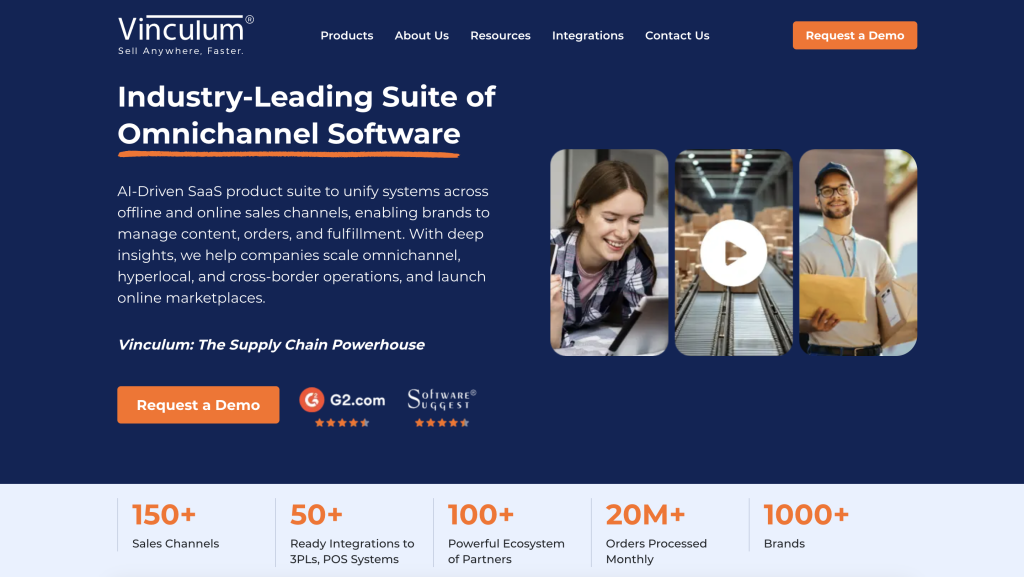
Vin OMS, part of Vinculum’s Vin eRetail suite, is built around a configurable inventory and order routing engine. It stands out for order types that depend on stock not yet in hand, such as back orders, back-to-back orders and part fulfillment, with rules set by service level.
Key features
- Inventory and order routing engine. Stock updates across channels automatically, and rules handle part fulfilment, dropship orders, back orders and back-to-back orders.
- Returns management. Both delivered and non-delivered returns are covered, with replacement orders and inward counts at the warehouse.
- Fulfilment from stores. The system reads store inventory and picks the best store for each order by customer location, stock and courier serviceability.
- Multi-warehouse fulfillment. Order lines are assigned to the most suitable location, with rules that limit how often an order is split.
- Stock transfers. Movements between warehouses and stores are tracked from request to receipt.
- Regional integrations. 200+ integrations include Lazada, Shopee, Tokopedia, Zalora and Noon alongside Indian marketplaces, plus SAP, Oracle, Microsoft Dynamics 365 and Tally.
Ideal for: Brands and retailers in India that regularly sell stock before it arrives, through back orders or back-to-back orders with suppliers.
Strengths
- Ready integrations for Lazada, Shopee, Tokopedia and Noon help brands entering Southeast Asia and the Middle East.
- The PIM product supports large catalogues across many channels.
What to consider
- Several capabilities described on the OMS page, such as advance shipping notes and multi-warehouse logic, are delivered through the warehouse product. Ask which modules your use case needs.
- Video-based packing proof for marketplace claims comes through third-party integrations, so check how disputes and returns evidence are handled.
Compare – Unicommerce vs Vinculum
5. Ginesys OMS: best for retailers on Ginesys ERP or POS
Ginesys acquired Browntape and made it the order management layer of the Ginesys One suite. The OMS keeps e-commerce channels, the ERP and physical stores in sync, so store stock can be sold on marketplaces and online sales posted to accounts automatically. Ginesys reports 1,200+ customers across its suite.
Key features
- Marketplace and webstore integrations. Shopify, WooCommerce and Magento, plus 60+ marketplaces including Amazon, Flipkart, Myntra, Meesho, Ajio and JioMart.
- Automatic order allocation. Rules assign orders to warehouses or shops based on stock, and website orders can be split across locations.
- Stock reservation. Inventory is reserved for online orders as a standard feature.
- POS inventory on marketplaces. Store stock from Ginesys POS can be listed online.
- Shipping management. Marketplace-specific labels, manifests, AWB generation and pickup scheduling with couriers such as Shiprocket, Blue Dart and Delhivery.
- Payment reconciliation. Marketplace payments and charges are tracked, with profit shown per order and per item.
Ideal for: Fashion and lifestyle retailers already on Ginesys ERP or POS who want store stock sold on marketplaces.
Strengths
- ERP, POS, warehouse and OMS work as one retail suite.
- Accounting entries for online orders are created in the ERP without manual work.
- Pure D2C businesses can use the OMS without the ERP.
What to consider
- The marketplace list (60+) is shorter than most others in this guide.
- The strongest benefits depend on using Ginesys ERP or POS.
6. Base: best for automating daily order processing
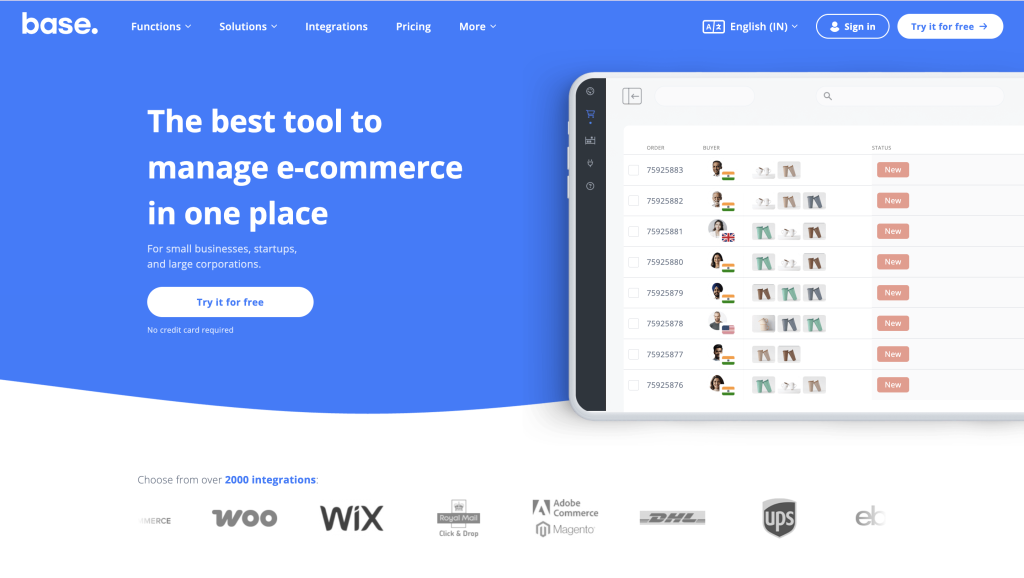
Base (base.com) offers Order Manager as one module in a wider e-commerce system that also includes marketplace listing, product management, a WMS, repricing and analytics. It collects orders from marketplaces and stores such as Amazon, Flipkart, Meesho, eBay and Etsy, and also accepts orders placed by phone or in person.
Key features
- Automatic actions. Rules change order statuses, send customer messages, issue invoices, create shipments and print documents.
- Pick and Pack Assistant. Barcode scanning checks each item, warns about packing errors and photographs the parcel as proof.
- Courier management. Labels, pickups and tracking numbers are handled from the order screen, one by one or in bulk.
- GST invoices and documents. Invoices, pro-forma invoices and corrections are issued in bulk or by rule, with custom print templates.
- Customer order page. Each order gets a page where the buyer can see details, download the invoice and track the shipment.
- Connector mode. Orders can be forwarded to an online store or ERP if you prefer to process them there.
- Open API. Orders and shipments can be created and edited through the API.
Ideal for: Small and mid-sized online sellers who want rule-based automation for statuses, invoices and shipments.
Strengths
- Automation rules cover most routine order steps.
- The Pick and Pack Assistant adds a packing check with photo proof.
- Base states that it offers over 2,000 integrations across marketplaces, stores and carriers.
What to consider
- The Order Manager page centres on processing and dispatching orders.
- It does not describe rule-based routing of orders across several warehouses and stores, so growing brands should ask how that is handled.
Compare: Unicommerce vs Base
7. Zoho Inventory: best for small businesses on Zoho
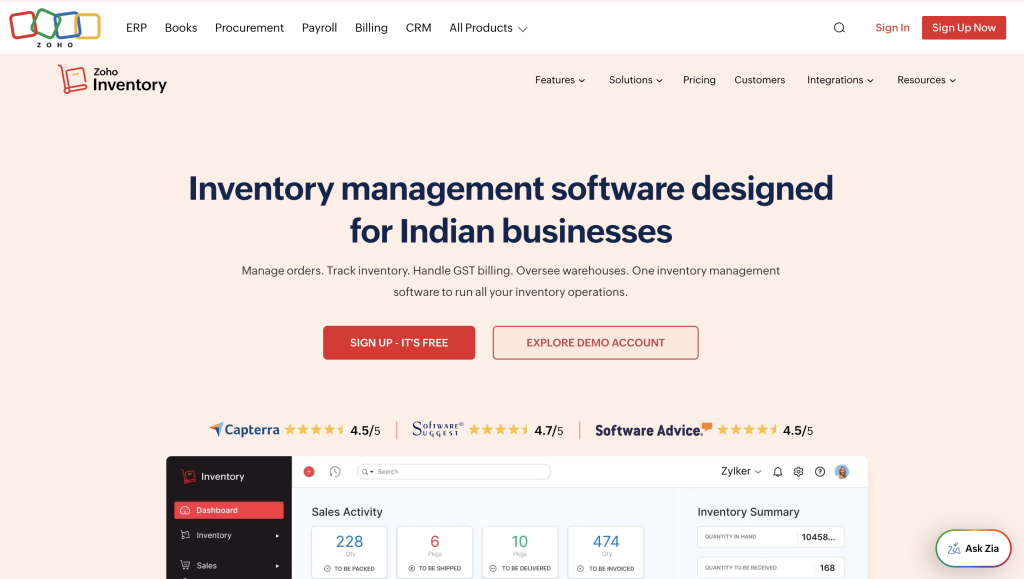
Zoho Inventory handles sales orders and purchase orders in one place, then carries them through packing, shipping and delivery updates. It is an inventory and order tool for small businesses more than a dedicated marketplace OMS.
Key features
- Multichannel order sync. Integrations with Amazon, eBay, Etsy and Shopify bring online orders into one system.
- Packing and shipping. Packages, packing slips and real-time rates from 30 shipping services.
- Dropshipping and backorders. A purchase order can be raised directly from a sales order, or the supplier can ship to the customer.
- Inventory control. Reorder points, item kitting, and batch, serial number and expiry tracking.
- Multi-warehouse management. Stock transfers between locations and warehouse selection at order creation.
- Reports and mobile apps. Sales, purchase and inventory reports with FIFO tracking, plus iOS and Android apps.
Ideal for: Small businesses on Zoho Books or Zoho CRM with lower order volumes and purchase orders to manage alongside sales.
Strengths
- The tight link with Zoho Books and Zoho CRM makes it an easy first system for Zoho users.
- Purchase-side features such as vendor payments and purchase receives are stronger than in most marketplace-focused tools.
- iOS and Android apps give order updates away from the desk.
What to consider
- It suits lower order volumes.
- The marketplace list on its order management page is short compared with India-focused OMS platforms, so sellers on Flipkart, Myntra or Meesho should confirm coverage first.
8. Cin7: best for businesses that manufacture or sell wholesale
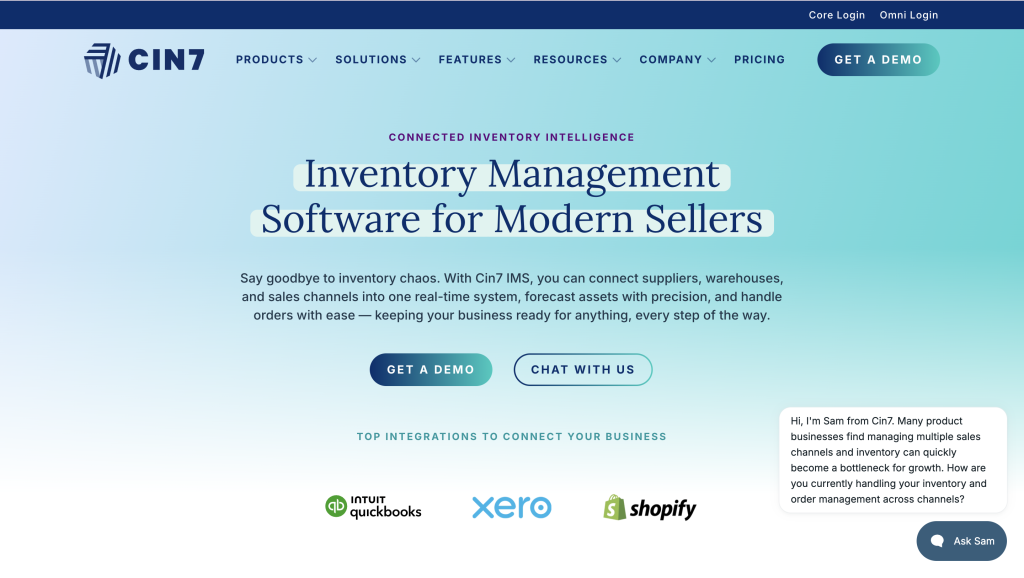
Cin7 is a cloud inventory and order management platform sold as two products: Cin7 Core and Cin7 Omni. It combines order management with inventory, manufacturing and financial reporting. Cin7 reports 8,500+ customers and 125 million+ orders processed a year.
Key features
- Centralised orders. Orders from e-commerce platforms, marketplaces, EDI and POS arrive in one view.
- Order automation. Rules check channels for new orders, route them to the right warehouse or 3PL and start dispatch.
- Returns and exchanges. Refunds, restocking and exchanges are processed in the system and can be filtered by type, status and location.
- Reorder points and forecasting. Automatic restock triggers, with ForesightAI demand forecasting as an add-on.
- Manufacturing. Bills of materials, assembly, batch and expiry tracking, and material requirements planning.
- B2B portal and POS. Wholesale ordering and point of sale are available as add-ons.
- Accounting sync. Native integrations with Xero and QuickBooks Online.
Ideal for: Product businesses that manufacture, assemble or sell wholesale, often through 3PLs and several warehouses.
Strengths
- Bills of materials, production planning and a B2B portal sit beside order management.
- 700+ app integrations and 3PL connections help companies with several warehouses.
- It suits businesses that make what they sell.
What to consider
- Sellers on Indian marketplaces should check channel support and GST document handling.
9. Anchanto: best for enterprise brands and 3PLs across Asia Pacific

Anchanto Order Management is built for brands, retailers and 3PLs running omnichannel operations across several countries, with a strong presence in Southeast Asia. Alongside orders and inventory, it manages product catalogues, listings and promotions. Anchanto reports 350+ enterprise customers and 200+ integrations.
Key features
- Central order processing. Orders from marketplaces, webstores, social commerce and offline channels arrive in one dashboard, with cancellations and returns handled centrally.
- Inventory allocation. Stock is allocated to channels and managed across warehouses, dark stores and retail stores.
- Order routing. Orders are routed by warehouse priority, location, stock or cost.
- Catalogue and listing management. Central catalogues with cross-listing across marketplaces.
- Promotions management. Campaign discounts, with inventory reserved ahead of sale days.
- Omnichannel options. Click and collect, BOPIS and BORIS through POS integrations.
Ideal for
Enterprise brands, retailers, distributors and 3PLs selling on marketplaces across Southeast Asia, Asia Pacific and the Middle East.
Strengths
- Wide marketplace coverage across Southeast Asia, including Shopee Premium Service Partner status.
- Catalogue and promotions tools in the same platform as orders.
- Consultant-led implementation with local-language support.
What to consider
- Its marketplace focus and customer base are strongest in Southeast Asia and Asia Pacific, so India-focused sellers should confirm coverage for Indian marketplaces, quick commerce platforms and GST documents.
- Finance reconciliation and marketplace chat are paid add-ons, so confirm which modules your scope includes.
- Implementation is consultant-led and runs in phases, so plan for a longer setup than plug-and-play tools.
Compare: Unicommerce vs Anchanto
10. OMSGuru: best for small marketplace operations teams
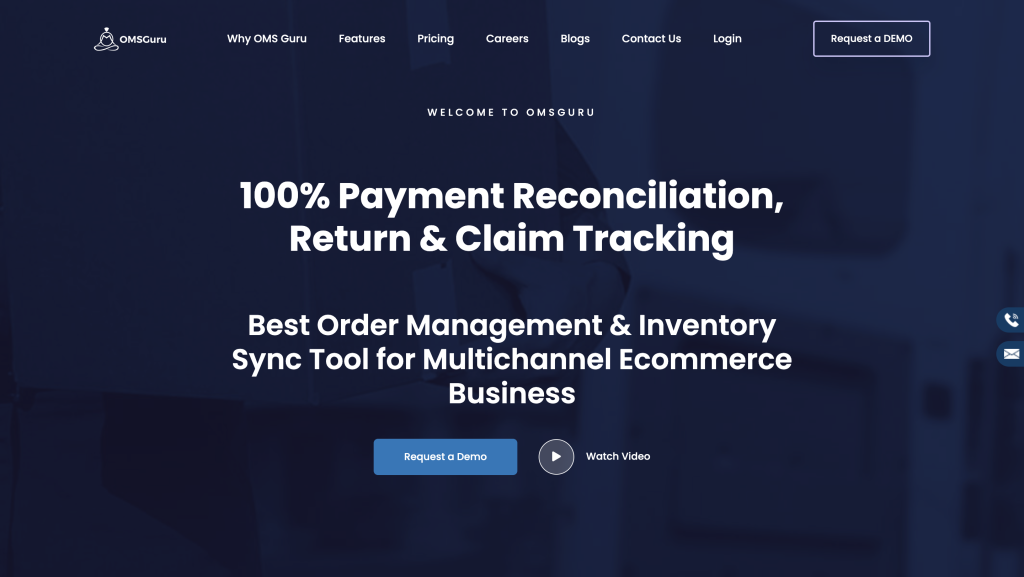
OMSGuru focuses on the repetitive work of processing marketplace orders at volume. Orders from channels such as Flipkart, Amazon and Meesho sync to one panel, where the team processes, packs and dispatches them. The product also includes inventory management, payment reconciliation and return reconciliation.
Key features
- Central order panel. No need to log in to each marketplace to process orders.
- Bulk and batch processing. Thousands of orders can be processed in one go, in manual or automatic batches.
- Picklists. Pick by batch or in bulk, sorted by rack, name or SKU.
- Bulk labels and invoices. Labels download sorted by SKU or courier and print on thermal printers, with custom retail invoices.
- Manifest generation. Created by scanning each AWB, by batch or by selected orders.
- SLA-based prioritisation. Orders are sorted by SLA so urgent ones are processed first.
- Return reconciliation. The system flags returns that have not reached the warehouse within marketplace timelines, so sellers can file claims.
- Offline orders and POS. Offline order creation and a point of sale for retail stores.
Ideal for: Small marketplace sellers with lean teams who process high daily order volumes in batches.
Strengths
- An interface designed for non-technical staff makes it accessible to small sellers.
- Return reconciliation with claim alerts is practical for marketplace-heavy businesses.
- Bulk and batch processing speed up daily dispatch.
What to consider
- The OMS page does not publish an integration count.
- It does not describe rule-based routing across warehouses, ERP connectors or enterprise controls. Larger brands should verify those before shortlisting it.
Checklist: questions to ask every OMS vendor before you decide
Take this list into every demo. A vendor that answers each question with your own channels, couriers and order volumes on screen is worth shortlisting.
- Are all my marketplaces, webstores, quick commerce platforms, couriers and POS systems supported today, and how deep is each integration?
- How quickly does inventory update across channels after a sale, a return and a cancellation?
- Can stock be reserved per channel the moment an order is placed?
- Can I set my own rules for warehouse allocation, order splitting and courier selection, including near-expiry stock?
- How are B2B and quick commerce purchase orders received and validated before acceptance?
- Can store inventory be used to fulfil online orders through ship-from-store or click and collect?
- Can a cancelled order be stopped after it is packed?
- How are customer returns and courier returns matched to the original order and graded?
- How are GST e-invoices, e-way bills and ERP accounting entries generated?
- Can the same system handle bulk B2B dispatch alongside B2C orders?
- What order volumes does the platform run today, and how does it perform during sale events?
- How long does onboarding take, and who supports us after go-live?
- What changes if we add a warehouse, a store, a new channel or a new country?
Choose the OMS that answers every question on your checklist
The order management system you choose decides how easily you can add channels, warehouses, stores and B2B buyers without adding headcount or errors. Most systems cover the basics, so judge each one on how it handles your daily exceptions: stock that falls out of sync, POs that get rejected, orders cancelled after packing, returns that never reach the shelf and tax documents that hold up dispatch.
Unicommerce’s OMS is built to answer every question on the checklist above. It brings marketplace, D2C, B2B, quick commerce and store orders into one control tower with real-time inventory sync and stock reservation. It routes each order by rules you set, validates POs before acceptance, books dark store slots, blocks cancelled orders after packing, matches every return to its order, and generates GST e-invoices, e-way bills and ERP entries as orders move.
Beyond order management, the same platform covers warehousing, payment reconciliation through UniReco and claim proof through UniCapture, and it already runs operations for 8,000+ businesses, from 10 orders a month to lakhs.
Your next steps
1. Map your operation. List every sales channel, fulfillment location and courier you use, along with your monthly order volume and your growth plan for the next two years.
2. Find where orders leak. Run the checklist against your current setup and note where stock, orders or money are lost today.
3. See it with your own data. Book a Unicommerce demo and walk through your channels, volumes and exceptions to see exactly how your orders would run.
FAQS
1. What is the best order management software for e-commerce businesses in India in 2026?
The best fit depends on your order volumes, channels, and fulfilment setup. Unicommerce, Increff, EasyEcom, and Vinculum are widely used by Indian brands selling across marketplaces, D2C websites, and quick commerce. Unicommerce suits businesses that want to scale from 10,000 to 10 lakh+ orders a month on one platform, with 290+ integrations.
2. How do I choose the best order management software for my business?
Start with your channels, monthly order volume, and number of fulfilment locations, then shortlist three or four platforms that integrate with your existing stack. Ask each vendor for a demo using your own channels and order data, along with pricing at your peak volume and a clear onboarding timeline.
3. What is the difference between an OMS and a WMS, and do I need both?
An OMS manages orders across sales channels: capturing them, syncing inventory, routing them to the right facility, and handling returns. A WMS manages work inside the warehouse, such as putaway, picking, packing, and stock storage. Sellers with one small warehouse can often run on an OMS alone, while businesses with large or multiple warehouses usually need both.
4. Can Unicommerce track and manage offline orders from physical stores?
Yes. Unicommerce brings offline orders, including retail store, B2B, and wholesale orders, into the same system as your marketplace and website orders. Inventory updates across all channels as each order is processed, and POS and ERP integrations keep store sales in sync.
5. Does a small seller processing under 50 orders a day need an OMS?
A seller on a single channel can usually manage with that marketplace’s seller panel at this volume. An OMS is worth adding if you sell on two or more channels, share inventory between them, or plan to grow soon, since overselling can start well before volumes get high.
6. What are the key features to look for in an order management system?
Look for native integrations with your sales channels, real-time inventory sync, automated order routing, bulk order processing, and returns management. Built-in invoicing and compliance documents, courier integrations with shipment tracking, and ready-made reports reduce the number of extra tools you need.
7. Which order management software is best for large enterprises?
Enterprises selling in India across marketplaces, stores, and B2B channels often evaluate Unicommerce, Increff, and Vinculum for their routing, multi-warehouse, and omnichannel capabilities. Global retailers with multi-country networks also consider Manhattan, IBM Sterling, SAP, and Oracle, which require larger budgets and longer implementation timelines.
8. Can an OMS integrate with marketplaces, Shopify, ERP, WMS, and logistics platforms?
Yes. Most OMS platforms connect through pre-built integrations or APIs to pull orders, update inventory, and send fulfillment and tracking data back to each system. Confirm that your specific marketplaces, storefront, ERP, and courier partners are supported natively, since custom integrations add cost and time.
9. Is cloud-based order management software better than an on-premises OMS?
For most e-commerce businesses, yes. A cloud-based OMS is faster to deploy, scales with order spikes without extra hardware, and receives marketplace integration updates automatically. On-premises systems suit organisations with strict data residency or heavy customisation needs, and they come with higher upfront and maintenance costs.
Written by
Sakshi Sinha
Content Strategist · Unicommerce
I’m an avid reader who genuinely believes a great blog can shift how you see the world or at least how you run your warehouse. At Unicommerce, I turn complex e-commerce operations into stories that actually click. When my screen-weary eyes finally beg for mercy, I’m out chasing Coco, my wonderfully chaotic dog, around the park. Life’s too short for boring content or boring walks.