
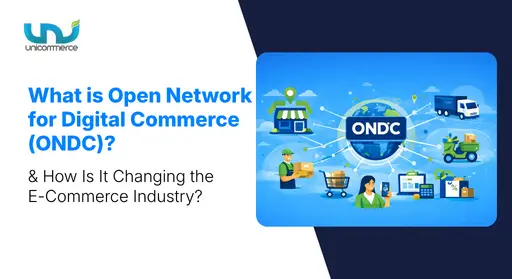
ONDC (Open Network for Digital Commerce) is an advanced ecosystem that enables smooth and interconnected online commerce.ONDC is much like UPI for payments, but for e-commerce. Launched by the Indian government in 2022, ONDC runs on open protocols that connect buyers, sellers, apps, and service providers under one shared framework, without locking anyone into a single platform.
ONDC has expanded beyond its initial pilot phase and is increasingly being used by merchants and service providers across India. According to a Press Information Bureau release dated March 9, 2026, approximately 206,000 merchants had completed at least one transaction on the ONDC Network as of December 31, 2025. The same release stated that around 600,000 service providers were making their services available through the network.
In this blog, we will cover:
- What is ONDC and how does it actually work
- Key benefits of the ONDC network
- Its impact on India’s e-commerce landscape
- How e-commerce businesses in India can leverage ONDC to grow
Whether you are a small seller, a startup, or an established brand, understanding ONDC could change how you think about selling online in India. Let’s begin!
What is ONDC?
ONDC, or Open Network for Digital Commerce, is an open digital commerce network that connects buyers, sellers, logistics providers, payment services and technology platforms across different applications. Unlike Amazon or Flipkart, ONDC is not a single marketplace or shopping app. It uses interoperable protocols to enable buying and selling across multiple platforms.
ONDC stands for Open Network for Digital Commerce, which is a government-backed initiative aimed at promoting open networks for all aspects of the exchange of goods and services over digital and electronic networks. Despite its growing potential, e-retail in India still accounts for roughly 1.6% of GDP in 2025, a sign that there is significant room left to grow.
So why did the need for ONDC arise in the first place?
India’s traditional e-commerce model came with some deep-rooted problems:
1. Platform monopoly:
A single entity had full control over the entire e-commerce value chain, from discovery to delivery, leaving little room for competition or flexibility.
2. High costs for sellers:
Being present across multiple platforms came at a steep price, eating directly into seller margins and making it harder for small businesses to survive.
3. Limited choices for buyers:
Buyers were restricted to what a single platform offered, and transactions could only happen if both the buyer and seller were on the same platform.
These challenges made it clear that India’s e-commerce ecosystem needed a fundamental shift, not just a better platform, but an entirely different model. That is exactly what ONDC set out to build.
Is ONDC an App or a Marketplace?
ONDC is not an ONDC app, shopping app, online marketplace or e-commerce company. It is an open digital commerce network that connects buyers, sellers, logistics providers and technology platforms through interoperable protocols. Therefore, there is no single official ONDC shopping app used by everyone.
Buyers use ONDC-enabled buyer apps to search for products and place orders. Sellers join the network through an ONDC seller app, seller network participant or technology service provider. These platforms help sellers create catalogues, manage inventory and process orders.
Logistics providers support delivery and fulfilment, while technology providers offer tools for cataloguing, order management, payments and integrations. ONDC itself does not directly sell products, own inventory, process every order or deliver products to customers.
This structure allows customers using one buyer app to discover products listed by sellers through another network participant. Therefore, if you are searching for an ONDC app for buyers or an ONDC app for sellers, you need to choose an ONDC-enabled participant based on your requirements. ONDC is better understood as digital commerce infrastructure rather than a traditional marketplace like Amazon or Flipkart.
How does the Open Network for Digital Commerce (ONDC) Work?
India’s e-commerce market is on a strong growth trajectory, with projections indicating an annual expansion of 25–30% over the next five years, as highlighted by the India Brand Equity Foundation (IBEF). While this growth opens up massive opportunities, it also brings forward an important need: ensuring that businesses of all sizes can participate fairly in this expanding market.
For a long time, access to online commerce has not been evenly distributed. Many smaller businesses have struggled with limited visibility and high platform dependency. This is where the ONDC network introduces a meaningful shift by creating a more open and accessible digital commerce environment.
One of the key ways the ONDC platform enables this is by standardizing essential processes such as product cataloging, inventory management, order processing, and fulfilment. Instead of businesses adapting to different platform-specific systems, ONDC creates a unified structure that simplifies operations.
ONDC transaction flow
1. The buyer searches for a product: A customer opens an ONDC-enabled buyer app and searches for a product or service.
2. The buyer app sends the request: The buyer app sends the search request through the ONDC network using standardised communication protocols.
3. Seller apps share product details: Relevant seller apps respond with information such as product name, price, availability, seller location, delivery options and estimated fulfilment time.
4. The buyer compares and places an order: The customer reviews the available options, selects a product and places the order through the buyer app.
5. The seller accepts and processes the order: The seller receives the order through its seller app or technology service provider, confirms availability, packs the product and prepares it for dispatch.
6. A logistics provider fulfils the delivery: A logistics service provider collects the order from the seller and delivers it to the customer. Depending on the transaction, delivery may be managed by a network logistics partner or another connected fulfilment provider.
7. Payment, delivery and after-sales activities are completed: Payment processing, order updates, fulfilment, cancellations, returns, refunds and customer support are managed by the relevant participants according to their roles and applicable policies.
Key participants in the ONDC network
1. Buyer Network Participant: A Buyer Network Participant operates the buyer-side application through which customers search for products, compare options, place orders, make payments and track deliveries. The buyer app is the customer-facing interface, but it is not the ONDC network itself.
2. Seller Network Participant: A Seller Network Participant helps businesses join the ONDC network and sell products online. It may provide tools for seller registration, catalogue creation, inventory updates, order processing and seller support.
3. Gateway: A gateway helps facilitate the discovery and communication of buyer and seller network participants. It can help route search requests and responses across the network so that buyers can discover products from sellers connected through different participants.
4. Technology Service Provider: A Technology Service Provider offers software, integrations and operational tools that help businesses participate in digital commerce. Its services may include catalogue management, inventory synchronisation, order management, warehouse integration, payment support, analytics and logistics connectivity.
5. Logistics Service Provider: A Logistics Service Provider manages the physical movement of an order. Its responsibilities may include pickup, transportation, delivery, shipment tracking, cancellation handling and reverse logistics for eligible returns.
6. Beckn Protocol: The Beckn Protocol is an open protocol used to enable communication and interoperability between different participants in decentralised digital commerce networks. It helps standardise how participants exchange information related to discovery, product selection, order creation, fulfilment and other transaction stages.
7. Network Participant: A Network Participant is an organisation that performs a defined role within the ONDC network. Examples include buyer network participants, seller network participants, gateways, technology service providers and logistics service providers.
Example of how an ONDC order works
Suppose a customer searches for shoes through an ONDC-enabled buyer app. The request travels through the ONDC network, and connected seller apps share available shoe listings. The customer selects a product, places the order and completes payment. The seller then packs the product, a logistics provider collects it, and the order is delivered to the customer.
This distributed model allows a buyer using one app to discover products listed by sellers through another network participant. It also allows sellers to access multiple buyer applications without creating separate catalogues for every marketplace.
ONDC Ecosystem Participants and Their Roles
The ONDC ecosystem includes multiple independent participants that work together to complete a digital commerce transaction. Unlike a traditional marketplace, ONDC separates activities such as product discovery, selling, payment processing, technology and delivery among different network participants.
| ONDC Participant | Role in the Network |
|---|---|
| Buyer App | Helps customers search for products, compare options, place orders, make payments and track deliveries. |
| Seller App | Helps businesses register, create product catalogues, update inventory, receive orders and manage fulfilment. |
| Seller | Owns or manages products, confirms orders, packs items and fulfils customer purchases. |
| Logistics Provider | Picks up products from sellers, transports them and delivers orders to customers. It may also support tracking and reverse logistics. |
| Gateway | Helps connect and discover buyer and seller network participants by routing search requests and responses across the ONDC network. |
| Technology Service Provider | Provides catalogue, inventory, order management, warehouse, payment, analytics and integration tools for businesses. |
| Payment Provider | Supports payment processing, transaction confirmation, refunds and settlement-related activities. |
| Customer Support or Grievance Participant | Helps manage order-related questions, complaints, cancellations, returns and refunds according to applicable policies. |
History of ONDC
| Phase | Event | What Happened |
|---|---|---|
| Pilot Phase | April 29, 2022 | Pilot launched in five cities. |
| Pilot Phase | May 5, 2022 | Food businesses were onboarded |
| Pilot Phase | June 20, 2022 | Expansion into the agriculture sector with NABARD integration. |
| Pilot Phase | July–August 2022 | Network scaled to more cities with plans for nationwide rollout. |
| Government Initiatives | 2022 (Ongoing) | Push for MSME inclusion, ODOP promotion, lower commissions, and better accessibility. |
| Expansion Phase | August 2022 | Network expanded to additional cities. |
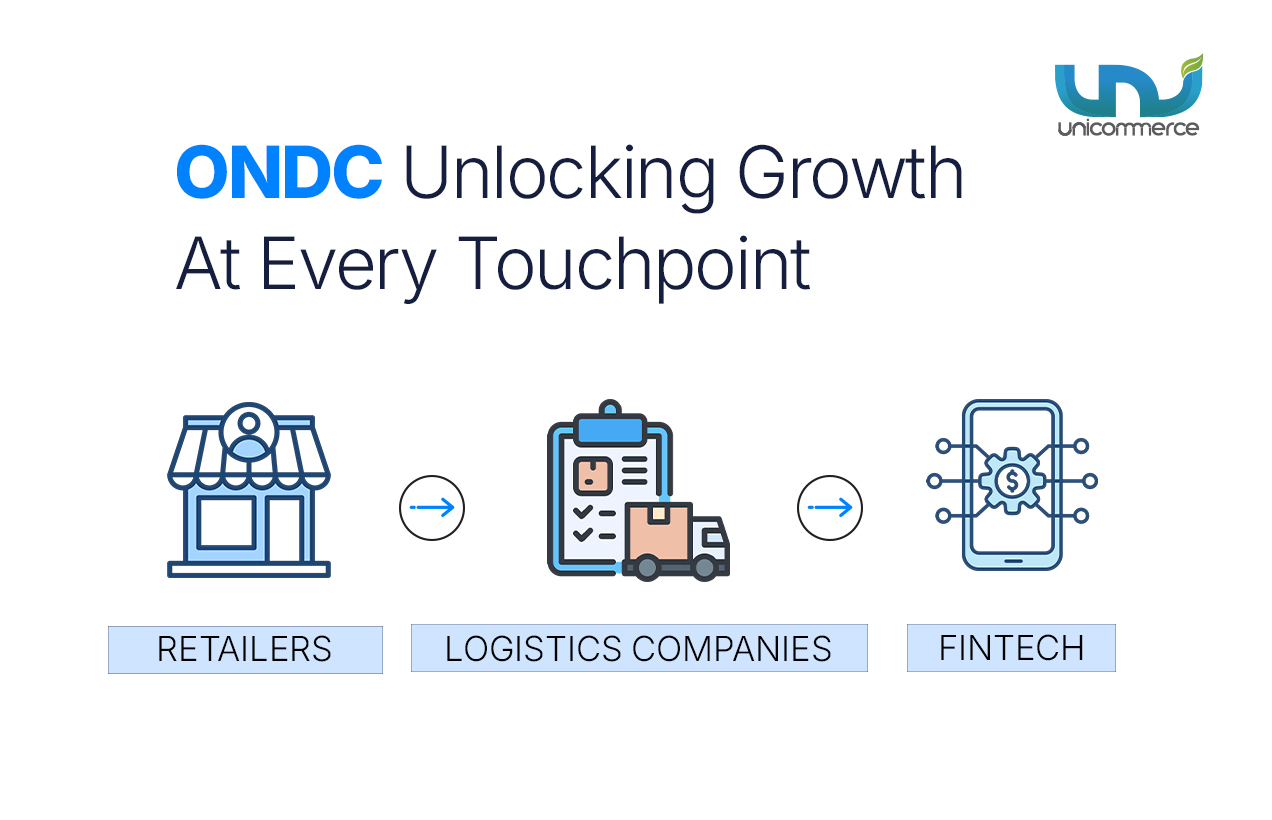
How the ONDC Network is Unlocking Growth Across Every E-commerce Participant
The ONDC network brings retailers, logistics providers, and financial partners onto a shared ecosystem, enabling them to collaborate more efficiently and scale without platform limitations. By removing silos and expanding access, the ONDC platform creates new growth opportunities for every participant in the digital commerce value chain.
1. For Retailers:
For retailers, especially small and mid-sized businesses, the open network for digital commerce, ONDC, opens up entirely new growth opportunities.
With access to a shared network:
- Sellers can reach customers beyond their immediate geography
- Product visibility improves without heavy reliance on platform algorithms
- Businesses can make more informed pricing decisions by comparing offerings across the network
The ability to create and manage digital catalogs also allows retailers to present a wider range of products to customers. This not only improves discovery but also enhances the overall shopping experience.
Another key advantage is flexibility. Retailers can now collaborate with third-party service providers, such as logistics and payment solutions, without being tied to a single platform. This reduces dependency on large marketplaces and gives sellers greater control over their operations.
2. For Logistics Companies:
The ONDC network also creates significant efficiencies for logistics providers.
Instead of working within isolated systems, logistics companies can:
- Partner with multiple sellers across the network
- Manage deliveries from different sources through a unified framework
- Optimize routes and operations more effectively
This reduces the need for complex integrations and improves coordination across the supply chain.
As a result:
- Delivery timelines can improve
- Operational costs can be reduced
- Both businesses and consumers benefit from faster and more reliable fulfilment
3. For Financial and Fintech Services:
Financial institutions and fintech platforms also stand to benefit from the ONDC platform.
By integrating with the network:
- Lenders can offer credit options directly at the point of purchase
- Businesses can access financial services more easily
- Data flow between different participants becomes more streamlined
This creates opportunities for:
- Faster access to credit
- Better financial decision-making
- More inclusive financial participation for small businesses
Broader Ecosystem Impact
At a larger level, the ONDC network strengthens the digital commerce ecosystem by enabling:
- Automation of recurring transactions, improving efficiency
- Better visibility into customer and business data, supporting informed decisions
- End-to-end integration of business needs, from discovery to fulfilment
- New revenue opportunities, such as value-added services (financing, advisory, etc.)
- Access to a larger, unified customer base, increasing market reach
Documents Required to Sell on ONDC
Businesses generally need to provide basic business, tax, banking and product information when registering through an ONDC seller app or seller network participant. The exact requirements may vary by seller app, business type, product category, location and applicable regulations.
| Document or Information | Usually Required For |
|---|---|
| PAN Card | Business and seller verification |
| GSTIN | Tax registration and seller verification, where applicable |
| Bank Account Details | Receiving payments and seller settlements |
| Business Address | Seller verification and arranging product pickup |
| Pickup Address | Enabling logistics providers to collect orders |
| Product Catalogue | Listing products on the ONDC network |
| Product Images and Descriptions | Helping customers discover and evaluate products |
| Product Pricing and Inventory Details | Displaying availability and processing orders |
| Product Category Approvals | Selling products that require specific permissions or compliance documents |
| FSSAI Licence | Selling food, grocery and other regulated food products |
| Brand Authorisation | Selling restricted, branded or trademarked products, where required |
| Return and Cancellation Policy | Managing customer expectations, returns and fulfilment |
| Business Registration Details | Confirming the legal identity of the seller, where applicable |
Additional requirements for certain products
Some categories may require additional licences, certificates or approvals. For example, food sellers may need an FSSAI licence, while sellers of cosmetics, healthcare products, electronics or other regulated goods may need category-specific documentation.
Before completing registration, sellers should confirm the current requirements with their selected seller app or seller network participant. Requirements may vary by seller app and product category. Providing accurate documents and product information can help reduce onboarding delays and prevent catalogue or order-processing issues.
How ONDC is Solving Core Challenges in E-commerce
The ONDC network is not just another layer in digital commerce; it actively addresses the structural gaps that have limited growth, access, and trust in the ecosystem for years. Instead of working around these challenges, the ONDC platform directly simplifies, standardizes, and strengthens how e-commerce operates in India.
Here’s how that shift is already happening:
1. Making Compliance Simpler:
Regulatory compliance has traditionally been complex, especially for small businesses entering online commerce. The ONDC platform removes this friction by introducing a standardized framework that businesses can follow from the start.
Instead of navigating multiple platform-specific rules, sellers operate within a clear and transparent system. This not only ensures better adherence to data protection and privacy norms but also creates a more level playing field across the ONDC network.
2. Removing Integration Barriers with Interoperability:
One of the biggest inefficiencies in e-commerce comes from disconnected systems. Different platforms, different standards, and constant integration challenges slow businesses down.
The open network for digital commerce, ONDC, changes this by enabling seamless interoperability. Buyer apps, seller systems, and service providers interact effortlessly within the same network.
Significant Modifications to Open Network for Digital Commerce in 2026
ONDC has come a long way from its pilot days in five cities. In 2026, the network has grown into something that is hard to ignore, with over 3 lakh sellers onboarded, more than 100 buyer apps active, and operations running across 400+ cities and towns across India.
But the scale is only part of the story. What is more interesting is where ONDC is showing up now.
It is no longer just a retail play. The network has expanded into Food & Beverages, Mobility, Financial Services, FMCG, and Agriculture, essentially covering large chunks of everyday economic activity. A kirana owner in a tier-3 town, a logistics startup in Chennai, a farmer looking for buyers, all of them now have a seat at the same table.
A few other changes worth noting:
1. AI-powered discovery has made buyer apps smarter. Recommendations now factor in vendor preferences and actual buyer behavior, making the search experience feel less like a catalog and more like a conversation.
2. Multi-language support across 10+ Indian languages means that language is no longer a barrier to participation, for buyers or sellers.
3. Improved cataloging tools, including automatic image recognition and better product tagging, have made listings sharper and more trustworthy.
4. Compliance and security have also been tightened; data protection norms, KYC standards, GST compliance, and ethical AI guidelines are now baked into how the network operates.
In short, ONDC in 2026 is not the same experiment it was in 2022. It is starting to look like infrastructure.
Who Can Join ONDC?
One of the most important things about ONDC is that it was never designed for just one type of participant. The network is genuinely open, and that openness extends to a wide range of businesses and individuals.
1. Local and Small Retailers:
If you run a shop, whether it sells groceries, clothes, or electronics, you can list your products on ONDC and reach customers well beyond your neighborhood. No need to depend on a single marketplace or pay steep commissions to get visibility.
2. D2C Brands:
Brands that want to sell directly to their customers, without going through intermediaries, can use ONDC to build that direct relationship. Less dependency on third parties means better margins and more control over the buyer experience.
3. Distributors and Wholesalers:
Bulk sellers can list their inventory and connect with business buyers across the network. ONDC makes it easier to find new clients without the usual friction of cold outreach or platform restrictions.
4. Logistics and Delivery Providers:
If you run a delivery or logistics operation, ONDC gives you access to sellers across the network who need fulfilment support, without complex one-on-one integrations with each platform.
5. Technology Providers:
Companies building tools, platforms, or services for e-commerce can plug into ONDC and support both buyers and sellers operating on the network.
6. Buyers and Consumers:
Anyone looking to shop can use ONDC-enabled apps to browse products from multiple sellers, all in one place, with more options and fewer restrictions than a closed platform offers.
How to Get Started on ONDC?
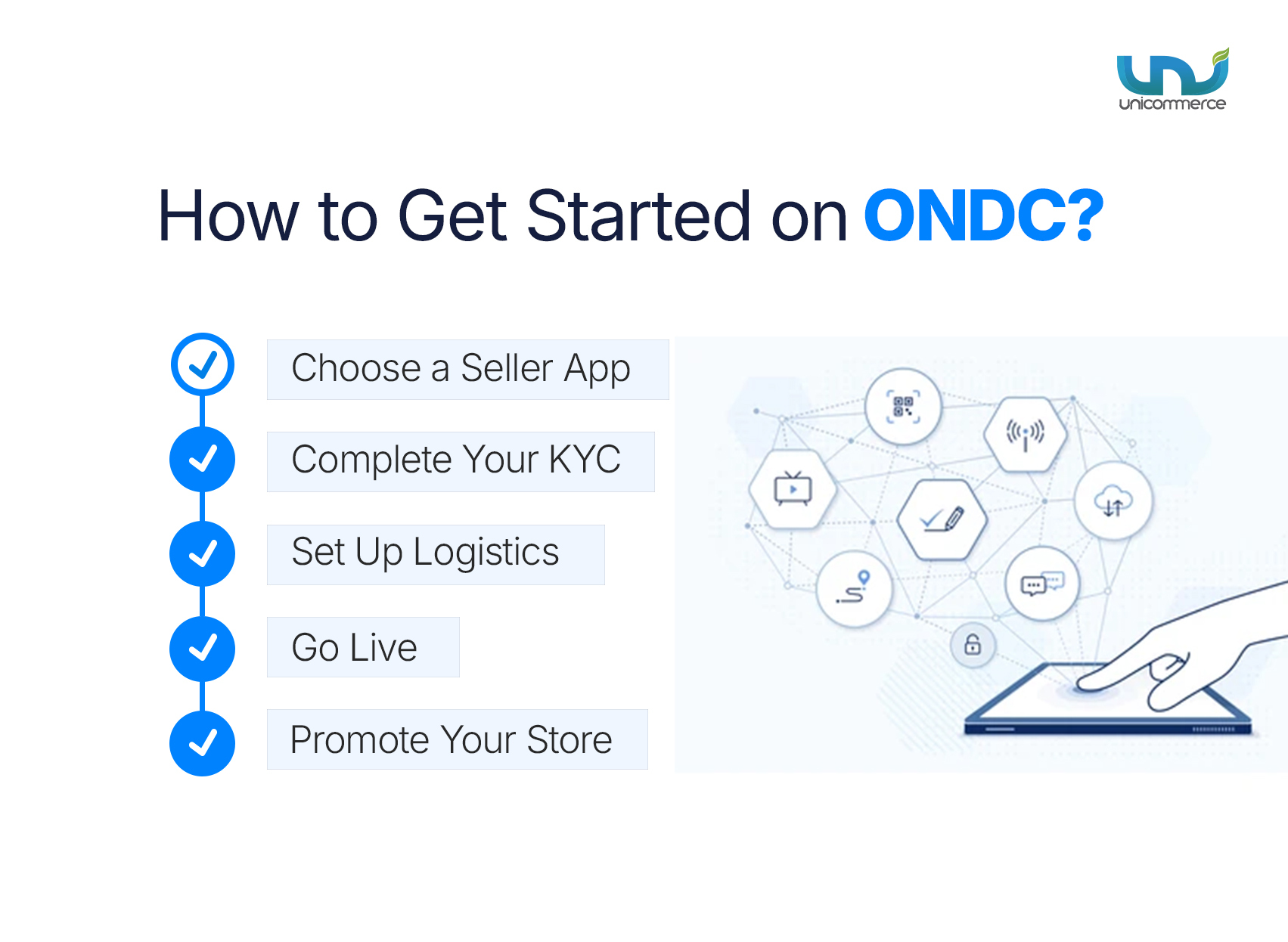
To start selling on ONDC, businesses generally register through an ONDC-enabled seller app, Seller Network Participant or technology service provider. The exact onboarding process, documents and charges may vary by participant and product category. Here is a step-by-step breakdown of how it works:
Step 1: Choose a Seller App
Start by picking a seller-side platform that is registered on the ONDC network. There are several options available, so choose one that fits your business type and is easy for you to navigate.
Step 2: Complete Your KYC
Once signed up, you will need to verify your business. This means submitting your GST number, business PAN, bank account details, and any other documents the platform requires. It is a one-time process and keeps the network trustworthy for everyone on it.
Step 3: List Your Products
Using the seller dashboard or POS integration, add your products, upload clear photos, set your prices, write accurate descriptions, and update your stock levels. A well-built catalogue directly affects how easily buyers can find and trust your listings.
Step 4: Set Up Logistics
Most seller apps come with logistics partners already integrated into the platform. Go through the available options and pick one based on your delivery areas and cost requirements. You do not need to figure out shipping from scratch.
Step 5: Go Live
Once your account is approved and your listings are in place, Once the seller account and catalogue are approved, products may become discoverable through participating buyer apps, subject to category availability, location, inventory, buyer-app coverage and participant policies.
Step 6: Promote Your Store
ONDC gives you the reach, but driving traffic to your listings still takes some work. Local marketing, targeted ads, and even word-of-mouth can make a real difference in how quickly your store picks up orders.
Benefits and Challenges of ONDC
The ONDC network is designed to make digital commerce more open and interoperable by connecting buyers, sellers, logistics providers and technology platforms. However, the experience can vary depending on the participants involved, the product category, location and level of network adoption.
Benefits of ONDC
1. Reduced dependence on a single marketplace:
ONDC can help sellers reduce their dependence on one large marketplace. Instead of relying entirely on a single platform’s policies, fees and algorithms, businesses can participate through the wider ONDC network.
2. Access to multiple buyer apps:
Sellers can potentially make their products discoverable through multiple ONDC-enabled buyer apps. This can help them reach customers across different applications without creating a completely separate selling process for every app.
3. Greater interoperability:
ONDC connects different buyer apps, seller apps, logistics providers and technology service providers through common protocols. This interoperability allows participants using different systems to communicate and complete digital commerce transactions.
4. Wider participation for sellers:
The open network model can create opportunities for small retailers, kirana stores, D2C brands, wholesalers and local businesses to participate in online commerce. Sellers may use network participants and technology providers for cataloguing, inventory, order processing and fulfilment.
5. Potential for better price discovery:
Because products and services may be available through multiple connected participants, buyers can compare different sellers, prices, delivery options and product choices. This may support better price discovery, although the options available can vary by buyer app, location and category.
6. Access to external logistics and technology providers:
Sellers can work with connected logistics and technology service providers for delivery, catalogue management, inventory synchronisation, order management and other operational needs. This allows businesses to access specialised services without building every capability internally.
7. Opportunities for MSMEs and local retailers:
ONDC can help MSMEs and local retailers explore digital selling without depending only on traditional marketplace models. Businesses may be able to reach customers outside their immediate locality and participate in a broader digital commerce ecosystem.
Challenges and Disadvantages of ONDC
Although ONDC offers an open approach to digital commerce, businesses and buyers may face certain challenges while using the network.
1. Fragmented customer experience:
The customer experience may differ across buyer apps, seller apps and logistics providers. Product discovery, order tracking, cancellations, returns and customer support may not feel as consistent as they do on a single, centrally managed marketplace.
2. Seller onboarding complexity:
New sellers may need to understand seller registration, KYC, catalogue creation, tax information, inventory updates, logistics and order-processing requirements. The onboarding process may also vary depending on the selected seller network participant.
3. Catalogue and inventory synchronisation issues:
Incorrect product information, outdated stock levels or delayed inventory updates can result in inaccurate listings, overselling, order cancellations and fulfilment problems. Sellers operating across multiple channels may need suitable inventory and order management systems.
4. Different policies across participants:
The applicable fees, delivery terms, return rules, cancellation policies and customer support processes may vary across buyer apps, seller apps and logistics providers. Sellers should review the terms of the participants they choose before going live.
5. Returns and dispute-management complexity:
Returns, refunds, damaged shipments and order disputes may involve multiple participants. Identifying the correct support channel and coordinating between the seller, buyer app and logistics provider can sometimes take additional time.
6. Limited consumer awareness:
Some customers may still be unfamiliar with ONDC, its buyer apps and the way the network operates. Limited awareness can affect searches, repeat purchases and the overall adoption of ONDC in certain cities or product categories.
7. Uncertain visibility and order volume:
Joining ONDC does not guarantee higher rankings, visibility or order volume. Product discovery may depend on buyer-app algorithms, catalogue quality, pricing, location, availability, customer demand and competition from other sellers.
8. Dependence on seller apps and logistics providers:
Although ONDC is an open network, sellers still depend on selected participants for onboarding, catalogue management, order processing, payments, delivery and support. The quality of these services can affect the seller and customer experience.
Is ONDC suitable for every business?
ONDC may be suitable for businesses that want to explore additional digital sales channels and reduce dependence on a single marketplace. However, sellers should compare participant fees, logistics coverage, technology capabilities, return policies and customer-support processes before choosing a seller app.
ONDC should be viewed as an additional commerce network rather than an automatic replacement for Amazon, Flipkart or a brand’s own website. Its benefits and challenges may vary by category, city, participant and operational setup.
Final Thoughts
ONDC is quietly but steadily changing how e-commerce works in India, shifting power away from a handful of platforms and putting it back in the hands of sellers, buyers, and service providers. By building on open protocols, it is democratizing digital commerce in a way that no single marketplace ever could. Whether you are a small kirana owner in a tier-3 town or a D2C brand looking to grow without paying heavy commissions, ONDC opens doors that were previously out of reach. The network is still evolving, but one thing is clear: the future of e-commerce in India is open, and ONDC is leading that charge.
FAQs
1. What is ONDC?
ONDC (Open Network for Digital Commerce) is a government-backed initiative that connects buyers, sellers, and service providers through open protocols, enabling seamless e-commerce transactions across platforms.
2. How is ONDC different from traditional e-commerce platforms?
Unlike traditional platforms that operate in closed ecosystems, the ONDC network allows buyers and sellers to interact across multiple apps, removing platform dependency.
3. How does the ONDC platform work?
The ONDC platform standardizes processes like cataloging, inventory, order management, and fulfilment, allowing different participants to operate within a unified system.
4. Who can join the ONDC network?
Retailers, D2C brands, wholesalers, logistics providers, fintech companies, and even consumers can participate in the ONDC ecosystem.
5. What are the benefits of ONDC for sellers?
Sellers get better visibility, reduced dependency on a single platform, lower costs, and access to a wider customer base across multiple buyer apps.
6. How does ONDC benefit consumers?
Consumers gain access to a wider range of products and sellers, better price discovery, and more flexibility in choosing services.
7. What is an ONDC logistics partner?
An ONDC logistics partner is a service provider that handles delivery and fulfilment within the network, enabling sellers to ship products without setting up their own logistics infrastructure.
8. Is ONDC available across India?
Yes, the ONDC network has expanded to hundreds of cities and continues to grow, covering both metro and smaller towns.
9. Is ONDC secure for transactions?
Yes, the ONDC platform follows strict protocols for data security, user authentication, and compliance, ensuring safe and reliable transactions.
10. How can a business get started on ONDC?
Businesses can join ONDC by selecting a seller app, completing KYC, listing products, choosing logistics partners, and going live on the network.
Written by
Sakshi Sinha
Content Strategist · Unicommerce
I’m an avid reader who genuinely believes a great blog can shift how you see the world or at least how you run your warehouse. At Unicommerce, I turn complex e-commerce operations into stories that actually click. When my screen-weary eyes finally beg for mercy, I’m out chasing Coco, my wonderfully chaotic dog, around the park. Life’s too short for boring content or boring walks.