
As an established seller, you already know how difficult it is to serve more than 7,600 islands while meeting customer delivery expectations of just 2-3 days. But for newcomers entering the Philippine market, building a successful brand can be even more challenging.
The Philippines is an archipelago, and customers expect fast deliveries no matter which island they’re on. That’s why brands lean heavily on 3PL inventory management partners. When shopping festivals like 11.11 and 12.12 arrive, order volumes can go into overdrive, and scaling without a strong fulfillment network, it can quickly turn into a logistics nightmare.
But here’s the catch: Adding more 3PL partners may solve the reach problem, but adds operational problems, like:
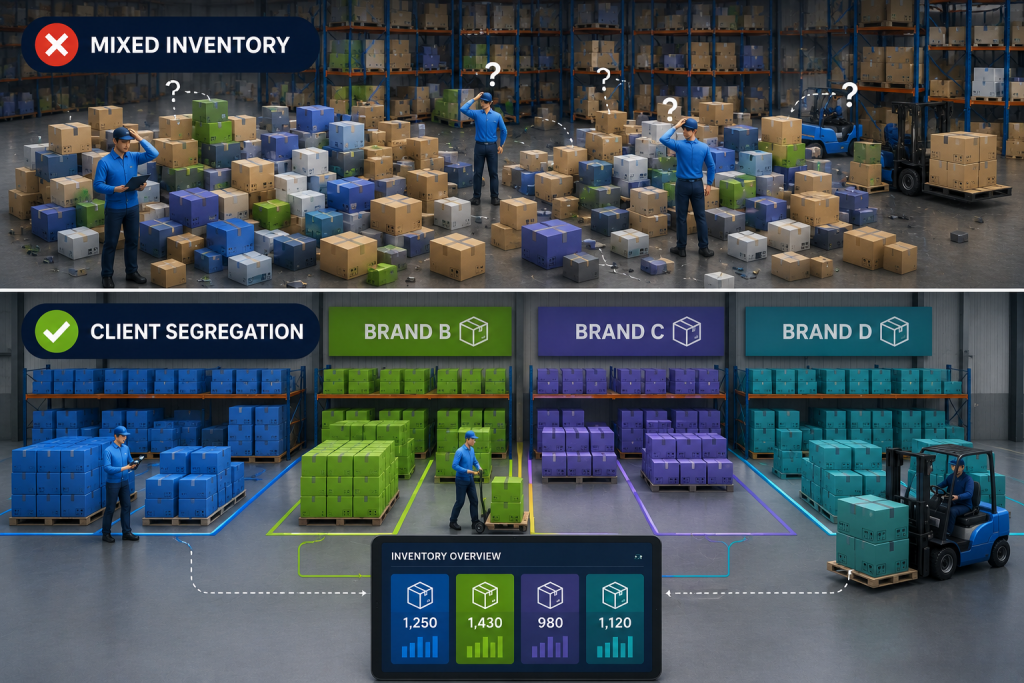
- Inventory mismatches between multiple clients sharing the same warehouse space.
- Delays in dispatches during peak sales periods when clients need faster fulfillment.
- Limited visibility into client inventory levels and stock movements.
- A higher risk of pick-and-pack errors when order volumes surge.
And suddenly, managing the warehouse becomes harder than reaching the customer.
After working with and speaking to numerous established brands, we’ve found that a 3PL warehouse management system is one of the most effective ways to tackle these operational challenges.
And that’s why we’ve put together 7 key reasons why a 3PL WMS system matters and how it can help you scale your operations without losing control of inventory, fulfillment, and client expectations.
Read on to discover them all!
7 Ways a WMS Can Help You Expand Your 3PL Operations
What does every brand want from its logistics operations? Simple: visibility, speed, and control. And that’s exactly what a 3PL WMS system helps deliver. It reduces inventory discrepancies, minimizes shipment delays, cuts down manual errors, and bridges communication gaps between brands and their logistics partners.
But that’s just scratching the surface. A modern 3PL WMS system does much more than keep warehouse operations running smoothly. It helps brands build customer trust, improve fulfillment performance, scale during peak sales periods, and create the kind of shopping experience that keeps customers coming back.
Let’s look at the top 7 ways a 3PL WMS system helps businesses grow and stay competitive.
1. Expand Your Range of Offerings
The greater the range of services you can provide to your customers, the less likely it is for them to find substitutes for you. A WMS will enable you to move past simple storage and transportation services to deliver the likes of same-day dispatch, end-to-end logistics, returns, and omnichannel fulfillment, all via the same platform.
Here is how this might look in practice:
- Both short- and long-term storage: Manage inventory efficiently based on client requirements, with customer-specific zone allocation and intelligent slotting to improve space utilization.
- Efficient returns management: Simplify reverse logistics with structured return workflows that help process returned inventory faster and reduce operational bottlenecks.
- Optimized pick paths: Reduce unnecessary movement across the warehouse floor with smarter picking routes, helping teams fulfill orders faster and improve productivity.
- Intelligent order routing: Automatically route orders across D2C, marketplace, and B2B channels to the most suitable fulfillment location for faster and more cost-effective delivery.
The more your clients grow, the more they’ll need from you. A WMS for 3PL lets you grow alongside them without rebuilding your operations every time.
2. Gain Access to Advanced Technology At Minimal Costs
Here’s how it really is: the companies will enjoy advanced logistics technology without investing their resources to build it since they’ve outsourced it through you. The only requirement is that such technology should be available to you in the first place.
With the best WMS for 3PL solution, you’ll gain:
- Barcode and RFID-enabled tracking: Improve accuracy across receiving, picking, and dispatch operations.
- Automated data capture: Reduce manual work and minimize human errors.
- Material handling equipment (MHE) support: Optimize warehouse space and improve operational efficiency.
- Demand forecasting capabilities: Plan labor and storage requirements ahead of demand spikes.
- Client-specific analytics and reporting: Give clients better visibility into inventory and operational performance.
The benefit is that your clients will get access to the advanced technology that could cost them millions otherwise, just because they’re working with you. This will keep you in business without investing heavily in research and development. That’s why 3PL WMS systems are considered high ROI investments in the 3PL industry.
3. Build a Transparent Work Environment for Your Warehouse and Ops Teams
The most challenging part of running a shared space warehouse in the 3PL world is managing multiple clients’ inventories, multiple packaging and dispatch procedures, and the warehouse workers who have to do it flawlessly. Without transparency, mistakes inevitably occur. The wrong SKU lot is picked. Goods get confused among the clients’ inventories. Dispatches are done without full paperwork.
What a 3PL WMS system provides is a unified platform to work on for the warehouse workers, ops managers, and clients:
- SKU-level inventory tracking: Track inventory down to the exact bin and slot location for complete visibility.
- Client-wise stock segregation: Keep inventory separated to avoid mix-ups and maintain accuracy.
- Real-time inventory visibility: Monitor inbound and outbound inventory movements as they happen.
- Task and workforce tracking: Measure productivity and monitor warehouse performance in real time.
- Exception alerts and notifications: Identify issues early and resolve them before they impact fulfillment.
Your workers do not rely on intuition to work anymore. Your ops managers will not spend hours looking for updates on WhatsApp. Your clients know everything about their inventory because it is accessible from one screen.
4. Network Connectivity, Integration, and Synchronization
If you run multiple warehouses, you must be familiar with the issue that arises: inventory piling up in one place when the other one runs out of it. Orders are being rerouted incorrectly. You get calls from customers requesting information on orders that you can only get by contacting three different managers.
What a WMS for 3PL can help you with:
- Centralized inventory management: Manage inventory across all warehouse locations from a single platform.
- Smart order routing: Fulfill orders from the nearest or most suitable location based on stock availability.
- Trackable stock transfers: Monitor inventory movements between warehouses with complete visibility.
- Multi-location inventory dashboards: Give clients a unified view of inventory across all fulfillment centers.
- Logistics partner connectivity: Integrate with shipping providers to streamline fulfillment and delivery operations.
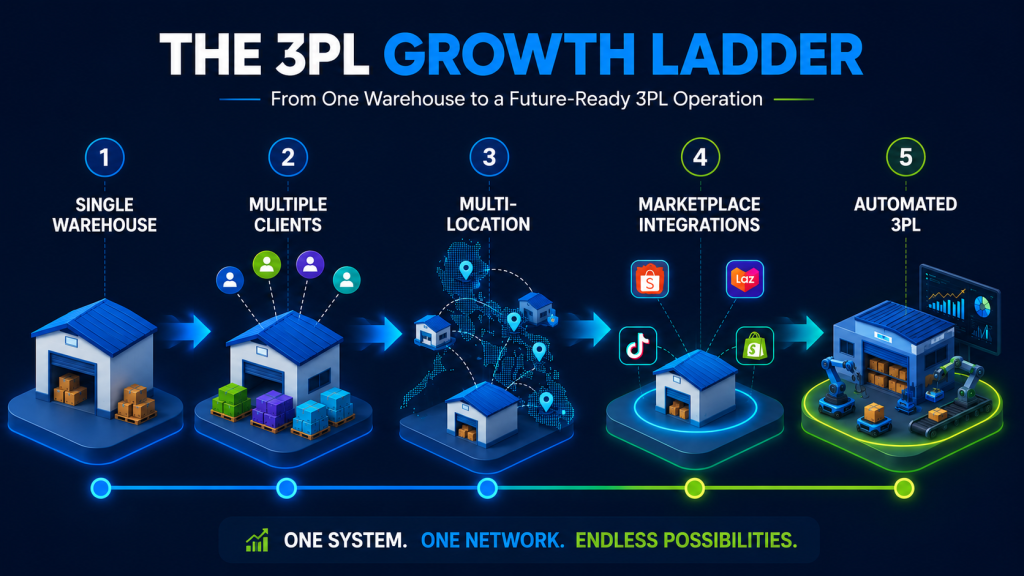
This is particularly critical when one tries to expand geographically to cover more of the Philippine archipelago or to explore opportunities in other parts of Southeast Asia. Opening up a fulfillment center in Cebu or Davao should not require starting afresh. A warehouse management software would ensure that additional centers connect with the existing system without affecting client experience.
5. Prepare for Any Future Event, Peak Season, or Market Spike
Your customers don’t only rely on you during off-months, but during periods of peak activity like 11.11, Shopee’s Mega Sale, Lazada’s Birthday Sale, or any other spike in order flow brought about by a TikTok Shop campaign that suddenly spikes orders by a factor of 10. The ability of a provider to meet its obligations during such critical periods is precisely why it matters to be able to do so as a 3PL company.
The 3PL WMS system will help you prepare for these events and periods of time:
- Demand forecasting: Predict future inventory and workforce requirements based on historical sales trends.
- Peak-ready workflows: Use predefined workflows to handle high-order volumes without operational disruptions.
- SLA performance tracking: Monitor delivery commitments and ensure service levels are consistently met.
- Wave and batch picking: Process more orders in less time during peak sales periods.
- Automated replenishment alerts: Trigger timely reorders and avoid stockouts during demand spikes.
It is during the busy season that the most successful 3PLs differentiate themselves from others. Those warehouses that succeed are the ones that are already structured for success and not those that are winging it as they go along.
6. Make Your Warehouse Floor More Efficient
This is where WMS for 3PL proves itself every day. Not only in the grand, sweeping strokes of strategy and planning, but also every time an item needs picking, every incoming shipment, and every dispatch.
A properly utilized WMS system improves your warehouse floor operation by ensuring:
- Barcode-based receiving: Verify SKU accuracy before inventory is stocked into the warehouse.
- Smart slotting and warehouse zoning: Place high-demand SKUs closer to dispatch areas for faster fulfillment.
- Batch and wave picking: Reduce picker travel time and improve order processing speed.
- FIFO and FEFO inventory management: Automatically prioritize older or expiry-sensitive stock for dispatch.
- Storage space monitoring: Track warehouse capacity and optimize space utilization.
- Dock-to-stock tracking: Measure how quickly inventory moves from receiving to available stock.
- Cross-docking workflows: Move eligible shipments directly to dispatch without unnecessary storage.
The cumulative result: fewer picking mistakes, shorter fulfillment cycles, and a warehouse floor operation running by design and not based on knowledge about where things are stored.
7. Continuous Improvement through Market Standardization
The 3PL marketplace is mature now. Customers are becoming smarter, service level agreements are tightening, and there is simply less room left for mediocre operations. Those who will excel in the market are those who integrate continuous improvement within their operation, rather than addressing problems when they appear.
WMS will help you achieve it:
- Performance benchmarking: Compare client, SKU, and location-level performance to identify operational gaps.
- Picking and packing accuracy tracking: Monitor error rates and pinpoint areas that need improvement.
- Fulfillment cycle time reporting: Track dock-to-dispatch timelines and improve warehouse efficiency.
- Custom SLA dashboards: Measure performance against delivery and service commitments in real time.
- Returns error analysis: Identify the root causes behind returns and fulfillment issues.
- Continuous technology upgrades: Stay competitive with regular WMS enhancements and new capabilities.
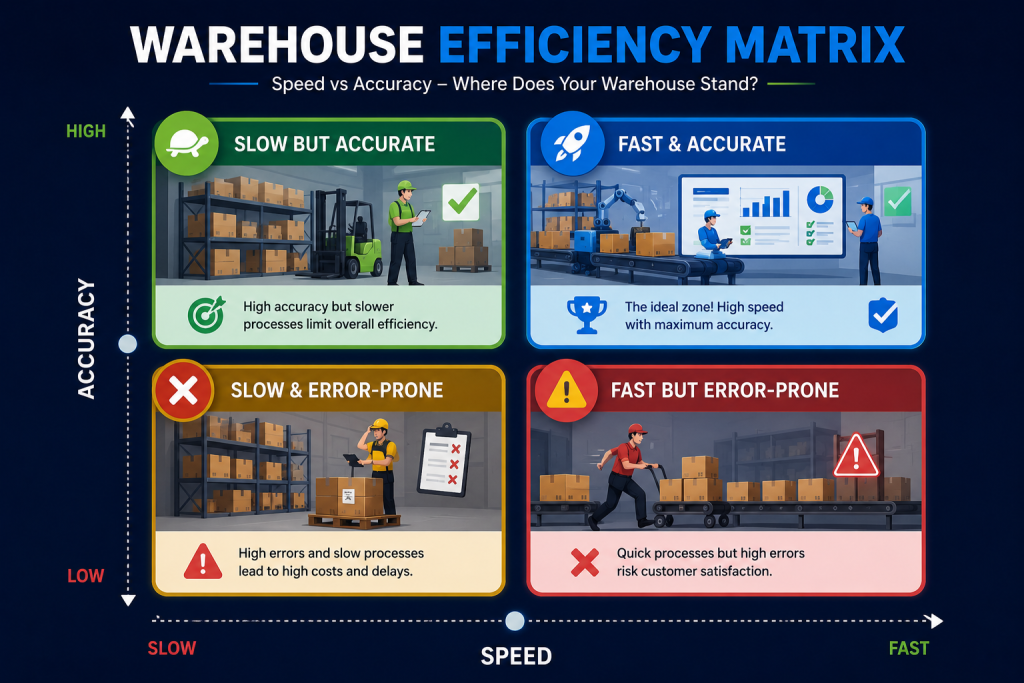
However, once you can track, measure, and monitor your operations in the process, improvements become systematic in nature. What your clients mean when they tell you they want a 3PL service provider and not a supplier is exactly this.
Now, you must be wondering how to choose the right 3PL warehouse management system. The good news is that most brands evaluate WMS solutions using a similar set of criteria. In the next section, we’ll walk through the key questions brands ask before selecting a 3PL WMS system, so you know exactly what to look for.
What Do Brands Actually Expect from a Modern 3PL WMS System?
Whether you’re a fast-growing D2C brand, a marketplace seller, or a 3PL provider managing multiple clients, the expectations are surprisingly similar.
Before investing in a 3PL WMS system, brands usually evaluate it against a few critical questions:
| What Brands Ask | What They Really Want |
|---|---|
| Will it help me reduce costs? | More efficient operations and fewer costly errors. |
| Can I trust the inventory data? | Real-time visibility and accurate stock levels. |
| Will it scale as my business grows? | The ability to handle more orders, warehouses, and clients. |
| Can it survive peak sales seasons? | Smooth operations during events like 11.11 and 12.12. |
| Will it connect with my existing systems? | Seamless integrations with marketplaces, shipping partners, and ERPs. |
| Can it improve customer experience? | Faster deliveries, fewer errors, and better order tracking. |
Notice a pattern? Almost every expectation comes back to one thing: operational control.
Brands want visibility into their inventory. They want orders moving without delays. They want confidence that their logistics operations won’t fall apart when demand spikes. That’s exactly where a modern 3PL WMS system proves its value.
And while there are many options in the market, the right system is the one that fits your business requirements, supports your growth plans, and helps you stay in control as operations become more complex.
This is where solutions like Unicommerce stand out, and those brands that are using it would advise you to choose Unicommerce as well because it is one system that will suit every business requirement of yours within a budget. This is not a mere sales talk, but our belief that is the best fit for your requirement.
Let’s dive into the details.
Why Unicommerce Is the Preferred WMS for 3PL Providers?
Unicommerce is a cloud-native SaaS platform for Warehouse Management System that works well for 3PL operations, and now over 7000+ brands use 3PL operations, helping them to get rid of the complexities of e-commerce by improving the performance of their 3PL warehouses.
Unicommerce WMS for 3PL providers:
- Multi-client, multi-warehouse management: Manage multiple clients and warehouses from a single dashboard instead of juggling separate systems.
- Inbound and outbound tracking: Get real-time visibility into inventory movements along with actionable operational insights.
- Marketplace and logistics integrations: Connect with 150+ logistics partners and major marketplaces through a single platform.
- Automated order allocation: Route orders to the right fulfillment location automatically, without manual intervention.
- Batch and wave picking: Speed up picking operations and improve warehouse productivity during peak periods.
- FIFO and FEFO stock rotation: Ensure timely stock movement and reduce losses for expiry-sensitive products.
- Built-in returns management: Handle returns efficiently through a structured reverse logistics workflow.
- Client inventory visibility: Give clients real-time inventory access, reducing constant stock update requests and improving transparency.
In addition to these, the ecommerce warehouse management services offered by Unicommerce manage over 8,800 warehouses, making the complicated processes of e-commerce a breeze for any company, irrespective of its size and type. But if you do, just believe in unicommerce and allow our system to do the job for you.
And if you need an effective WMS for 3PL that makes your operations smooth, then believe in us and adopt our 3PL warehouse management system, i.e., Unicommerce, and make your tasks much easier.
All is done, but if you have any other queries, then just book a free demo session.

FAQs
1. What is a WMS for 3PL operations?
A WMS solution for 3PL services is a special warehouse management system intended to assist logistics service providers in handling the inventory, orders, and delivery of goods to customers. This system covers all core warehouse operations, including receiving, picking, dispatching, and returning goods.
2. How does a WMS for 3PL differ from a standard WMS?
The main difference is that a 3PL WMS system allows you to control operations of your warehouse on behalf of many clients at once; in contrast, a traditional WMS allows managing the warehouse of a company only. Another specific feature of such WMS includes client billing and SLA tracking modules.
3. What features should I look for in a 3PL warehouse management system?
The main functionalities of the 3PL warehouse management system include stock control, automatic order allocation, barcode labeling, batch/partial order processing, and integration with logistics providers and online marketplaces.
4. Can a WMS improve order fulfillment speed for 3PL providers?
Of course. With the help of such features of WMS as wave/partial/batch picking, order allocation, and pick path optimization, the process of order handling will become faster.
5. How does real-time inventory visibility help 3PL operations?
Real-time inventory visibility provides a clear picture of stock availability, location, and movement both for your team and your customers. This avoids stockouts, prevents orders from being made in error, and cuts out the time-consuming back-and-forth communication between 3PL teams and customers.
6. What is the role of a WMS for 3PL inventory management?
The WMS in 3PL inventory management keeps track of every single item in terms of when and where it was received and dispatched, whether this be storage location, batch number, expiration date, and belonging to which customer.
7. How does a WMS help 3PLs scale their operations?
WMS allows 3PL companies to expand their operations because everything becomes standardized. There is no need to hire more employees, and the same procedures and rules are applied whenever you take on a new client or even open a new warehouse.
8. Is logistics warehouse software suitable for multi-location 3PL operations?
Yes. Nowadays, logistics warehouse software comes ready for multi-location management. The solution connects all warehouses within the network, facilitates transfers between locations, and offers centralized reporting features.
9. How does a WMS support 3PLs during peak seasons?
The benefits of a WMS include demand forecasting capabilities, pre-built workflow configuration for handling high volume, wave picking strategy implementation, auto re-ordering based on predefined rules, and SLA management.
10. What is the best WMS for 3PL providers in the Philippines and Southeast Asia?
Unicommerce WMS is a popular system among 3PL providers located in the Philippines, Indonesia, Malaysia, and Southeast Asian countries overall. Unicommerce manages over 8000+ warehouses. The system also supports multi-client management, marketplace integration with such platforms as Shopee, Lazada, and TikTok Shop, real-time tracking, and returns management.