
Inventory planning rarely gets the credit it deserves. Most businesses treat it as a back-office function when it’s actually one of the more direct levers on revenue and operational efficiency.
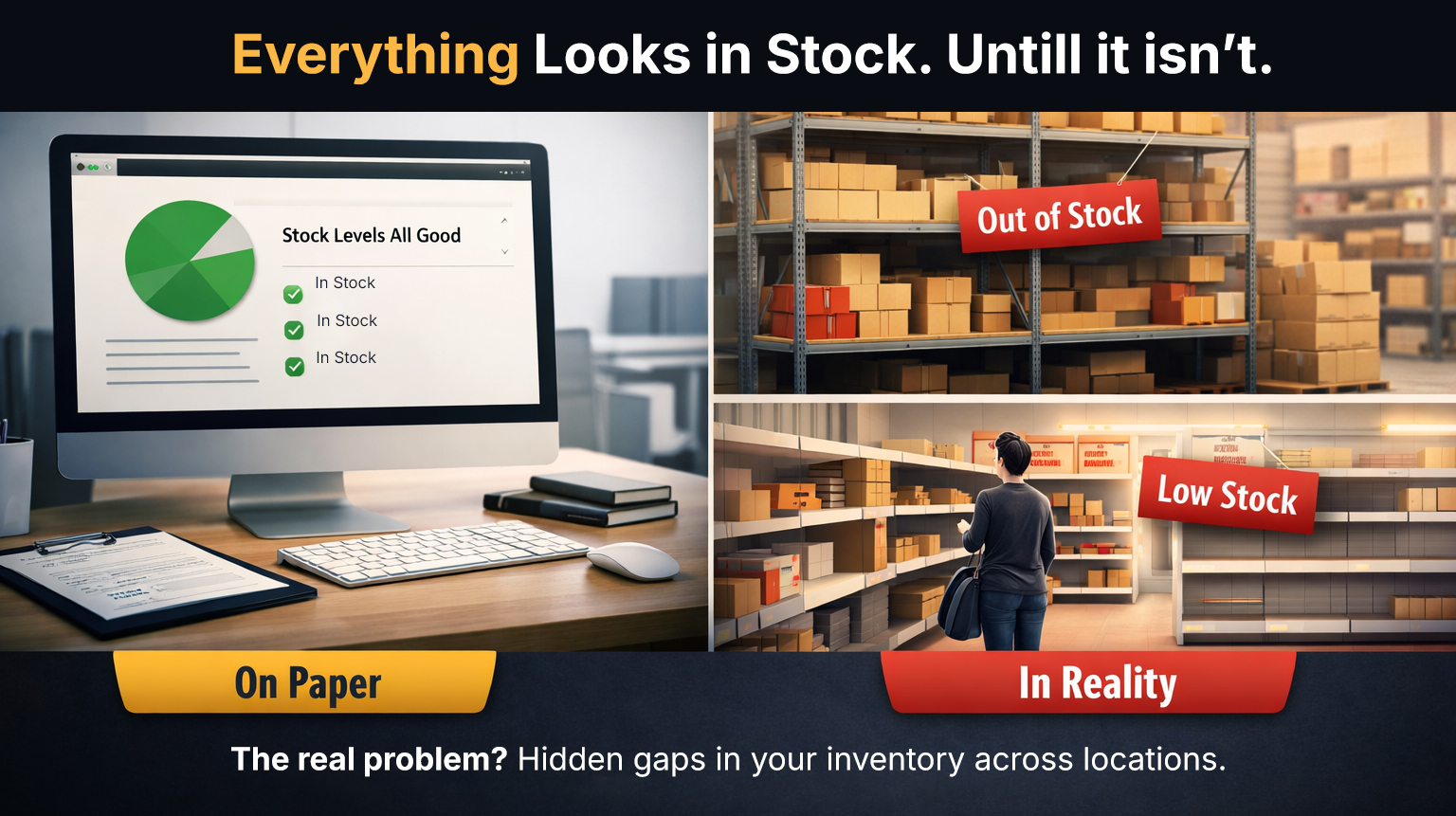
Let’s say you have a warehouse in Bulacan that appears to have adequate stock, while a distributor in Cebu is forced to turn away customer orders, and a retail branch in Davao is close to running out of inventory. It happens because you don’t have visible red flags indicating any immediate concern.
This is where the real gap becomes evident. The problem is not simply about how much inventory a business holds, but how well it can see, manage, and act on that inventory across locations.
Inventory Management is Like a Control Tower
An inventory management system works much like a control tower at an airport, constantly monitoring, directing, and coordinating the movement of goods so that everything flows smoothly without delays or confusion. From the moment inventory enters your warehouse to the point it reaches the customer, every step is tracked, verified, and optimized in real time.
When the inventory arrives in the warehouse, the system scans and records each item. When an order is placed, it guides picking and packing with barcode checks to ensure the right item is shipped and updates stock in real time.
How inventory systems help-:
- Clear, real-time inventory records give the team complete visibility of stock at all times
- Defined shelves and bin locations reduce search time and speed up picking
- Barcode-tracked inventory ensures accurate picking and packing of the right product every time
What an Inventory Management System Really Solves?
An inventory management system solves several operational challenges by bringing structure, visibility, and control to how inventory is handled. It enables accurate tracking of stock, improves inventory control across locations, and ensures that businesses can monitor movement, reduce errors, and make timely decisions based on real-time data.
This shift from reactive tracking to proactive control is what defines effective inventory management in the Philippines.
Key Backend Challenges It Solves:
- Inter-island stock coordination: Ensures smooth movement of inventory between locations despite complex logistics across regions.
- Delayed stock updates: Provides real-time or near real-time visibility, reducing lag between physical movement and system records.
- Unplanned stock transfers: Brings structure to how inventory is moved between warehouses, distributors, and stores.
- Manual reconciliation issues: Reduces dependency on spreadsheets and manual checks, improving accuracy in stock counts.
- Inconsistent stock levels across locations: Helps balance inventory to avoid overstock in one region and stockouts in another.
- Supplier discrepancies: Tracks received vs expected quantities, making it easier to identify short or incorrect deliveries.
- Multi-channel inventory mismatch: Syncs stock across online marketplaces and offline stores to prevent overselling.
- Lack of process standardization: Introduces defined workflows for receiving, transferring, and auditing inventory.
Inventory Tracking vs Inventory Control: Why It Matters
Inventory tracking and inventory control both play a crucial role in improving an e-commerce business in the Philippines. However, they serve different purposes; let’s understand how they differ.
| Aspect | Inventory Tracking | Inventory Control |
|---|---|---|
| Purpose | Monitors stock levels and movement | Decides what actions to take based on inventory data |
| Key Question | What inventory do we have, and where is it? | What should we do with this inventory? |
| Function | Records stock in hand, in transit, and sold | Sets rules for reordering, transfers, and stock allocation |
| Nature | Reactive (shows what has happened) | Proactive (guides what should happen next) |
| Business Impact | Improves visibility | Improves efficiency, cash flow, and decision-making |
Now that we have understood how inventory tracking provides visibility and inventory control drives decisions, the next step is to ensure those decisions lead to the best possible outcomes. This is where inventory optimization comes into play.
What is Inventory Optimization?
Inventory optimization is the process of maintaining the right amount of stock to meet customer demand while minimizing costs and maximizing profitability. It helps businesses make smarter decisions by aligning inventory levels with actual demand patterns, supply timelines, and operational realities.
For instance, during peak summer months in cities like Manila, temperatures rise significantly, which directly impacts buying behavior. Demand for products like air conditioners, cooling appliances, and summer apparel increases sharply, while demand for winter clothing or certain outdoor products drops.
Without inventory optimization, a business might either:
- Overstock winter products that do not sell
- Or run out of high-demand summer items at the peak of the season
Inventory optimization helps businesses anticipate these seasonal shifts and adjust stock levels accordingly, ensuring they are prepared for demand spikes while avoiding excess inventory that ties up capital.
Now that you understand what an inventory system is and how inventory tracking, control, and optimization work together, the next step is to see how these concepts translate into real, day-to-day operations.
Let’s look at how you can practically implement this in your business.
How to Implement an Inventory Management System in Your Business
A step-by-step guide to setting up an efficient system that gives you real-time visibility and complete control over your inventory.
1. Start by Understanding Your Inventory Reality:
Before implementing any system, the business first evaluated its current state:
- Which products were selling the fastest
- Which SKUs were barely moving
- How frequently were stockouts happening
- How often were reorders triggered
This step helped them move from assumptions to clarity. Without this, even the best inventory system would only automate existing inefficiencies.
2. Organize and Categorize Your Inventory:
The next step was structuring the inventory in a way that the system could actually work with.
They grouped products based on:
- Fast-moving vs slow-moving items
- High-value vs low-value products
- Region-wise demand differences
This made it easier to prioritize what needed tighter inventory control and what required less frequent attention. It also ensured that high-demand products were always visible and easier to replenish.
3. Standardize Product Information:
A major issue the business faced earlier was inconsistent product data across locations.
To fix this, they ensured every product had:
- Clear SKU identification
- Supplier details
- Barcode information
- Category and movement tags
Once this was standardized within the inventory system, tracking became far more accurate. Teams could now identify and manage products without confusion.
4. Enable Real-Time Inventory Tracking:
With structured data in place, the business focused on inventory tracking.
They ensured that:
- Every sale updates the inventory instantly
- Stock transfers were recorded in real time
- Inventory in transit was visible
This eliminated delays in reporting and gave them a live view of stock across Bulacan, Cebu, and Davao. Visibility was no longer a problem.
5. Introduce Inventory Control Through Clear Rules:
Once tracking was reliable, they introduced inventory control mechanisms:
- Defined reorder points for key SKUs
- Created structured processes for stock transfers
- Set approval workflows for inventory movement
This reduced dependency on manual decisions and ensured consistency across operations.
6. Plan Inventory Based on Demand and Seasonality
The business then moved towards inventory optimization by aligning stock with demand patterns.
They started factoring in:
- Seasonal demand shifts
- Regional consumption patterns
- Changes in supplier costs
For example, certain products required higher stocking during peak demand periods, while others needed tighter control to avoid excess inventory. This step helped reduce both stockouts and overstocking.
7. Integrate Sales Channels with the Inventory System:
To avoid mismatches, the business integrated its sales channels with the inventory system.
This ensured:
- Orders from all platforms reflected in one system
- Stock levels remained consistent across channels
- Overselling was minimized
Automation replaced manual updates, improving both speed and accuracy.
8. Maintain Accuracy with Strong Receiving and Stock Audits:
Implementation does not end with setup it requires discipline.
The business focused on:
- Verifying every new stock arrival
- Ensuring accurate quantity checks
- Conducting regular stock audits
Even small discrepancies were addressed early to prevent larger reporting issues later.
9. Test, Refine, and Scale:
Before fully relying on the system, they tested it across scenarios:
- Simulated high-order volumes
- Checked system response to stock transfers
- Validated reporting accuracy
This helped them identify gaps early and refine processes before scaling operations.
To successfully implement all these strategies, businesses need more than just processes; they need a reliable inventory system that can bring everything together in one place.
A robust inventory management system acts as the foundation for seamless operations by providing end-to-end visibility of inventory movement across warehouses, distributors, and retail locations. It ensures that every unit of stock is accurately recorded, monitored, and updated in real time.
Smarter Inventory Control, Tracking & Optimization with Unicommerce
Being a powerful ecommerce inventory management system, Unicommerce enables businesses to track inventory across multiple warehouse locations, monitor stock levels in real time, and gain actionable insights through detailed inventory reports. With seamless barcode integration, it ensures accurate tracking and smooth order processing across the entire supply chain, eliminating manual errors and bringing efficiency to everyday operations.
- Centralized inventory tracking across marketplaces, websites, and offline stores
- Real-time stock visibility with alerts for low inventory levels
- Multi-warehouse optimization for better stock allocation and utilization
- Automated inventory updates to reduce manual intervention and errors
- SKU-level insights to track product performance
- Replenishment planning to avoid stockouts and overstocking

FAQs
1. What is an inventory management system?
An inventory management system is a technology solution that helps businesses track, manage, and optimize their stock across warehouses, stores, and sales channels. It provides real-time visibility into inventory levels, movement, and availability. This allows businesses to make faster decisions, reduce errors, and ensure smooth order fulfillment.
2. Why is inventory control important for businesses in the Philippines?
Inventory control helps businesses maintain the right balance between supply and demand, especially in a geographically distributed market like the Philippines. It prevents costly issues like overstocking and stockouts. By improving stock allocation and planning, it also enhances cash flow and overall operational efficiency.
3. What is the difference between inventory tracking and inventory control?
Inventory tracking focuses on visibility; it tells you what stock you have, where it is, and how it is moving. Inventory control, on the other hand, is decision-driven and defines what actions should be taken based on that data. Together, they help businesses move from simply monitoring inventory to actively managing it.
4. How does an inventory system improve inventory tracking?
An inventory system enables real-time tracking of stock across all locations and sales channels. It updates inventory automatically after every transaction, such as sales, returns, or transfers. This reduces manual errors, improves accuracy, and ensures teams always work with up-to-date information.
5. What challenges does an inventory management system solve?
It addresses common issues like delayed stock updates, mismatched inventory across locations, and supplier discrepancies. It also reduces dependency on manual processes like spreadsheets and physical checks. Standardizing workflows and improving visibility, it helps businesses avoid operational inefficiencies.
6. What is inventory optimization?
Inventory optimization is the process of maintaining the ideal stock levels to meet demand while minimizing costs. It uses demand patterns, seasonality, and supply timelines to guide inventory decisions. This helps businesses avoid excess inventory and ensures they don’t miss sales due to stockouts.
7. How does an inventory system help multi-location businesses?
An inventory system provides a centralized view of stock across warehouses, distributors, and retail outlets. It enables better coordination and faster stock transfers between locations. This ensures that inventory is balanced and available where demand exists.
8. How does barcode integration improve inventory accuracy?
Barcode integration ensures every item is scanned and recorded accurately during receiving, picking, and packing. It minimizes human errors that often occur with manual data entry. This leads to higher-order accuracy and smoother warehouse operations.
9. How can businesses implement an inventory management system?
Businesses should begin by understanding their current inventory challenges and organizing their product data. The next step is enabling real-time tracking and setting clear inventory control rules like reorder points. Finally, integrating all sales channels ensures consistent and accurate stock updates across the business.
10. What are the benefits of using an inventory management system in e-commerce?
It improves real-time visibility of stock, helping businesses avoid overselling and stock discrepancies. It also enhances order accuracy and speeds up fulfillment processes. Overall, it enables better decision-making, leading to improved customer satisfaction and higher revenue.