
After the New Year slowdown, Republic Day 2026 marked India’s first major e-commerce sale moment of the year. With attractive offers and deep discounts, many shoppers had already completed their purchases by the time the sale window began to close, clearly signaling the importance of this period for both consumers and brands.
From last Republic Day to this one, India’s e-commerce sales have clearly increased. Many customers eagerly await this purchasing window, and for good reason:
- Attractive offers and temporary reductions
- Launches of new products coincide with sales
- Value-oriented combo and bundle deals
Republic Day sales drive high demand but often strain operations, causing fulfillment issues, inventory mismatches, warehouse bottlenecks, and dispatch delays. Most delivery challenges stem from operational readiness, not demand.
Let’s take a closer look at the Republic Day sales strategy in one blog, including the typical start time of the sale, the major online shopping trends influencing demand, and how firms can effectively manage operations to be ready for future sale events.
Understanding Republic Day Sales Platforms & Dates
Before diving deeper, it’s important to know when most sales start and end. Here’s a quick guide for shoppers looking to plan their Republic Day purchases:
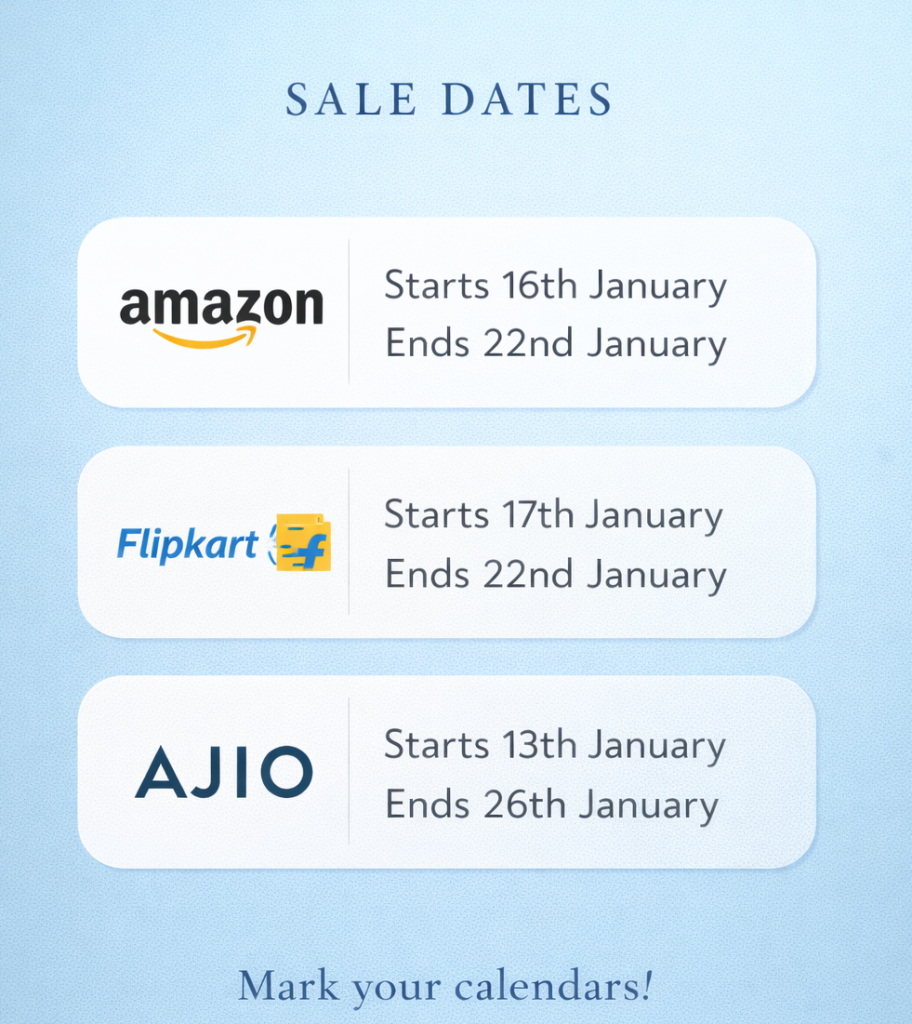
1. Marketplaces (Amazon, Flipkart, and Others): These platforms are the most anticipated by customers, offering huge discounts on fashion, accessories, shoes, personal care, electronics, furniture, and more. Here are the key sale dates for 2026.
2. D2C Websites and Brand Apps: Many brands also run Republic Day sales on their websites, in retail stores, or on mobile apps. These sales usually start earlier than marketplaces, often from 5th January to 26th January, giving loyal customers early access to deals. For example, PUMA India is currently running its Republic Day sale on its website and app.
3. Quick Commerce Platforms (Blinkit, Swiggy Instamart, Big Basket, & More): Quick commerce platforms cater to everyday and replenishment-led categories such as groceries, snacks, wellness items, and festive products. They focus on speed and availability, ensuring customers get what they need during the sale period. For example, Swiggy Instamart is currently offering up to 90% off to attract shoppers and drive traffic to its platform.
Which Brands Dominated Republic Day Sales Till Now?
As sales are coming to an end, most brands have already sold their products in large quantities. Some industries consistently dominate Republic Day sales in India, driven by strong demand, seasonal relevance, and value-led buying behavior.
1. Electronics & Accessories:
Electronic items like smartphones, earphones, soundbars, kitchen appliances, premium electronics, and durable goods continue to lead the sales, as consumers look to upgrade devices at discounted prices.
According to last year’s data, electronics contributed nearly 10–15% of the overall sales growth compared to the previous Republic Day weekend.
2. Beauty, Personal Care & Wellness:
Skincare and grooming products continued to see strong demand, as sale offers encouraged customers to repeat purchase in everyday-use categories.
According to Unicommerce data, beauty, wellness, and personal care recorded around 16% year-on-year growth in order volumes during the 2025 Republic Day sale period.
3. FMCG & Daily Essentials:
Everyday consumption categories such as staples, packaged foods, and household essentials saw strong participation across regions, as shoppers used the sale period to stock up on routine needs.
According to Unicommerce reports, health & pharma categories recorded over 80% year-on-year growth in order volumes, making them one of the fastest-growing segments during the Republic Day sale.
Key Trends Shaping Republic Day Sales 2026
Festive sales are no longer just one-time, discount-driven increases due to e-commerce growth in India. Based on Unicommerce data, an analysis of sales trends for 2025–2026 reveals that growth is becoming more behavior-driven and structural than just promotional. Order volumes, category mix, and channel performance demonstrate the need for companies to reconsider their sales tactics for tier-2/3 city engagement, technology-led execution, and repeat consumption.
According to Unicommerce research, Republic Day sales in 2026 will be characterized by the following four major trends:
1. Smaller Cities Are Taking the Lead:
- Smaller cities are emerging as major contributors to growth beyond metros.
- Tier 3 cities like Kolar (Karnataka), Rohtak (Haryana), Kamrup (Assam), Ernakulam (Kerala), and Khordha (Odisha) accounted for nearly 40% of total orders, with volumes growing by over 19% YoY.
- Tier 3 markets accounted for ~43% of food & beverage orders, while healthy food demand more than doubled in Tier 2 cities.
This trend highlights the expanding reach of e-commerce into smaller cities and online shopping trends in tier 2 and tier 3 cities.
2. Repeat Consumption Is Fueling Sales Growth:
- Order volumes grew 16.9% YoY, and GMV increased by 11.9%, driven more by frequent repeat orders than larger ticket sizes.
- FMCG & Agriculture (~80% YoY) and Beauty & Wellness (~53% YoY) were the fastest-growing categories.
- Popular items included dry fruits, millet-based foods, packaged healthy snacks, organic staples, face serums, body washes, and grooming essentials.
This reflects a shift toward habit-driven, repeat-buying behavior during sales.
3. Speed & Automation Win Customers:
- Quick commerce platforms grew ~25% YoY, while brand-owned websites grew ~23% YoY, with marketplaces continuing to handle the largest share of total orders.
- Brands increasingly use automation for real-time inventory management, order routing, and customer engagement.
This highlights that efficient execution and operational readiness are now as important as pricing or discounts in driving sales success.
4. AI Is the Secret Conversion Weapon:
- Over 2.5 million customer communications were sent via SMS, WhatsApp, and RCS during the sale period, boosting conversions.
- AI Voice Agent ‘Catalyst’ handled 1.2 lakh calls for last-mile order completion.
- Revenue from AI-driven engagement exceeded its cost, demonstrating AI is a high-yield growth lever.
This demonstrates that AI is a high-impact growth lever alongside speed and operational efficiency.
Why Even Big Brands Feel the Pressure During Republic Day?
But these growth trends also bring their own set of challenges. During high-volume sales like Republic Day, brands often feel the pressure on their operations, especially when it comes to dispatching, managing inventory, and fulfilling orders. At some point, even well-prepared brands can face bottlenecks that impact sales and customer experience.
Let’s take a closer look at the key problems brands encounter while managing inventory and operations during the Republic Day sales 2026:
- Multi-Channel Pressure: Selling simultaneously across marketplaces, D2C websites, and quick commerce platforms puts immense pressure on inventory management. Without centralized control, brands face stockouts, overselling, missed sales opportunities, and limited real-time visibility.
- Fulfillment and Delivery Bottlenecks: Sudden order surges can overwhelm warehouses and delivery partners, leading to dispatch delays. This challenge is especially critical for quick commerce, where customers expect fast and predictable delivery timelines.
- Channel Coordination Complexity: Orders flowing in from multiple online and offline channels make it difficult to align inventory movement and logistics planning. Poor system integration often results in uneven stock allocation across channels.
- Operational Scalability: Peak sale periods demand rapid scaling of order processing and workforce capacity. Manual or semi-automated operations struggle to keep pace, slowing dispatch and increasing error rates.
- Returns and Post-Sale Management: Higher order volumes naturally result in more returns and exchanges, increasing pressure on reverse logistics. Inefficient refund and restocking processes can erode customer trust and reduce repeat purchases.
Unicommerce Supporting the Next Phase of India’s E-Commerce Growth
Managing peak sales like Republic Day requires speed, accuracy, and end-to-end operational control, not just attractive discounts. With integrated solutions across the entire e-commerce lifecycle, Unicommerce helps brands handle high order volumes efficiently while aligning with online shopping trends in 2026.
Trusted by 7,500+ brands across India, Southeast Asia, and the Middle East, Unicommerce enables seamless scale. Its flagship platform, Uniware, processes over 1 billion order items annually, proving its ability to support large-scale operations.
Uniware – Centralized Operations Made Simple
The core of Unicommerce’s e-commerce operations is Uniware, its flagship platform. To ensure seamless operations during peak demand, it automates tasks and provides consolidated inventory visibility.
Key capabilities of Uniware include:
- Real-time multi-channel inventory tracking
- Automated order routing and processing
- Warehouse automation for faster, error-free fulfillment
- Returns and reverse logistics management
- Seamless scalability during high-volume sales
Shipway – Smarter Logistics & Delivery
Shipway is a full-stack logistics management software that guarantees economical, dependable, and quick delivery. It helps companies manage courier aggregation, shipping automation, and last-mile delivery to ensure orders reach customers on time.
Convertway – AI-Powered Customer Engagement
Convertway helps organizations engage high-intent customers and increase conversions by utilizing AI-driven communication. By sending timely reminders, notifications, and follow-ups via channels such as SMS, WhatsApp, RCS, and AI Voice Agents, marketers can improve customer satisfaction and convert traffic into sales.
Unicommerce’s comprehensive package of Uniware, Shipway, and Convertway enables brands to effectively manage peak Republic Day sales periods in India, turn operational complexity into a competitive advantage, and focus on expansion rather than firefighting.
FAQs:
1. What is the growth rate of the e-commerce industry in India?
India’s e-commerce industry is growing at a strong double-digit rate, driven by rising online shopping, deeper penetration into tier 2 and tier 3 cities, repeat consumption, and festive events.
2. What is the latest trend in shopping?
The latest online shopping trends include repeat purchases over one-time purchases, rapid growth in tier 2 and tier 3 cities, increased adoption of quick commerce, automation-led fulfillment, and AI-driven customer engagement via WhatsApp, SMS, and voice agents.
3. What is Flipkart Republic Day sale?
Flipkart Republic Day Sale is one of India’s biggest annual online sales events, offering heavy discounts across electronics, fashion, beauty, home essentials, and FMCG categories. It attracts high order volumes and plays a key role in Republic Day sales growth each year.
4. What does Amazon Great Republic Day sale 2026 start?
Amazon Great Republic Day Sale 2026 typically runs from mid- to late January, close to Republic Day, with early access for Prime members. The sale features major discounts across electronics, appliances, fashion, and daily essentials.
5. What is the future of e-commerce in 2030?
By 2030, India’s e-commerce growth will be driven by expansion into tier 2/3 cities, rapid adoption of quick commerce, AI-led personalization, automation, and omnichannel selling. Sales events and more will continue to be major growth catalysts rather than one-time discount spikes.
6. Which item is sold most online?
Electronics remain the top-selling category online, followed by beauty & personal care, FMCG, and daily essentials. During Republic Day sales 2026, electronics contributed 10–15% of sales growth, while FMCG and wellness categories recorded the fastest YoY growth.
7. What are the top trends of Republic Day Sale 2026 in India?
The key trends Republic Day Sale 2026 include strong demand from tier 2 and tier 3 cities, higher repeat purchases in FMCG and beauty categories, rapid growth of quick commerce platforms, and increased use of AI-driven customer engagement to boost conversions and order completion.
8. How did consumer behavior change during Republic Day Sale 2026?
One of the biggest trends Republic Day Sale 2026 revealed was a shift toward repeat consumption rather than high-ticket one-time purchases. Categories like FMCG, health, and wellness saw faster growth as customers stocked up on daily essentials during the sale period.
9. Which sales channels performed best during Republic Day Sale 2026?
Marketplaces continued to handle the largest order volumes, but brand-owned D2C websites and quick commerce platforms recorded faster year-on-year growth. These trends Republic Day Sale 2026 highlight the growing importance of omnichannel selling and faster fulfillment.
10. Why is operational efficiency a major trend in Republic Day Sale 2026?
Operational readiness emerged as a critical trend Republic Day Sale 2026, as high order volumes put pressure on inventory, warehouses, and delivery networks. Brands using automation, real-time inventory visibility, and AI-powered engagement were better equipped to manage demand and avoid fulfillment delays.