

“Just as beauty brands find their footing, the market shifts with a new trend, asking them to prove their worth once again.”
Beauty is expanding across geographies and demographics, with trends like K-beauty and glass skin pushing consumers beyond core categories into wellness, personal care, and aesthetic treatments. This is reshaping the selling journey of brands in the beauty and personal care industry.
Demand now moves faster than planning cycles, and backend operations are being tested at every step, from procurement and inventory placement to fulfilment speed and returns recovery.
Understanding Market Segmentation in the Beauty & Personal Care Industry
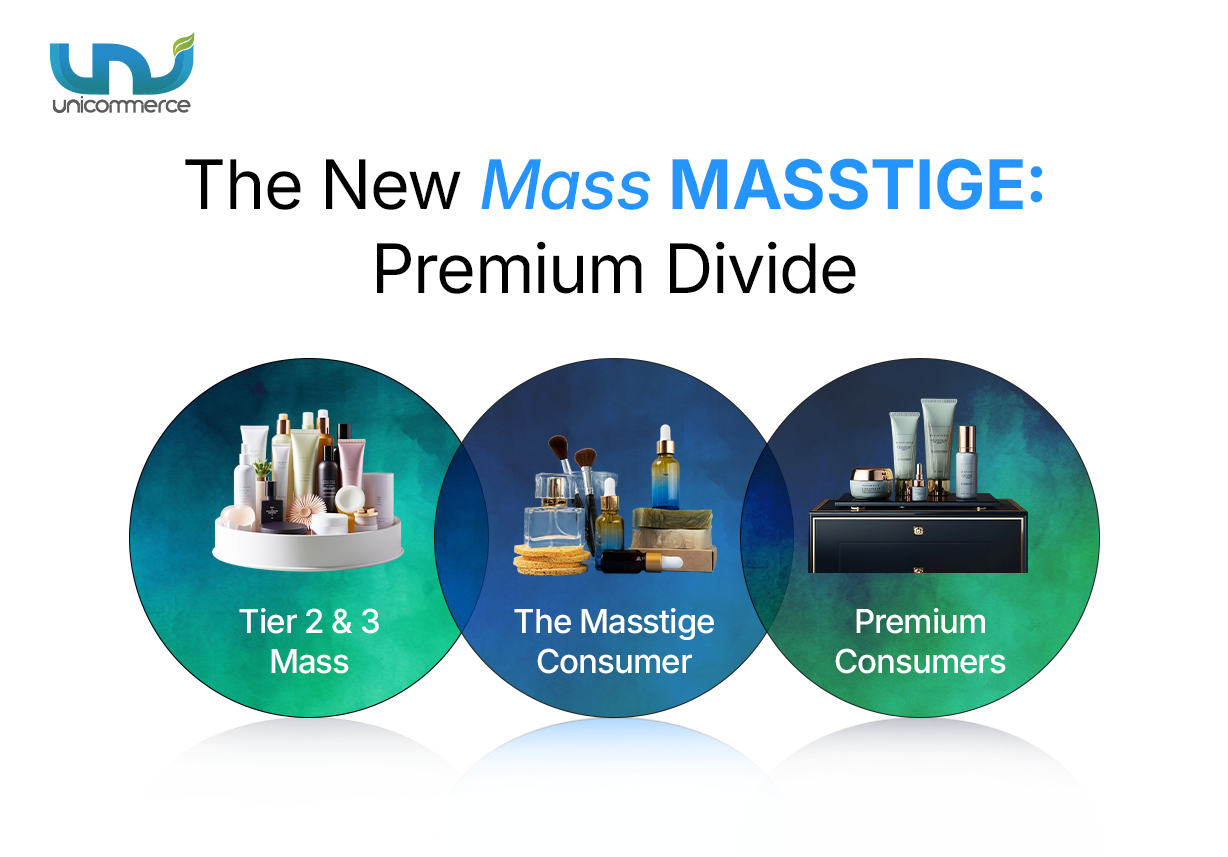
The Indian beauty market is no longer one homogeneous demand pool. It is now clearly split into three distinct consumer segments, each behaving differently and placing unique demands on how brands plan, distribute, and track inventory.
1. Tier 2 & 3 Mass Consumers
This segment continues to purchase beauty and personal care products for functional needs, cleansing, hygiene, and daily use. Price sensitivity, trust in familiar brands, and wide availability remain the primary decision drivers.
- Operational implication for brands
- Inventory needs broad geographic coverage
- Stock is typically pushed through high-volume, mass channels
- Availability matters more than assortment depth
2. The Masstige Consumer
This fast-growing middle segment blends mass buying behaviour with premium aspirations. Consumers here follow influencers closely, experiment with trending formulations, and respond quickly to UGC-driven launches.
3. Premium Consumers
A smaller but rapidly growing segment that prefers luxury, imported, or high-end formulations. While volumes are lower, expectations around freshness, packaging, and service are significantly higher.
How Beauty Brands Can Plan Their Inventory Distribution Across Channels- Nykaa, Myntra, Meesho & Others?
The beauty and Personal care Industry is the fastest-growing globally. There is a cutthroat competition out there! Being a beauty player, it’s really important to align with the evolving market segmentation. As competition intensifies, partnering with a specialized agency for health and wellness marketing can help beauty brands translate segmentation insights into sharper positioning, stronger marketplace visibility, and data-backed growth strategies across channels.
Understanding Channel Behaviour: Premium, Masstige, and Volume
Fragmented demand and faster trend cycles mean inventory distribution alone can’t keep up! Control and visibility now matter just as much.
| Challenges (Trend-Led Beauty) | Solution |
| Viral demand causes sudden stockouts | Buffer Inventory absorbs spikes and keeps high-intent SKUs available |
| Premium SKUs get misused or exhausted early | Reserve Inventory protects critical SKUs and preserves margins |
| Stock issues noticed too late | Real-Time Inventory Visibility enables instant rebalancing |
Now, when inventory distribution is sorted, here comes the order validation and further processing. Once inventory is in place, the selling journey enters the order validation and fulfilment cycle.
Top Beauty Trends Disrupting Your Order Fulfillment Cycle
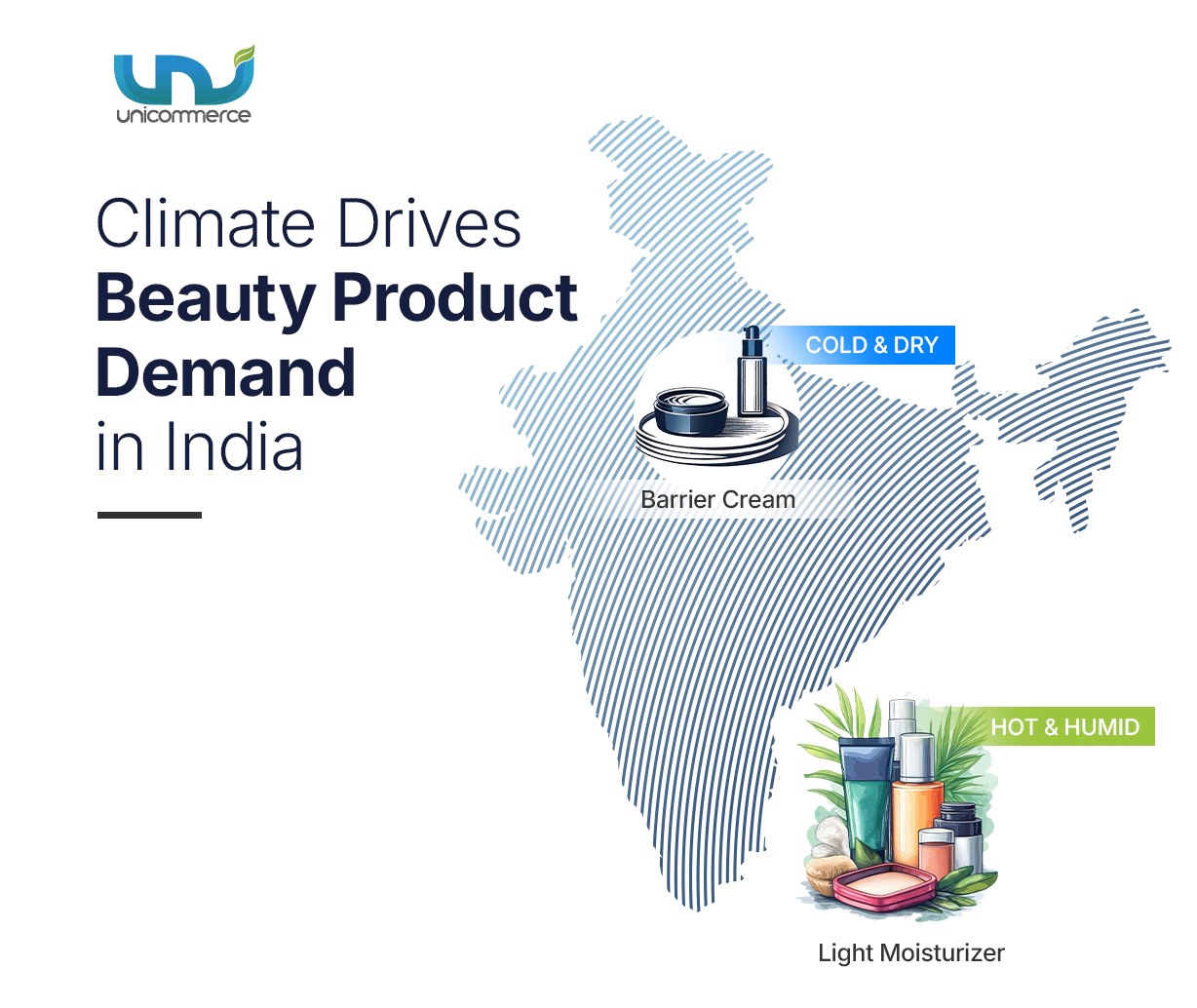
1. Regional and Climatic Demand Variation
‘Beauty trends shift by region; inventory mistakes show up by the order.’
Climate-driven preferences play a clear role. Richer barrier creams tend to see stronger demand in northern markets, while lighter moisturizers perform better in southern regions.
It’s only when orders for barrier creams start spiking that the gap becomes visible, sales outpace availability in the North, while the same inventory sits idle in eastern or southern locations where demand is low. By the time this mismatch is identified, the opportunity is already lost, and fulfillment teams are left reacting instead of fulfilling.
What Breaks When Inventory Is Misaligned with Demand
- Poor Fill Rate
When beauty brands miss emerging trends, inventory falls out of sync with demand. This leads to unfulfilled or partially fulfilled orders, cancellations, and customer churn—especially during viral product spikes.
- SLA Breaches on Marketplaces
Orders get accepted in high-demand regions, but stock isn’t physically available nearby. Fulfillment delays follow, pushing deliveries beyond promised SLAs.
- Overselling Despite “available” Inventory
Systems show stock on hand, but it’s sitting in low-demand or distant locations. By the time inventory is rerouted, orders are already oversold or cancelled.
- Higher Cancellations and RTOs
Delayed dispatch and missed delivery promises lead to customer cancellations and higher RTO, especially for COD-heavy beauty orders.
- Ranking and Visibility Penalties on Marketplaces
Repeated SLA misses and cancellations impact seller scores, reducing product visibility exactly when demand is peaking.
- Reactive Fulfilment Instead of Controlled Execution
Teams spend time firefighting, expediting transfers, splitting orders, or apologizing to customers, instead of fulfilling at scale.
2. Shrinking Trust Gap Between Global and Indian Beauty Brands
For a long time, premium beauty consumers gravitated toward international brands, often overlooking Indian alternatives due to perceptions around quality, consistency, and safety. That perception is now changing.
Brands like The Minimalist have proved in the D2C beauty space that in-house manufacturing and end-to-end supply chain control can match global standards and win premium consumer trust. This shift is important!
As more Indian beauty brands take manufacturing in-house, they gain greater control over formulations, quality checks, batch management, and timelines. But this control also raises expectations internally. Once production is owned, execution gaps can no longer be blamed on vendors; the entire order flow becomes the brand’s responsibility.
This is where operations start to matter as much as the product itself. Brands manufacturing in-house need a robust order management backbone to keep pace with growing demand and multi-channel selling.
That typically means:
- Automated picking, packing, and dispatch to ensure consistency and speed at scale
- End-to-end visibility into where every order stands—queued, packed, dispatched, or delivered
- Marketplace-level insights to understand which channels are driving volume, value, and repeat demand
As consumer trust shifts toward Indian brands that demonstrate control and consistency, the winning differentiator is no longer just formulation; it’s the ability to run a tight, transparent, and scalable order operation. In today’s beauty market, changing perceptions are closely tied to how well brands manage their end-to-end selling journey.
3. Stepification of Skincare & the Rise of Combo Offers
Skincare in 2026 is no longer about single products — it’s about complete routines. Consumers now follow structured sequences like cleanser → toner → serum → moisturizer → SPF, and many brands promote step-by-step kits such as “Glass Skin Routine,” “Barrier Repair Combo,” “Anti-Acne 4-Step Set,” and “Hydration Essentials Bundle.”
As shoppers prefer buying the entire routine instead of individual SKUs, demand for combo packs and curated bundles keeps rising across marketplaces and D2C websites.
How an OMS Helps Brands Handle Combo & Bundle Demand
- Bundle-level stock checks ensure all items are available before an order is confirmed.
- Smart kit mapping links each component SKU correctly, preventing bundle mismatches.
- Automated allocation routes bundle orders only to warehouses that can fulfil every item.
- The Rising Demand for Skincare & What It Means for Operations
4. The Rising Demand for Skincare & What It Means for Operations
With growing awareness around sun damage, barrier health, and long-term skin protection, consumers are increasingly shifting toward science-backed skincare like sunscreens, moisturizers, serums, and barrier-repair products.
Surveys such as Unilever’s global study (10,000 respondents across the U.S., India, China, etc.) show that 74% of consumers now expect beauty products to genuinely improve how they feel, not just enhance appearance. This shift toward efficacy-focused skincare has created steady, year-round demand spikes, especially for functional categories like sunscreen, moisturizers, and targeted treatments.
How an OMS Helps Skincare Brands Stay Ahead
- Real-time inventory sync to prevent overselling during sudden demand spikes.
- Centralized visibility across marketplaces and D2C sites to control allocation.
- Replenishment alerts for fast-depleting actives to avoid mid-sale stockouts.
5. AI-Recommendation-Driven Shopping (TikTok, Instagram, Nykaa AI)
Decoding beauty has become increasingly complex, from understanding ingredients and hair textures to analysing routines and verifying brand claims. Navigating all of this can feel overwhelming. That’s why consumers are shifting from traditional Google searches to AI-powered assistants like ChatGPT, with nearly 17% now relying on AI chatbots to get clear, personalized beauty guidance.
Unlike traditional trends where one product goes mainstream, AI tools analyze each user’s skin type, routine, concerns, budget, and past purchases to suggest their best match.
- One user gets recommended a ceramide moisturizer
- Another gets a peptide serum
- Someone else sees a tinted SPF
- Another gets matched to a vitamin C essence
- A different user sees a hair repair mask
This leads to parallel demand spikes across multiple SKUs rather than a single predictable curve. For order management, this means:
- Multiple SKUs hit fast-mover status at once
- Stockouts happen across variants, not just one SKU
All this leads to dips in fulfillment rate because operational pressure spreads across the catalog.
How Unicommerce Helps Beauty Brands Stay Aligned with Ongoing Trends
Beauty trends today don’t break slowly; they spike, fragment, and shift regionally. Unicommerce helps beauty and personal care brands stay ahead by bringing speed, control, and visibility to backend operations, at scale.
Built for Trend Volatility at Scale
Unicommerce powers operations for 7,000+ brands, processing 101 Cr+ transactions annually across 10,540++ warehouses and fulfilment locations. This scale matters in beauty, where demand can surge overnight and fade just as fast.
- Reduces Stockouts During Regional Demand Spikes
With real-time, location-wise inventory visibility, brands can spot demand–inventory mismatches early and rebalance stock before SLAs are hit.
- Prevents overselling even when demand spikes regionally
- Helps brands maintain 99.9%+ fulfilment accuracy during peak periods
- Reduces ageing inventory caused by misaligned SKU placement
- Protects Marketplace SLAs & Rankings
Unicommerce uses SLA-aware order routing to fulfil orders from the most suitable location, based on proximity, availability, and channel priority.
- Fewer delayed dispatches
- Lower cancellations and RTOs
- Better seller scores during high-traffic sale periods
This is critical when trend-led demand peaks on marketplaces like Nykaa and Myntra.
- Handles Combo, Kit & Routine-Based Demand Smoothly
As skincare shifts to step-based routines, Unicommerce ensures combo orders don’t break fulfilment logic.
- Bundle-level stock checks before order confirmation
- Automated kit allocation only where all components are available
- No partial fulfilments or last-minute order cancellations
- Brands convert more routine-led demand without increasing support overhead.
- Minimises Errors Across High-Variant Catalogs
Beauty brands deal with hundreds of similar-looking SKUs. Unicommerce’s barcode-driven picking and packing reduces mispicks across shades, actives, and SPFs.
- Fewer wrong dispatches
- Lower returns due to variant mismatch
- Better customer experience for premium buyers
- Enables In-House Manufacturing & Omnichannel Expansion
For brands manufacturing in-house and expanding offline, Unicommerce provides a single operational view across online and physical inventory.
- Track where every order stands: packed, dispatched, or delivered
- Monitor inventory ageing across warehouses and stores
- Identify which channels drive volume vs margin

FAQs
1. What is missing in the beauty industry’s growth model today?
The beauty industry is missing operational readiness and talent maturity to support rapid demand growth. While platforms like Nykaa have scaled discovery and access, backend capabilities such as skilled operations teams, structured inventory planning, and sustainable execution have not scaled at the same pace.
2. Why is skilling and upskilling a major gap in the beauty ecommerce ecosystem?
Skilling and upskilling remain gaps because beauty ecommerce operations are far more complex than traditional retail. Managing high-SKU catalogs, expiry-led inventory, combo kits, and multi-channel fulfilment requires specialised skills that most teams are not formally trained for.
3. How does the lack of upskilling affect beauty brands selling on Nykaa?
Lack of upskilling creates execution gaps that impact fulfilment accuracy, SLA adherence, and customer experience. Even with strong demand on Nykaa, untrained teams struggle with inventory allocation, bundle handling, and trend-led demand spikes, leading to cancellations and returns.
4. What is missing in sustainability efforts within the beauty industry?
Most sustainability efforts in the beauty industry focus on ingredients and packaging, while operational sustainability is often overlooked. Inefficient inventory placement, overproduction, high returns, and expired stock continue to create hidden environmental and cost impacts.
5. Why are sustainable practices difficult to implement at scale in beauty ecommerce?
Sustainable practices are difficult to scale because beauty operations often lack real-time visibility and process discipline. Without clear tracking of inventory ageing, movement, and fulfilment accuracy, brands struggle to reduce waste or measure sustainability outcomes.
6. What needs to change for the beauty industry to grow sustainably?
The beauty industry needs stronger skilling, better operational visibility, and process-led execution to grow sustainably. As demand accelerates through marketplaces, AI-driven discovery, and influencer-led commerce, long-term growth will depend on trained teams and efficient backend operations.