
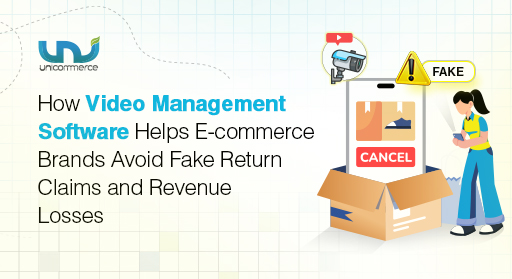
E-commerce brands often face major challenges when dealing with fake return claims. Marketplaces like Myntra have already introduced measures such as Tagloop to address this issue. However, for brands selling across multiple channels, a more robust solution is required, one that records every detail of the packing and dispatch process to provide verifiable proof against fraudulent returns. This is where a Video Management System (VMS) comes in. It captures the entire packing workflow, documenting elements like order ID, product label, condition, and color, ensuring complete visibility and accountability.
In this blog, we’ll explore what fake returns are, how they impact e-commerce businesses, and how a Video Management System (VMS) can help brands tackle this issue at multiple levels, from warehouse operations to finance reconciliation.
How Fake Returns Impacts E-commerce Brands: Time, Money, and Credibility
With India’s e-commerce growing fast in tier 2& 3 cities, most orders are still cash-on-delivery, which often leads to more returns, and many times these returns are fake. Here are some repercussions of fake returns that every e-commerce brand faces:
Reverse Logistics Cost: As per India’s reverse logistics Market report 2022- 2027, India’s reverse logistics costs are expected to reach USD 39.81 Bn by 2027, growing at a CAGR of 6.15%. This highlights how RTOs (Return to Origin) and CIRs (Customer Initiated Returns) continue to drain revenue, and during the festive season, these losses can multiply because the possibility of a fake return is high.
Revenue Loss: Return fraud isn’t just a minor annoyance; it’s a significant leak in revenue. Even small false claims add up when volumes are high during festive sales.
Disrupt Inventory Management : Fake returns disrupt inventory management when the returned item doesn’t match the system data and remains unidentified in the warehouse. This creates confusion for sellers, who struggle to classify it as a ‘fake product’without reliable proof or as a ‘valid inventory’ item ready for resale.
Reconciliation Chaos: Fake returns disrupt financial accuracy during reconciliation, creating serious challenges for e-commerce sellers. When refunds are issued without the actual product being returned, order, refund, and inventory data fall out of sync. The system may show a completed return, but the physical stock and financial records tell a different story, leading to mismatched payment entries, inflated return volumes, and avoidable revenue losses. Without concrete proof, sellers spend hours manually verifying disputes, turning reconciliation into a frustrating, time-consuming process that delays settlements and affects profitability.
When businesses receive fake returns, they can raise a claim to either the marketplace platforms or logistics players. But, without reliable proof, it becomes challenging to file a claim.
Fighting Returns Without Reliable Proof Is a Losing Battle
Fighting fake return claims on marketplaces or with logistics partners is one of the toughest challenges for e-commerce sellers. The process demands detailed proof like photos, order IDs, and courier scans, but without reliable, time-stamped evidence, most claims get rejected.
Manual records or QC notes don’t hold up when buyers allege damage or send back a fake product. Marketplaces often side with customers, leading to refunds without genuine returns, delayed settlements, and mounting revenue loss. Over time, this not only impacts profit but also lowers seller ratings and marketplace visibility.
What Is a Video Management System (VMS) and How It Works
A Video Management System (VMS) specifically captures the critical stage when an order is being packed or a returned item is being unpacked for inspection. This ensures there is visual proof that the product was in good condition before it was dispatched to the customer.
In the case of returns, if a damaged product is received, the recorded footage helps validate that the item was shipped in proper condition, allowing sellers to file claims with marketplaces or logistics partners confidently. It acts as a solid layer of protection against fake damage claims and disputes, helping brands maintain accountability and transparency throughout the fulfillment cycle.
It automatically records & links the packaging video with scan identifiers and AWB no. It helps ensure accuracy, prevent fake return claims, and resolve disputes quickly by providing time-stamped visual proof of every order movement.
How VMS Empowers Every Function Across E-commerce Operations
From warehouse floors to finance desks, VMS ensures transparency, traceability, and trust across every stage of order fulfillment.
Warehouse Managers: VMS gives warehouse managers complete visibility and control over packing and dispatch operations. Every order is automatically recorded, helping them identify packing errors, track accountability, and ensure SOP compliance. With quick access to visual proof, warehouse teams can resolve internal errors faster and maintain accuracy even during peak order volumes.
Operations Managers: For operations managers, VMS brings end-to-end transparency across the fulfillment process. Each step, from picking to return, is time-stamped and verifiable through video, reducing disputes and improving SLA adherence. It helps optimize workflows, spot bottlenecks, and improve overall operational efficiency.
Finance Heads: A VMS empowers finance teams with reliable visual proof during reconciliation and claim filing. Since marketplaces often side with consumers in case of disputes, sellers are required to provide solid evidence to support their claims. With video footage attached to each transaction, brands can easily prove that products were dispatched in good condition, helping accelerate claim approvals and prevent unjust deductions. This not only ensures financial accuracy but also protects sellers from fraudulent refunds and streamlines the overall audit and dispute resolution process.
Business Owners & Leadership: For business leaders, VMS acts as a profit protection tool. It reduces losses from fake returns and fulfillment errors, builds credibility with marketplaces, and enhances customer trust through transparency. As operations scale, VMS ensures sustained accuracy and accountability without increasing manpower or costs.
Ensure Faster, Transparent Claim Resolution With VMS
Sellers often lose margins due to the lack of proper evidence during claim resolution, making the process time-consuming and frustrating. When teams are stuck resolving disputes from past sales, it becomes difficult to focus on scaling their e-commerce operations.
That’s where Unicommerce’s Video Management System (VMS) comes in a one-stop solution designed to simplify claim management and improve operational transparency. The VMS automatically records and links packaging videos and images with the corresponding scan identifiers and AWB numbers, eliminating the need for separate tools or manual setups. It’s fully integrated within the Unicommerce system, ensuring a seamless experience for warehouse and finance teams alike.
With Unicommerce’s Video Management System, e-commerce brands can achieve:
Accurate Inventory Tagging – Easily classify items as good or damaged during return inspections, with every step recorded for accountability.
Plug-and-Play Camera Compatibility – Works effortlessly with existing CCTV setups, so there’s no need for new hardware or installation.
Secure Cloud Storage & Access – All videos are stored safely in the cloud, making it easy to retrieve evidence for claims, audits, or marketplace verification anytime, anywhere.
Bring transparency and accountability to every shipment with Unicommerce’s Video Management System. Schedule a Free Demo Today.
FAQs
1. What is a Video Management System (VMS) in e-commerce?
A Video Management System (VMS) records every step of the order packing, dispatch, and return inspection process. It provides time-stamped visual proof, helping e-commerce brands prevent fake return claims and improve accountability.
2. How do fake returns impact e-commerce businesses?
Fake returns lead to revenue loss, disrupt inventory management, increase reverse logistics costs, and create reconciliation issues. They can also harm seller ratings and reduce marketplace visibility if not addressed properly.
3. How does VMS help prevent fake return claims?
VMS captures detailed footage of packing and return inspections, linking videos to order IDs and AWB numbers. This allows sellers to provide verifiable evidence during disputes, ensuring faster claim approvals and protecting profits.
4. Which e-commerce functions benefit most from VMS?
Warehouse managers, operations teams, finance heads, and business leaders all benefit. VMS improves operational transparency, ensures SOP compliance, streamlines claim resolution, and protects revenue across departments.
5. Can VMS integrate with existing e-commerce systems?
Yes. Solutions like Unicommerce’s VMS are designed to integrate seamlessly with existing e-commerce workflows and CCTV setups. Videos are securely stored in the cloud and linked with order details for easy retrieval during audits or claims.