
As a seller, you know the thrill of seeing your products in the hands of satisfied customers. But reaching those customers—no matter where they are—can be a challenge. Every touch point, whether online, on your D2C website, or in physical stores, represents an opportunity to connect with potential buyers.
Imagine your products showcased not just on your own website, but also on popular marketplaces like Amazon or Flipkart. This widespread visibility isn’t just about being everywhere your customers are; it’s about being ready to meet their needs at every step of their buying journey.
But how can you effectively achieve this? The answer lies in adopting a strategy known as multichannel selling.
Now, let’s delve into what multichannel selling is and how it can elevate your business to new heights.
What is Multichannel Selling?
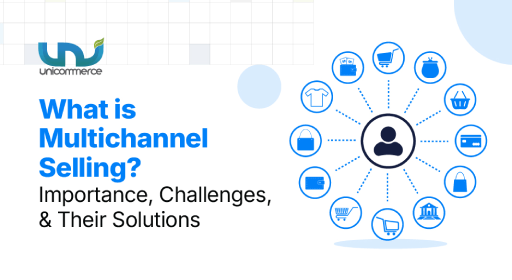
Multichannel selling refers to the strategic distribution of products or services through multiple sales channels, both online (e.g., websites, marketplaces, etc.) and offline (e.g., retail stores). The primary objective of multichannel selling is to enhance accessibility and convenience for your customers at the same time leveraging the strengths of different sales channels.
An excellent example of multichannel selling is Bata, a footwear retailer. Bata sells its footwear through its website (D2C channel), but also their physical retail stores across India, allowing customers to try on footwear in-store before purchasing online.
Also, they collaborate with online marketplaces like Amazon to reach a broader audience. This multichannel approach has enabled Bata to cater to diverse customer preferences and expand its market presence effectively.
Why Do We Need Multichannel Selling?
In this highly competitive e-commerce ecosystem, the need for multichannel selling has become increasingly important. Here’s why you should embrace this strategy:
1. Meeting Customers Where They Are
Today’s consumers expect convenience and choice. Multichannel selling allows businesses to reach customers on their preferred platforms, whether it’s through online marketplaces or physical stores.
By being present across multiple channels, businesses can capture sales from different customer segments. For instance, a fashion and beauty brand can attract online clothing shoppers through platforms like Myntra, at the same time engaging makeup shoppers on platforms such as Nykaa.
2. Creating Different Revenue Streams
Relying on a single sales channel can expose your business to risks such as market fluctuations or channel-related issues. For instance, if an online marketplace changes its algorithms or fees, it can impact sales unexpectedly. However, if you’re selling on different sales channels like your own e-commerce website and physical stores, you can easily reduce these risks.
If there is a disruption in one channel, others can continue to contribute to overall revenue. This approach provides stability and protection against unforeseen challenges in the marketplace.
3. Staying Ahead in Changing Landscape
Buyers today expect seamless access to products across various sales channels. Whether they first see a product in-store and later decide to purchase it online, businesses must adapt to this multichannel behavior to remain competitive.
Failing to do so risks losing customers to competitors who effectively leverage multiple channels to meet customer expectations and capture sales opportunities.
4. Centralized Data for Informed Decision-Making
By selling through multiple channels, you can collect data that provides deep insights into your customer behavior and preferences. This data includes valuable parameters such as customer demographics, purchase patterns, product preferences, and geographic locations.
For example, data collected from online marketplaces may reveal which products are top sellers in different regions or among specific customer segments. At the same time, data from a direct-to-consumer website can provide insights into customer browsing behaviors and conversion rates.
By systematically analyzing this data, sellers can refine their marketing strategies and optimize product listings across platforms, thereby enhancing customer experiences.
Multichannel vs. Omnichannel: What is the difference & Which is Better?
We now know what multichannel selling is but omnichannel selling also enables sellers to sell on multiple platforms.
So how is omnichannel selling different from multichannel selling?
While both approaches involve selling products through multiple channels, they differ significantly in their scope and execution.
- Multichannel Selling: This strategy involves businesses selling their products through more than one channel, such as their own website, online marketplaces, and physical stores. Each channel operates independently, targeting different customer segments and providing various shopping experiences.
- Omnichannel Selling: Unlike multichannel selling, omnichannel strategy focuses on creating a seamless and integrated shopping experience across all channels. Its primary focus is to provide consistency in branding, customer service, and product offerings regardless of the channel through which a customer interacts with the brand.
What are the Key Differences between Multichannel and Omnichannel Selling?
- Customer Experience: Omnichannel seeks to provide a unified and cohesive experience across all channels, while multichannel may offer varied experiences based on each channel’s capabilities.
- Integration: Omnichannel requires tighter integration between different channels and systems to ensure a seamless experience, whereas multichannel channels may operate more independently.
- Consistency: Omnichannel ensures consistency in branding, messaging, and customer service, whereas multichannel allows for more flexibility in channel-specific strategies.
While both strategies aim to expand market reach, omnichannel selling goes a step further by focusing on a unified customer experience across all touchpoints.
Challenges of Multichannel Selling
Implementing multichannel selling has several benefits, but it also comes with its own set of challenges. Here are some difficulties you may encounter when taking your business multichannel:
1. Juggling Inventory Across Channels
Managing inventory across multiple sales channels can be a complex task. You need to ensure accurate stock levels to avoid situations where you either run out of products (stockouts) or have too much inventory (overstock). This requires real-time synchronization of inventory data across all platforms.
For example, imagine you’re running low on a particular SKU. If a customer buys that product from your physical store while another customer simultaneously places an order for the same item on your website, your inventory system needs to update instantly to reflect both sales. This ensures that you don’t oversell or disappoint customers by having to cancel orders.
Using robust multichannel inventory management software can help streamline this process by automatically updating stock levels across all channels.
2. Creating a Consistent Customer Journey
Each sales platform, whether it’s an online marketplace, your own website, or a physical store, has its unique requirements and customer expectations. For providing a top-notch customer experience you need to ensure that your branding, messaging, and customer service remain consistent across these platforms.
For instance, a customer should receive the same level of service and satisfaction whether they purchase from your website or a third-party marketplace.
3. Managing Cost of Multiple Channels
Managing costs across multiple sales channels can be like juggling multiple balls at once. Each platform comes with its own set of expenses, from listing fees and commissions on marketplaces to rent and utilities for physical stores. Also, marketing across these channels also adds up, as each platform requires its own tailored campaigns and advertising budget.
Along with that handling inventory across different channels involves costs for storage, shipping, and logistics management. Thankfully, multichannel management software simplifies this complexity by providing a centralized dashboard.
This tool allows businesses to manage listings, process orders, and handle returns from a single interface, streamlining operations and reducing the burden of managing multiple logins and platforms.
4. Coordinating Shipping and Fulfillment
With orders coming in from various channels, coordinating shipping and fulfillment logistics can create challenges for your business. Different channels may have their own shipping requirements, pricing structures, and delivery expectations. Managing these shipping needs efficiently while ensuring timely delivery and cost-effectiveness requires careful coordination.
Using an efficient multichannel order management software can make your processes easy. These systems consolidate and capture order information from all channels and present it on a single platform. They automate tasks such as comparing shipping rates, selecting the most suitable carriers based on factors like speed and cost, generating shipping labels, and tracking deliveries in real time.
This not only optimizes fulfillment operations and reduces shipping costs but also enhances customer satisfaction through reliable and timely deliveries.
5. Returns and Reconciliation
Returns and reconciliation are two critical aspects of e-commerce that extend beyond the delivery of a product. When a customer initiates a return or if a delivery cannot be completed by the logistics partner, these processes become essential.
Each sales channel has its unique policies and procedures for handling returns and reconciliation. For instance, some platforms may offer free returns, while others require customers to cover return shipping costs.
Managing these different policies is important for maintaining customer satisfaction and operational efficiency. The sellers have to ensure that there are accurate inventory updates after returns.
Also, aligning financial records across multiple channels when processing refunds requires attention to detail and integration with internal accounting systems. You can easily streamline these processes with the help of a returns management system and advanced reconciliation tools.These technologies can significantly reduce manual work and errors while at the same time enhancing the overall business efficiency in multichannel selling.
Let’s Expand Our Reach and Go Multichannel!
Nowadays multichannel selling isn’t just an option but a necessity for businesses looking to scale up. This approach not only expands your market reach but also builds resilience by diversifying sales channels, reducing dependency on any single platform.
Integrating advanced multichannel management software into your existing business framework can help you streamline operations by providing a centralized platform to manage listings, process orders, and handle returns seamlessly across all channels.
So are you ready to go multichannel? Make the move and expand your reach today!
FAQs
1. What is multi channel selling in eCommerce?
Multi channel selling in eCommerce refers to selling products across multiple platforms such as your own website, online marketplaces, social commerce channels, and physical stores. This approach helps businesses reach customers wherever they prefer to shop.
2. How is multichannel retailing different from single-channel selling?
Multichannel retailing allows businesses to sell through more than one sales channel, while single-channel selling relies on only one platform. Multichannel retailing increases visibility, reduces dependency on one channel, and creates multiple revenue streams.
3. What is the difference between multi channel retailing and omnichannel retailing?
In multi channel retailing, each sales channel operates independently. In contrast, omnichannel retailing focuses on creating a seamless, integrated customer experience across all channels. Both strategies support growth, but omnichannel emphasizes deeper integration.
4. Why is multi channel ecommerce important for growing brands?
Multi channel ecommerce helps brands expand their reach, improve customer convenience, and stay competitive in a rapidly changing digital landscape. By selling across multiple platforms, businesses can attract different customer segments and increase overall sales.
5. What are the key challenges in managing multichannel sales?
Managing multichannel sales can be challenging due to inventory synchronization, order processing, shipping coordination, and maintaining consistent customer experience across platforms. Using centralized order and inventory management systems helps overcome these challenges.
6. How does multichannel retailing improve customer reach?
Multichannel retailing allows businesses to meet customers on their preferred platforms—whether marketplaces, D2C websites, or offline stores. This increases brand visibility and captures demand from shoppers with different buying behaviors.
7. Is multichannel selling suitable for small and mid-sized businesses?
Yes, multichannel selling is suitable for small and mid-sized businesses, especially when supported by automation tools. With the right technology, even growing brands can efficiently manage listings, inventory, and orders across multiple channels.
8. What tools are required to manage multi channel selling efficiently?
To manage multi channel selling effectively, businesses need multichannel inventory management, order management, shipping integration, and returns management software. These tools help centralize operations and reduce manual errors.
9. What is the reason that orders from different sales channels mismatch without an order management system?
Without an OMS, each channel operates separately, causing delayed sync, duplicate orders, and inventory mismatches. This leads to overselling and fulfillment errors. Unicommerce OMS centralizes all channels to prevent order mismatches.
10. What is the reason that large brands require central order management software for all channels?
Large brands need central OMS to unify orders from marketplaces, websites, and offline stores into one system. This ensures accuracy, faster fulfillment, and better control. Unicommerce OMS provides centralized order visibility and control.
11. Why do brands running multiple stores and websites need omnichannel retail software?
Brands need it to unify inventory, orders, pricing, and customer data across all channels. It ensures consistent customer experience and efficient operations. Unicommerce omnichannel solution helps brands scale seamlessly across stores and websites.