

The beauty and personal care world sparkles with glamour and hype, with constant innovation and exciting product experiences. New textures, fresh routines, and fast-moving trends keep customers hooked, but a brand can only sustain this excitement when its backend operations run just as flawlessly.
In 2026 and beyond, beauty brands will win not just because they create great products, but also because their operational engine is strong enough to deliver them consistently, as by 2026, almost ⅓ rd of global beauty sales will come from online channels, pushing brands to optimize digital operations and fulfillment.
This blog brings together everything you need to know about the beauty and personal care industry, its upcoming dynamics in 2026, operational challenges, and the solutions that help brands stay ahead. Stay tuned!
What’s Fueling the Boom in Beauty & Personal Care in 2026
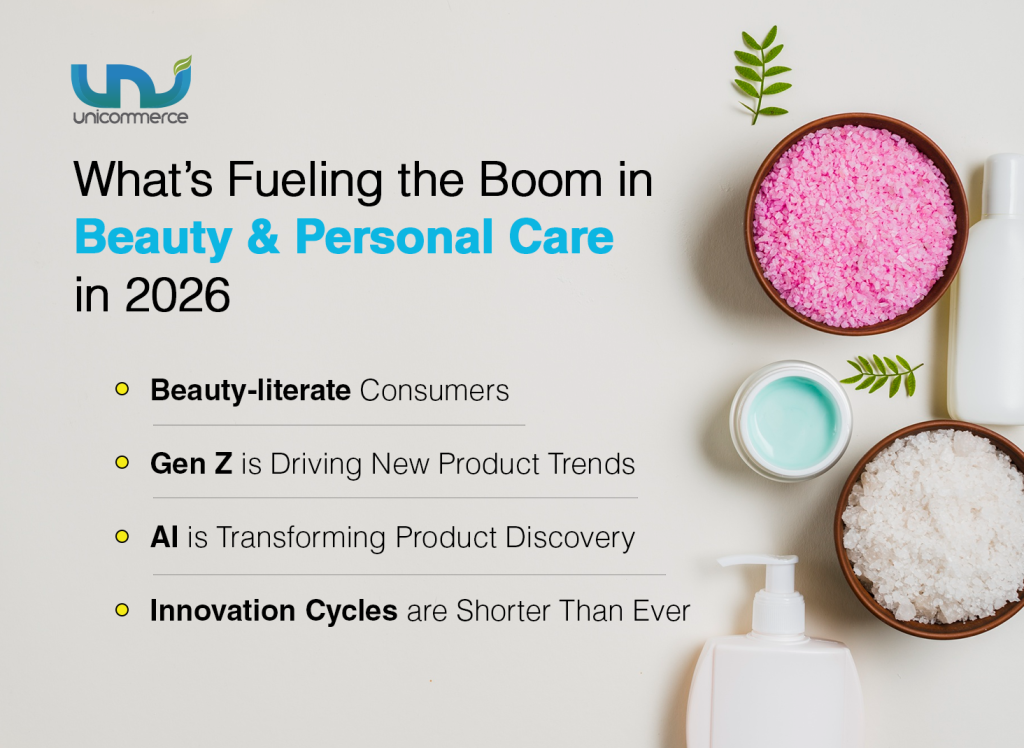
1. Beauty-literate Consumers:
Shoppers now understand terms like glass skin, barrier repair, skin cycling, and slugging, leading to more informed and specific product expectations.
2. Gen Z is Driving New Product Trends:
Brands like Dot & Key are launching unique textures, playful packaging, and fast-innovation formats designed for Gen Z’s tastes.
3. AI is Transforming Product Discovery:
Nykaa’s Trend Report highlights that such AI-led guidance can boost conversions by up to 62%. That’s why many brands are shifting to prioritize AI-led product recommendations as these tools help shoppers in making more personalized and confident decisions.
4. Innovation Cycles are Shorter Than Ever:
Micro-trends, influencer recommendations, and social media virality require faster launches and more flexible inventory planning.
A Look Back and a Look Ahead at BPC Trends Shaping 2026 and Beyond
The beauty and personal care industry has evolved rapidly since 2020, shaped by shifting consumer expectations and digital transformation. Between 2020 and 2024, demand surged for wellness-focused, health-conscious, clean beauty, organic formulations, and cruelty-free products. Shoppers became more aware of what they put on their skin, prioritizing ingredients, transparency, and sustainability.
In 2026 and the years ahead, this evolution accelerates even further. Several major shifts are redefining how beauty brands operate:
1. Stronger Social Media Influence:
Platforms like TikTok, YouTube, and Pinterest now dictate buying decisions. Influencer product reviews, GRWM videos, and viral trends can cause overnight spikes in demand, making inventory planning more volatile than ever.
2. Hyper-Personalization Becomes the Norm:
Consumers expect beauty solutions tailored to their skin tone, skin type, lifestyle, and concerns. From serum strengths to curated routines, personalization drives SKU expansion and requires more agile inventory strategies.
3. Rise of Customized Beauty Offerings
Brands like Traya have proven that personalized, diagnosis-based product combinations work. This trend will grow, prompting brands to handle more kitting, bundling, and variable SKU combinations.
4. Shift Toward Plant-Based and Functional Ingredients
Ingredient-conscious shoppers prefer botanical actives, vitamin-based formulas, and science-backed products.
5. Smarter, Data-Led Consumer Decisions
With ingredient checkers, reviews, and AR tools available instantly, consumers are making more intelligent, research-driven purchases. Brands must maintain accurate product data, real-time availability, and consistent stock across all channels.
Overall, the beauty and personal care industry from 2026 to 2035 will be shaped by personalization, sustainability, technology, and smarter consumer expectations, all of which bring unprecedented pressure on inventory, warehousing, and order management systems.
Top 7 Trend-Driven Inventory Challenges and How to Fix Them
1. Natural Beauty Products Increase the Risk of Dead Stock
Today’s consumers are far more conscious about checking the ingredient lists, especially for products like serum, facewash, shampoo, and various other cosmetic products. That means, consumers are more interested in buying products with natural ingredients, which have less shelf life. That’s what creates another operational hurdle for sellers, who must track expiry dates very closely. If the products lie in the warehouse unnoticed, they may become deadstock soon. All these situations call for the strict implementation of FIFO and FEFO inventory rotation.
- Minimizes expiry losses
- Prevents dead stock
- Ensures product freshness
- Improves batch tracking
2. The Inclusivity-Led Inventory Chaos Challenge
Today’s beauty shoppers, especially Gen Z, expect brands to be inclusive, which has pushed cosmetic companies to launch a wider variety of shades across foundations, lipsticks, and other products. A single red lipstick can easily have 30–100 undertones, and each one becomes a separate SKU. Multiply that across categories, shade ranges, and seasonal launches, and brands end up managing thousands of SKUs every day.
Manually tracking shades, updating stock after every sale, and maintaining accuracy across multiple channels becomes nearly impossible at this scale. This is where a barcode-enabled Inventory Management System (IMS) steps in and completely simplifies SKU-heavy operations.
- Accurate SKU Tracking
- Error-Free Stock Counts
- Faster Picking & Packing
- Real-Time Inventory Sync
- Lower Expiry & Dead Stock
- Higher Fulfillment Accuracy
3. Counterfeit Surge Creates a New Returns Challenge
Counterfeit products have flooded the market, with reports indicating that up to 67% of branded items sold online may be fake. This creates a serious challenge for ecommerce sellers, especially during returns. Brands often receive counterfeit or tampered products back from customers, making SPF (Seller Protection Fund) claims difficult to defend without solid proof.
4. Video Management System (VMS) as Proof of Authenticity
With the rise of high-demand beauty trends, counterfeit returns have also grown sharply. As popular products like serums, foundations, and high-priced skincare items go viral, some customers return fake or used products in place of the originals. This has become a serious challenge for ecommerce beauty brands, especially during peak sales or fast-moving trend cycles. Brands often receive counterfeit items during returns, making SPF claims difficult and leading to heavy losses.
A Video Management System (VMS) helps solve this by recording the entire packing process, giving brands solid proof that the product shipped was authentic, sealed, and undamaged. This protects sellers from fraudulent returns and ensures accountability across every order.
- This video proof strengthens SPF claims
- Reduces losses from fraudulent returns
- Protects the brand from counterfeit-related risks.
5. Stepified Beauty Routines Are Driving Demand for Combo Offers
Beauty and personal care brands are now offering complete routines, serums, face wash, moisturizers, vitamin-based products, and combo kits to give customers a holistic experience. But this also means sellers must create bundles, track multiple SKUs together, and ensure each kit contains the right components every time.
A strong Inventory Management System (IMS) makes this seamless by:
- Tracking individual SKUs and bundled SKUs in real time
- Automating kitting and de-kitting workflows
- Ensuring accurate stock deduction for each component in the kit
- Preventing missing items or wrong combinations during packing
- Maintaining visibility of both parent bundles and child SKUs
(bundling skincare routines, limited-edition kits, seasonal packs brands offer products in bundles rather than standalone SKUs)
6. Why Omnichannel Matters
Today’s consumers expect a consistent experience across every touchpoint—offline stores, brand websites, marketplaces, and even quick-commerce platforms. A shopper may visit a store to check texture, fragrance, or product quality, but still choose to buy online for the convenience of doorstep delivery, access to exclusive shades, or to bundle multiple products that might not be available in-store.
This behaviour makes omnichannel presence essential for beauty and personal care brands. It ensures that no matter where the customer discovers, evaluates, or buys a product, the experience is smooth, connected, and reliable.
How Omnichannel Helps Beauty & Personal Care Brands
- Unified Product Experience
- Seamless Product Discovery
- Improved Convenience
- Real-Time Inventory Sync
7. Trend-Driven Demand Makes Inventory Planning Highly Unpredictable
Beauty and cosmetic products are heavily influenced by fast-moving trends, for instance, viral lip shades, seasonal skincare routines, influencer-led launches, and sudden ingredient-based hype. These trends often spike quickly and fade just as fast, making it difficult for brands to predict demand accurately. Overstocking puts sellers at risk of holding unsold inventory that may expire, while understocking leads to stockouts and missed revenue opportunities.
How the Inventory Management System Resolves this
One Unified Dashboard Helps Decision-Making
All channels tracked in one place
Quick access to demand reports and sales trends
Closing Insights for the Beauty & Personal Care Industry
While the front-end of the industry sparkles with innovation, the real success of Beauty and personal care brands depends on how strong and stable their backend operations are. It includes everything from managing thousands of SKUs, tracking expiry-sensitive inventory, handling counterfeit-prone returns, processing combo kits, and running omnichannel fulfillment. That’s why beauty brands need systems that can keep pace with trends and consumer expectations.
This is exactly where Unicommerce becomes a powerful enabler.
With enterprise-grade OMS + WMS capabilities, Unicommerce helps beauty and personal care brands run seamless operations across marketplaces, Q-commerce platforms, brand websites, and offline stores.
How Unicommerce Supports Beauty & Personal Care Operations
- Real-time inventory sync across all channels
- Batch, lot, and FIFO method for short-shelf-life SKUs
- Barcode-led accuracy for high-SKU categories like shade ranges
- Kitting and bundling workflows for step-based beauty routines
- Video Management System (VMS) integration for SPF claim support
- One unified dashboard for inventory, orders, and warehouse flows
With these capabilities, Unicommerce ensures that beauty brands not only keep up with trends but also fulfil every order with precision and consistency. See how a leading beauty brand achieved 4× order volume growth with a 99.9% order fulfillment rate using Unicommerce.

FAQs
1. What is the FIFO method and why is it important for beauty e-commerce?
The FIFO (First In First Out) inventory method ensures that older stock is sold before newer batches. For beauty and personal care brands, FIFO reduces expiry-led losses, prevents dead stock, and improves freshness — especially important for natural, short-shelf-life products.
2. How does the first-in first-out inventory method help manage trend-driven demand?
The first -in first-out inventory method helps brands cycle inventory efficiently during trend spikes. When viral products surge in demand, FIFO ensures accurate batch rotation, better forecasting, and minimal wastage, even when trends change rapidly.
3. What challenges do beauty brands face with trend-driven demand in 2026?
Beauty brands in 2026 struggle with fast innovation cycles, SKU explosion due to inclusivity, counterfeit returns, personalized routines, and volatile demand. These challenges require stronger inventory planning, smarter warehouse systems, and strict FIFO implementation.
4. How can FIFO help reduce expiry losses for natural beauty products?
Natural products have shorter shelf lives, making expiry tracking critical. Using FIFO, brands ensure the earliest manufactured batch moves out first, reducing wastage, improving batch visibility, and maintaining high product quality.
5. How does inventory management impact the order fulfillment rate in beauty e-commerce?
A robust inventory management system with real-time sync, barcode accuracy, and FIFO automation significantly boosts the order fulfillment rate. Brands can process orders faster, reduce mispicks, avoid stockouts, and maintain consistent delivery performance.
6. What tools help beauty brands maintain a high order fulfillment rate?
Systems like Unicommerce offer OMS + WMS capabilities, FIFO-based batch and lot tracking, barcode-led accuracy, VMS proof for returns, and unified dashboards all of which improve the order fulfillment rate and reduce operational errors.