
The right retail inventory management software is the one that fits your business. It should match your operational workflows, integration requirements, budget, and growth plans. But exploring so many options with different features can be overwhelming. The key is to identify what matters most to your business before comparing software and choosing one. Before you compare any retail inventory management system for your e-commerce business in the Philippines, here are some questions you should be asking yourself:
- Will the software work with our existing technology stack, or will we need to change it?
- Where do we face the most inventory-related errors?
- What inventory decisions do we want the software to help us make?
Beyond these questions, there are several other factors to consider before choosing a retail inventory management system. That’s exactly what this guide is for. We’ve broken down 10 smart tips to help you evaluate different retail inventory management systems and choose one that aligns with your business needs, operations, and growth plans.
Why Do Businesses Need a Dedicated Retail Inventory Management System?
A dedicated retail inventory management system helps businesses keep track of stock across sales channels and locations, reduce manual inventory work, and maintain accurate stock records as order volumes grow.
Manual inventory processes often become difficult to manage as e-commerce businesses handle more orders, SKUs, and sales channels. Teams may have to update stock across Shopee, Lazada, TikTok Shop, and spreadsheets while checking mismatched counts, returns, and stock adjustments. During sale periods, these manual tasks can lead to overselling, stockouts, delayed order processing, and errors in inventory records.
What You Need to Know About the Growth and Scope of E-commerce in the Philippines:
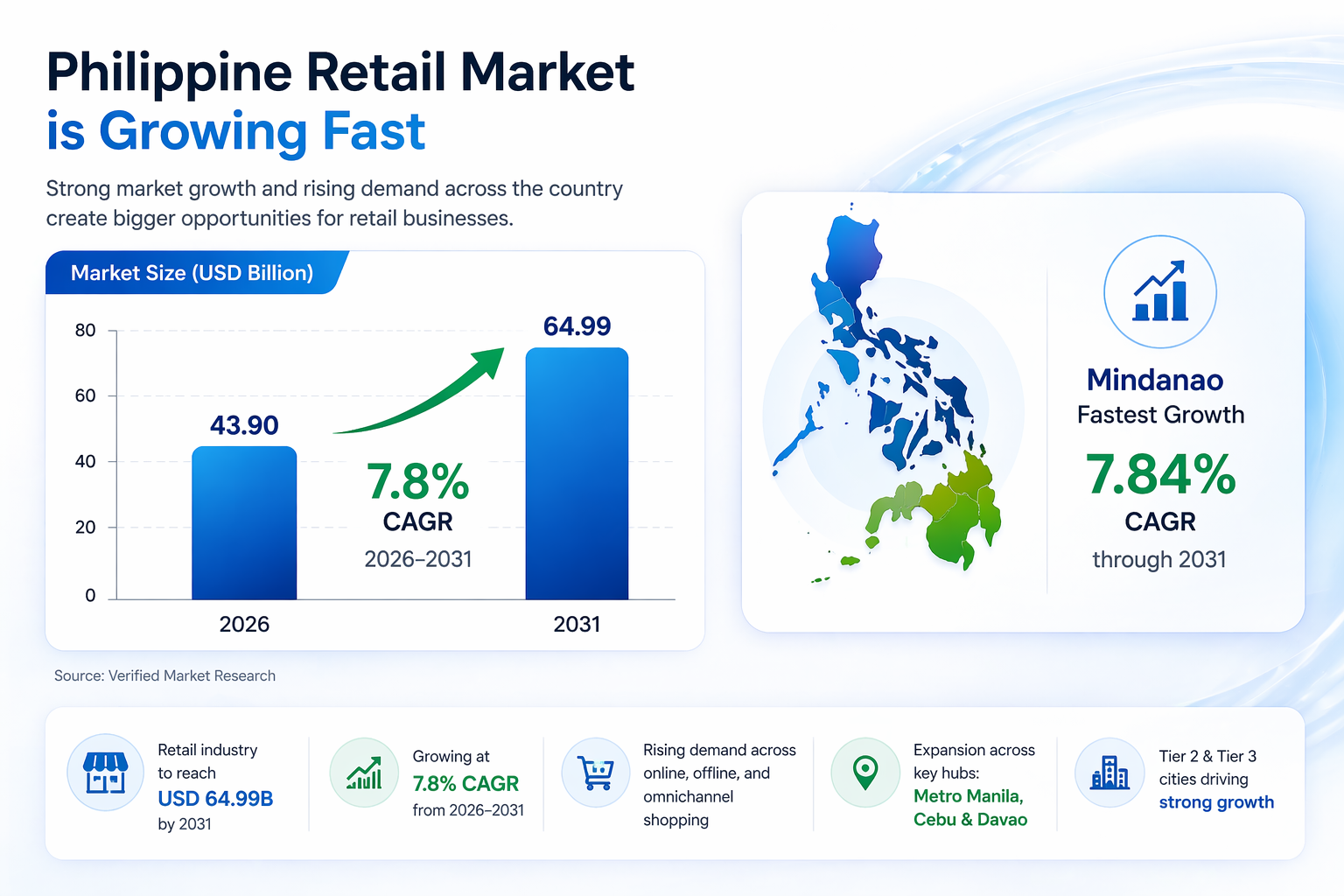
- The Philippine retail industry is projected to reach USD 64.99 billion by 2031, growing at a 7.8% CAGR from 2026 to 2031.
- Online selling is spread across multiple marketplaces. Shopee holds 42% of the Philippine e-commerce marketplace share, followed by Lazada at 28% and TikTok Shop at 12%.
- Businesses are expanding their fulfillment networks. Multi-warehouse operations are growing across major demand hubs such as Metro Manila, Cebu, and Davao, adding more locations to track and manage inventory across.
- Demand is also spreading beyond major cities. Tier 2 and Tier 3 cities across Visayas and Mindanao are seeing greater digital shopping adoption, with Mindanao’s retail market forecast to grow at a 7.84% CAGR through 2031.
- Inventory errors can be costly. Stockouts and overstocks continue to create significant losses for businesses globally, making inventory accuracy an important operational priority.
For an e-commerce business, this means more channels, locations, and inventory movements to keep track of. Managing them manually can become harder as the business grows. A retail inventory management system brings these processes into one system, giving teams better visibility and reducing the need to update and reconcile inventory manually.
Why More Retailers Are Moving to Modern Retail Inventory Management Systems?
A retail inventory management system is software that tracks, monitors, and manages your stock from the moment it enters your warehouse to the moment it reaches your customer. It helps brands maintain accurate inventory across warehouses, stores, and online sales channels from one central system.
For Philippine brands, this has become more important than ever as customer demand grows across multiple channels and businesses expand into multiple warehouse locations. Consumers now shop through marketplaces, websites, social commerce platforms, and offline stores, while expecting fast delivery and accurate stock availability every time.
To understand why this matters now, just look at how quickly the Philippine retail and eCommerce market is growing:
- The Philippine retail industry is projected to reach USD 64.99 billion by 2031, growing at a 7.8% CAGR from 2026 to 2031.
- In the Philippines eCommerce marketplace race, Shopee holds 42% market share, followed by Lazada at 28% and TikTok Shop at 12%.
- Multi-warehouse operations are rising as brands expand fulfillment across major demand hubs like Metro Manila, Cebu, and Davao to reduce delivery times and improve customer reach.
- $1.73 trillion is lost globally every year due to stockouts and overstocks.
- Tier 2 and Tier 3 cities are rising fast, especially across Visayas and Mindanao, as infrastructure improves and digital shopping adoption grows. In fact, Mindanao is forecast to record the fastest 7.84% CAGR through 2031 in the retail market.
These stats point to one clear answer: as the Philippine retail market grows, brands can no longer rely on manual processes or outdated systems to manage inventory efficiently. Rising online demand, multi-channel selling, and faster delivery expectations now require smarter operations.
The practical solution is a robust, AI-powered retail inventory management system built for modern retail complexity. It helps brands stay accurate, agile, and ready to scale without losing control of stock.
That is why more brands are switching to retail inventory management systems with modern features such as:
- Real-time stock visibility across all channels
- Automatic inventory sync to reduce overselling
- Faster replenishment of fast-moving products
- Better forecasting based on actual demand
- Centralized management for multiple warehouses
- Higher order accuracy and improved customer satisfaction
The need is clear, but the next challenge is choosing the right system. Not every retail inventory management solution is built for the fast-moving needs of Philippine brands. Some only handle basic stock tracking, while others are designed to support multi-channel growth, multiple warehouses, and rising customer expectations.
To help you make the right decision, here are 10 smart tips to choose the best retail inventory management system for your business.
How to Choose the Best Retail Inventory Management System for Multi-Channel Retail?
The best retail inventory management system should provide real-time inventory visibility, automate stock updates, integrate with all sales channels, and support multi-warehouse operations. Before choosing one, evaluate its integrations, inventory tracking, order management, reporting, scalability, and ease of use. The right system should help prevent overselling, reduce manual work, maintain accurate stock levels, and give your team a single view of inventory across marketplaces, D2C websites, social commerce, and offline stores.
To make that decision easier, here are the key things to look for when choosing the best retail inventory management system for multi-channel retail:
Tip 1: Know Your Business Size and Complexity First
Before you even book a product demo, get clear on what your business actually needs.
A small boutique in BGC managing 200 SKUs has very different needs from a multi-branch pharmacy chain tracking 5,000+ products across 20 locations. The right system for one business may be unnecessary or completely unsuitable for another.
So, before purchasing, ask yourself:
How many products do I currently manage?
Do I sell across multiple channels (online + offline)?
Do I have multiple warehouses or store branches?
How often does my product mix change?
If you are a growing retailer, choose a system based on where your business will be in the next 2–3 years. Switching systems during a growth phase can be costly, time-consuming, and disruptive.
Tip 2: Prioritize Real-Time Stock Visibility
If your inventory data is 24 hours old, it is already outdated. The best retail inventory management systems update stock levels the moment a sale happens, whether that sale comes from Shopee, your physical store, or a walk-in order. This ensures every sales channel works with the same live inventory numbers.
Without real-time stock visibility, you risk:
- Accepting online orders for products that are already sold out in-store
- Sending staff to pick items that are not actually available at the listed location
- Making restocking decisions based on outdated inventory data
Tip 3: Choose a System Built for Multi-Channel Retail
Filipino shoppers browse on Shopee, purchase on Lazada, pick up in-store, and return through walk-ins, sometimes all within the same week.
Your retail inventory management system should connect all these touchpoints and automatically sync stock across every channel. So, before choosing a system, ask the vendor directly:
- Does it integrate with Shopee, Lazada, and TikTok Shop?
- Does it connect with your existing POS system?
- Can it support same-day or next-day fulfillment workflows?
Tip 4: Look for Automated Reordering and Demand Forecasting
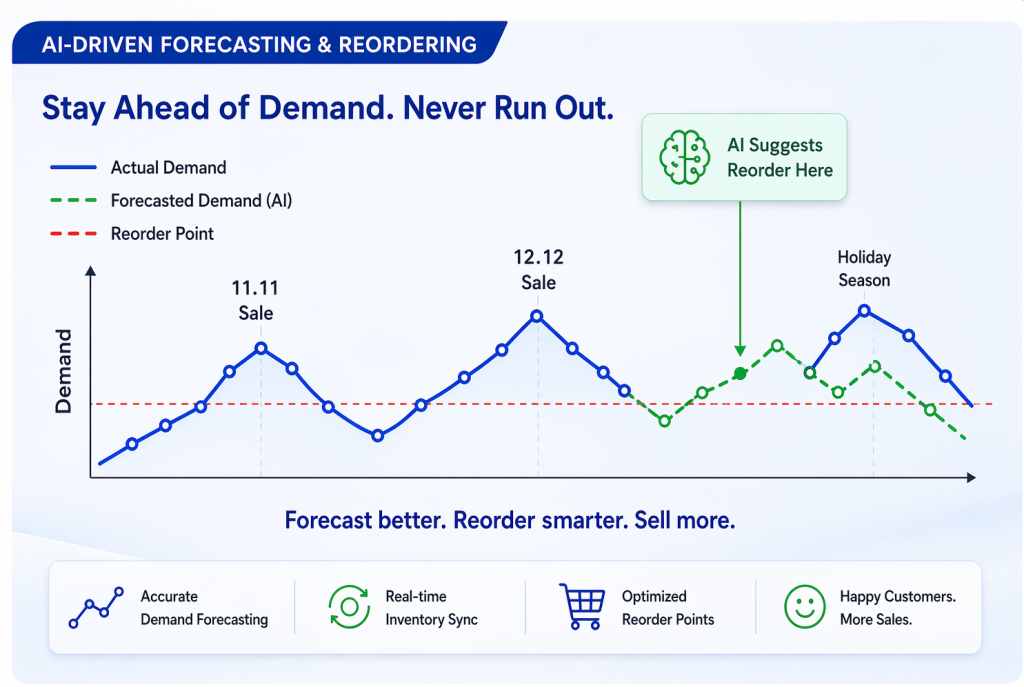
Running out of your best-selling product before a holiday weekend is a common retail mistake, and often an expensive one.
Businesses using AI-driven forecasting can reduce inventory errors by 20–50%, as it prevents errors with automated reorder points and demand forecasting based on past sales trends.
Look for features such as:
- Automatic low-stock alerts
- Reorder point triggers
- Sales-based demand forecasting
- Seasonal demand planning
- Suggested reorder quantities
Tip 5: Evaluate Total Cost of Ownership
When comparing retail inventory management systems, many businesses focus only on the monthly subscription price. That can be misleading.
The real cost often includes:
- Implementation and setup fees
- Staff training costs
- POS or eCommerce integration charges
- Customer support fees
- Upgrade costs for more users or features
Tip 6: Don’t Overlook Ease of Use for Your Team
A powerful retail inventory management system only works if your team can use it easily. If the system feels complicated, teams often avoid it, make mistakes, or return to manual workarounds.
During evaluation, ask for a live demo and see if daily tasks feel simple. Look for:
- Easy-to-use dashboard
- Simple workflows
- Quick staff training
- Local support resources
- Fewer manual steps
Tip 7: Make Sure It Handles Philippine Tax and BIR Compliance
Your retail inventory management system should support some Philippines tax and BIR compliance and many global tools need extra customization for local compliance.
Before choosing, check for:
- BIR-compliant receipts
- Tax-ready reports
- CAS support
- Local compliance experience
- Existing Philippine customers
Tip 8: Test Scalability Before You Commit
Your business will grow, and your system should grow with it. A scalable retail inventory management system should handle:
- More SKUs as your catalog expands
- More users as your team grows
- More branches or warehouses
- More sales channels and marketplaces
Ask vendors about plan limits, upgrade costs, and how easy expansion is.
Tip 9: Ask About Reporting and Analytics Capabilities
Good inventory management is not just about knowing what stock you have. It is about knowing what your data is telling you.
The right retail inventory management system should help you answer questions like:
- Which products sell fastest?
- Which items have been sitting too long?
- Which branch runs out of stock often?
- What is the stock-to-sales ratio across locations?
If a system only shows stock counts without useful insights, it is only doing half the job. Choose one with dashboards and reports that support smarter buying, pricing, and planning decisions.
Tip 10: Verify Vendor Support and Local Presence
When something goes wrong, fast support matters.
For Philippine retailers, ask:
- Is there a local support team or partner?
- Are support hours aligned with Philippine business hours?
- Is support included in the plan?
- Is onboarding help available?
A vendor with limited support or overseas-only timings can create delays during peak sales or month-end operations. Choose a provider that understands the Philippine retail market and can support you when it matters most.
So, before choosing the right inventory management system, go through the quick checklist below to make a smarter and more confident decision:
quick check ✎
Five things your retail software should already be doing
Tap each one. See how many feel true.
See how Unicommerce handles all of this →
check all five first
Now that you know what to look for, the good news is you do not have to compromise on these features. Unicommerce is the solution that checks all these boxes for a growing retail business.
From real-time inventory visibility to multi-channel operations and scalable growth support, it is built for the needs of modern retail.
But why should you trust Unicommerce? Find out in the next section.
Why Unicommerce Is Trusted by Fast-Growing Retail Businesses?
Fast-growing retail businesses need more than basic inventory software. They need a system that connects inventory, orders, warehouses, and sales channels while providing the visibility needed to manage increasing operational complexity.
Unicommerce helps brands manage these operations from a single SaaS-based platform, with capabilities designed for multi-channel and multi-warehouse retail. Its performance across growing businesses includes:
- 99.99% fulfillment accuracy for reliable order processing
- Real-time reporting to monitor inventory, orders, and operational performance
- Centralized control across warehouses and multiple sales channels
For retailers scaling across marketplaces, D2C websites, and physical stores, these capabilities help reduce manual work, improve inventory visibility, and manage growing order volumes from one platform.
Final Thoughts
Choosing retail inventory management systems is a growth decision because the right system helps prevent stockouts, reduces manual work, and gives you better control over what to buy, when to restock, and how much inventory to keep. It helps solve problems before they impact revenue.
For Philippine retailers, investing in the right system today means building a stronger foundation for future growth, whether that means more branches, more marketplaces, or wider distribution.Take time to compare your options and choose a solution that does more than manage inventory. Choose one that helps your business grow faster and operate smarter.
Looking for a retail inventory management system built for your brand? Start with a free demo and see how the right system transforms your operations from reactive to ready.
FAQs:
1. What is a retail inventory management system?
A retail inventory management system is software that helps businesses track, manage, and update stock across warehouses, stores, and online sales channels. It improves stock accuracy, reduces errors, and helps retailers make faster decisions.
2. Why do Philippine retailers need retail inventory management systems?
Philippine retailers often sell through Shopee, Lazada, TikTok Shop, websites, and physical stores at the same time. Retail inventory management systems help keep stock synced across all channels and prevent overselling or stockouts.
3. Which is the best retail inventory management system for growing businesses in the Philippines?
The best retail inventory management systems for growing businesses are those that offer real-time stock visibility, multi-channel integrations, warehouse management, reporting, and scalability. Solutions like Unicommerce are designed for fast-growing retail brands.
4. Can retail inventory management systems integrate with Shopee and Lazada?
Yes, modern retail inventory management systems can integrate with Shopee, Lazada, TikTok Shop, and other marketplaces. This helps businesses manage stock, orders, and fulfillment from one platform.
5. How do retail inventory management systems reduce stockouts?
Retail inventory management systems use real-time stock updates, automated reorder alerts, and demand forecasting to help businesses restock on time and avoid running out of fast-selling products.
6. Are retail inventory management systems useful for small businesses in the Philippines?
Yes, retail inventory management systems are useful for both small and large businesses. Even small retailers benefit from better stock accuracy, faster order handling, and fewer manual errors.
7. Do retail inventory management systems support multiple warehouses?
Yes, many retail inventory management systems are built to manage multiple warehouses, store branches, and fulfillment centers from one dashboard. This helps expand Philippine brands.
8. Can retail inventory management systems help with BIR compliance?
Many retail inventory management systems support tax-ready reports, receipts, and integrations required for Philippine compliance. Businesses should always confirm BIR-related features before choosing a provider.
9. How much do retail inventory management systems cost in the Philippines?
The cost of retail inventory management systems depends on features, the number of users, warehouses, integrations, and support needs. Businesses should compare total ownership cost, not just monthly pricing.
10. How do I choose the right retail inventory management system?
Choose a retail inventory management system based on your business size, number of SKUs, sales channels, warehouse needs, reporting requirements, and future growth plans. Always request a demo before making a decision.
11. Can Retail Inventory Software Integrate With POS Systems and Sales Channels?
Yes, retail inventory software can integrate with POS systems, e-commerce platforms, and online marketplaces to provide centralized inventory visibility across sales channels. The integration typically works through:
- Real-time inventory syncing: Sales from stores or online channels automatically update available stock.
- Unified product catalog: SKUs, pricing, variants, and product information can be managed centrally.
- Omnichannel fulfillment: Businesses can support options such as buy online, pick up in-store (BOPIS) and ship-from-store.
- Centralized order visibility: Orders from different channels can be tracked and fulfilled through a connected system.
12.What are the costs and deployment options for retail inventory management solutions?
The cost of retail inventory management software depends on the deployment model, number of users or locations, features, integrations, and implementation requirements. Common deployment options include:
Cloud-based SaaS: Usually involves a recurring subscription and requires less upfront investment. It is suitable for retailers looking for faster deployment and automatic updates.
On-premises: Requires upfront licensing, hardware, and IT maintenance costs but offers greater control over infrastructure and data.
Hybrid deployment: Combines cloud and on-premises systems, making it suitable for retailers with existing infrastructure and specific operational requirements.
Additional costs may include implementation, customization, integrations, training, and ongoing support.
13.What Features Should I Look for in Retail Inventory Management Software for a Small Store?
For a small store, retail inventory management software should cover the essential processes of tracking stock, managing sales and purchases, and knowing when to reorder. Look for these key features:
- Real-time inventory tracking: Monitor current stock levels as sales and purchases occur.
- Low-stock alerts and reorder management: Get alerts when stock reaches predefined levels and manage replenishment.
- POS integration: Automatically update inventory when a product is sold.
- Barcode scanning: Quickly record sales, stock receipts, and inventory movements.
- Sales and inventory reports: Track sales trends, stock levels, and fast- or slow-moving products.
- Supplier and purchase order management: Manage suppliers and create and track purchase orders.
- Accounting integration: Sync sales and purchase data with accounting systems to simplify financial records.