
Inventory was supposed to be your biggest asset.
You planned your purchases, studied trends, and stocked up with confidence expecting those products to turn into steady sales. For a while, everything worked. Orders were coming in, shelves were moving, and the business felt in control.
But then something changed.
A few products stopped selling. At first, it didn’t seem like a big deal. Maybe demand slowed, maybe customers shifted preferences. You decided to wait it out. Weeks passed… then months. Those same products were still sitting in your warehouse untouched.
Slowly, they started taking up more than just space.
They began locking your cash flow. You couldn’t reinvest in new, trending products. Storage costs kept increasing. Your team spent time managing inventory that wasn’t bringing in any revenue. What once felt like an investment was now quietly turning into a liability.
That’s the reality of dead stock also known as obsolete inventory.
In fast-moving ecommerce markets, where trends change overnight and customer expectations keep evolving, even a small forecasting mistake can snowball into unsold inventory. And the longer it sits, the harder it becomes to recover its value.
The good news? Dead stock is not just a problem, it’s a solvable one.
In this Blog, we’ll walk you through:
- What dead stock really means (and how it differs from slow-moving inventory)
- Why it can significantly impact your business
- The most common reasons it builds up
- Proven strategies to prevent and reduce it
- And practical ways to clear existing dead stock without heavy losses
Because in ecommerce, it’s not just about selling more, it’s about making sure what your stock actually sells.
What Is Dead Stock?
Dead stock refers to inventory that has remained unsold for an extended period and is unlikely to be sold in the future. It represents products that no longer have active demand in the market and are essentially stuck in your warehouse without generating revenue.
Dead stock is often used interchangeably with obsolete inventory, especially when items have become outdated, expired, damaged, or irrelevant due to changing market trends. While some products become dead stock due to poor planning, others are impacted by external factors like seasonality, competition, or shifts in customer preferences.
Examples of Dead Stock
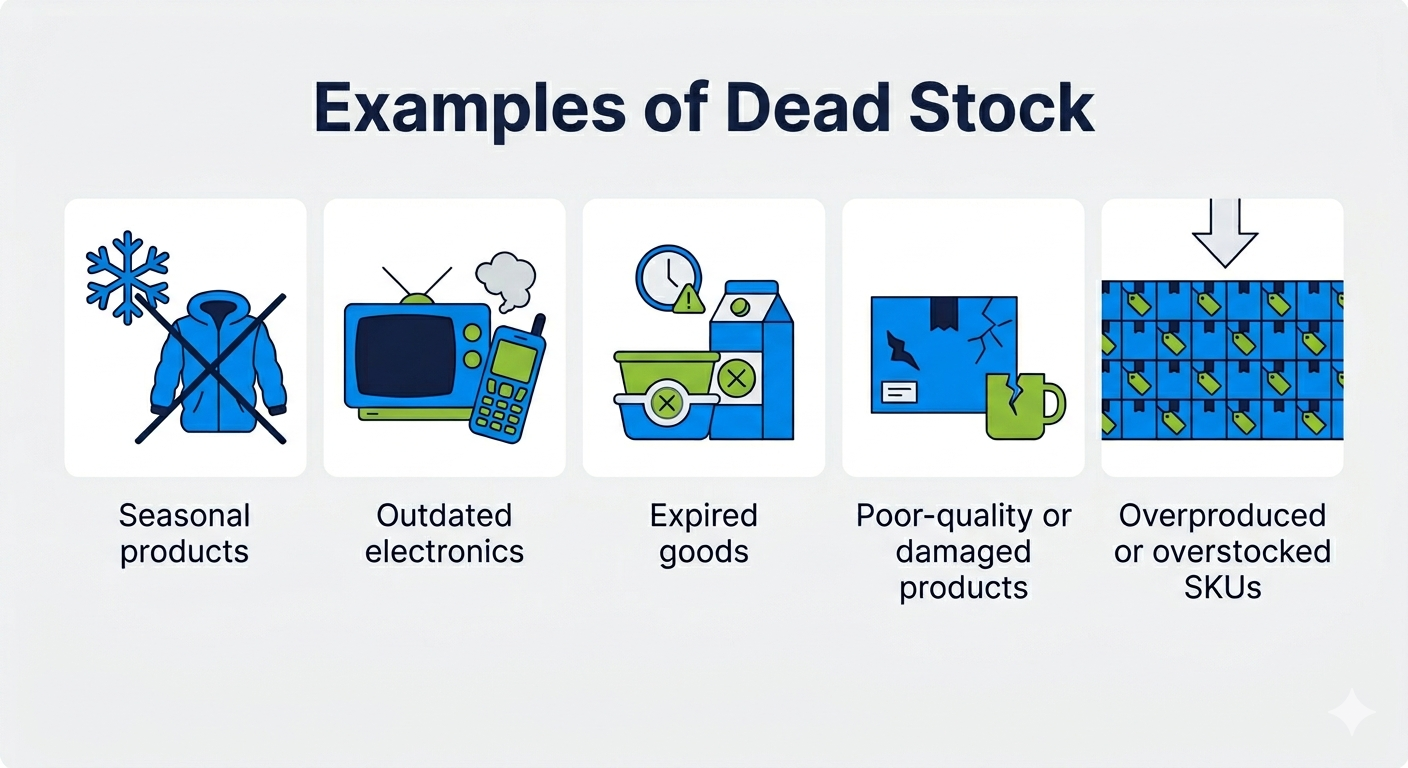
Here are some common scenarios where inventory becomes dead stock:
-
Seasonal products:
Items like winter jackets, festive décor, or seasonal fashion that didn’t sell during peak demand periods often become unsellable once the season ends.
-
Outdated electronics:
Gadgets and devices lose value quickly as newer models are launched, making older versions less attractive to customers.
-
Expired goods:
Perishable items such as cosmetics, food, or medicines can become dead stock once they cross their usable shelf life.
-
Poor-quality or damaged products:
Items that fail quality checks or get damaged during storage or transit are difficult to sell.
-
Overproduced or overstocked SKUs:
Ordering or manufacturing more than required often due to inaccurate demand forecasting leads to excess inventory that eventually becomes dead stock.
| Parameter | Amazon | Flipkart |
|---|---|---|
| Lost or Damaged Inventory Claims | Sellers can submit claims within 60 days from the date the item is reported lost or damaged in the fulfillment center. | Not specifically defined in this format; usually handled through SPF claims. |
| Customer Return Claims | Claims can be filed 60–120 days after the refund or replacement date. | Returns TAT: 60 days from return approval (45 days during Big Billion Days). |
| Removal Claims (Lost in Transit) | Claims can be raised 15–75 days from the shipment creation date (after a 15-day delivery grace period). | Not applicable in the same structure. |
| Other Removal Claims | Sellers can raise claims within 60 days after the shipment is returned. | Not applicable. |
| Time to Raise Platform Claim | Depends on claim type and scenario. | SPF claim must be raised within 14 days. |
| Claim Resolution Time | Varies based on case review and investigation. | Claim accepted or rejected within 12 days. |
| Claim Settlement Time | Credited in the next settlement cycle after approval. | Approved claim amount settled within 3–4 days. |
Why Is Dead Stock Bad for Business?
Dead stock doesn’t just sit in your warehouse, it quietly impacts every part of your business, from cash flow to decision-making. Here’s how:
1. Blocks Cash Flow:
Inventory is essentially money in physical form. You invest capital to buy or produce products, expecting returns when they sell.
When items turn into dead stock:
- That money gets locked and cannot be reinvested
- You may struggle to fund new, high-demand products
- Growth slows due to limited working capital
2. Increases Carrying Costs:
Even if products don’t sell, the costs of storing them never stop.
These include:
- Warehouse rent or storage costs
- Labor for handling and managing inventory
- Insurance and maintenance expenses
The longer dead stock sits, the more it eats into your margins without generating revenue
3. Wastes Warehouse Space:
Warehouse space is limited and valuable especially for growing ecommerce businesses.
Dead stock:
- Occupies space that could be used for fast-moving, profitable products
- Reduces operational efficiency
- Creates clutter and slows down warehouse operations
You end up paying to store products that don’t contribute to sales
4. Leads to Financial Losses:
Dead stock almost always results in losses.
To clear it, businesses often:
- Offer heavy discounts
- Bundle it with other products
- Sell it through liquidation channels
Even then:
- Profit margins drop significantly
- Sometimes products are sold below cost or not sold at all
What started as an investment eventually becomes a direct financial hit
5. Affects Business Decisions:
Dead stock doesn’t just impact finances it also affects how you run your business.
It can:
- Distort inventory data and reports
- Mislead demand forecasting
- Result in poor purchasing decisions
This creates a cycle where bad data leads to more bad inventory decisions
What Causes Dead Stock?
Dead stock rarely happens by chance; it’s usually the result of gaps in planning, visibility, and execution. Most businesses don’t notice the problem early, and by the time they do, inventory has already stopped moving.
Here are the most common causes:
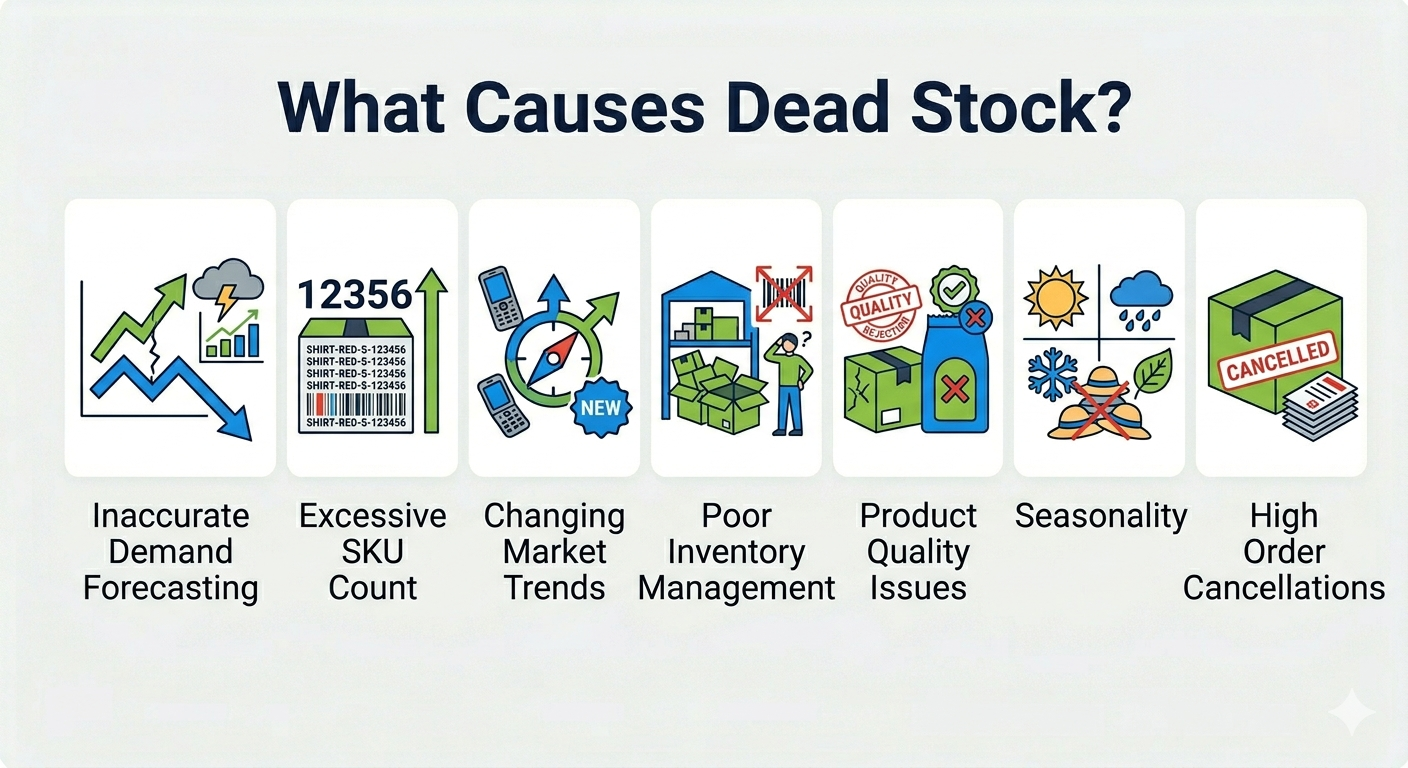
1. Inaccurate Demand Forecasting:
Forecasting demand is never perfect, but poor predictions are one of the biggest reasons for dead stock.
- Businesses often overestimate demand and order more than needed
- External factors like market shifts or competition impact actual sales
- Lack of historical data or reliance on guesswork leads to errors
When forecasting goes wrong, excess inventory quickly turns into dead stock.
2. Excessive SKU Count:
Offering too many product variations may seem like a growth strategy but it often backfires.
- More SKUs = more complexity in inventory management
- Not all products perform equally
- Low-performing SKUs remain unsold and pile up over time
Without regular SKU analysis, underperforming products slowly become dead stock.
3. Changing Market Trends:
Customer preferences evolve faster than ever, especially in ecommerce.
- Trends in fashion, electronics, and lifestyle products shift rapidly
- What’s popular today may lose demand in weeks
- New competitors or alternatives can reduce product relevance
If businesses fail to adapt quickly, inventory becomes outdated and unsellable.
4. Poor Inventory Management:
Lack of proper systems and processes leads to poor inventory decisions.
- No real-time visibility across warehouses and channels
- Delayed stock updates and inaccurate inventory data
- Inefficient replenishment and stock allocation
Without control and visibility, businesses end up overstocking or mismanaging inventory, leading to dead stock.
5. Product Quality Issues:
Even if demand exists, poor product quality can kill sales.
- Defective or damaged items are hard to sell
- Negative reviews reduce future demand
- Returns increase, adding back to inventory
Unsellable or returned products often end up as dead stock.
6. Seasonality:
Seasonal products have a limited selling window.
- Items like winter wear, festive décor, or seasonal goods lose demand quickly
- Unsold stock after the season becomes difficult to move
- Delayed sales cycles increase risk
Poor planning around seasonality leads directly to dead stock.
7. High Order Cancellations:
Order cancellations can disrupt inventory planning.
- Customers cancel due to delays, wrong expectations, or price issues
- Inventory reserved for orders suddenly becomes available again
- Businesses may end up with unexpected excess stock
High cancellations can quickly turn planned inventory into dead stock.
How to Calculate the Cost of Dead Stock
The most basic way to calculate dead stock is:
Dead Stock Cost = Unsold Units × Cost per Unit
This gives you a direct estimate of how much capital is stuck in unsold inventory. For example, if you have 500 unsold units that cost ₹500 each, your dead stock value is ₹2,50,000.
But That’s Not the Full Picture
In reality, the cost of dead stock goes far beyond this simple formula. You also need to consider:
1. Carrying Costs (Hidden Expenses):
Dead stock continues to incur costs like warehousing, rent, insurance, and labor. The longer products sit idle, the more expensive they become to maintain.
2. Opportunity Cost (Lost Growth Potential):
The money locked in dead stock could have been used to invest in fast-selling products, marketing, or business expansion. This is often the biggest invisible loss.
3. Depreciation & Obsolescence:
Products lose value over time especially in categories like electronics, fashion, and cosmetics. What you bought at full price may only sell at a steep discount later.
4. Discounting Losses:
Most dead stock is eventually cleared through heavy discounts, bundles, or liquidation reducing your margins significantly.
How to Prevent Dead Stock
Preventing dead stock is far more effective than dealing with it later. Here’s how you can stay ahead:
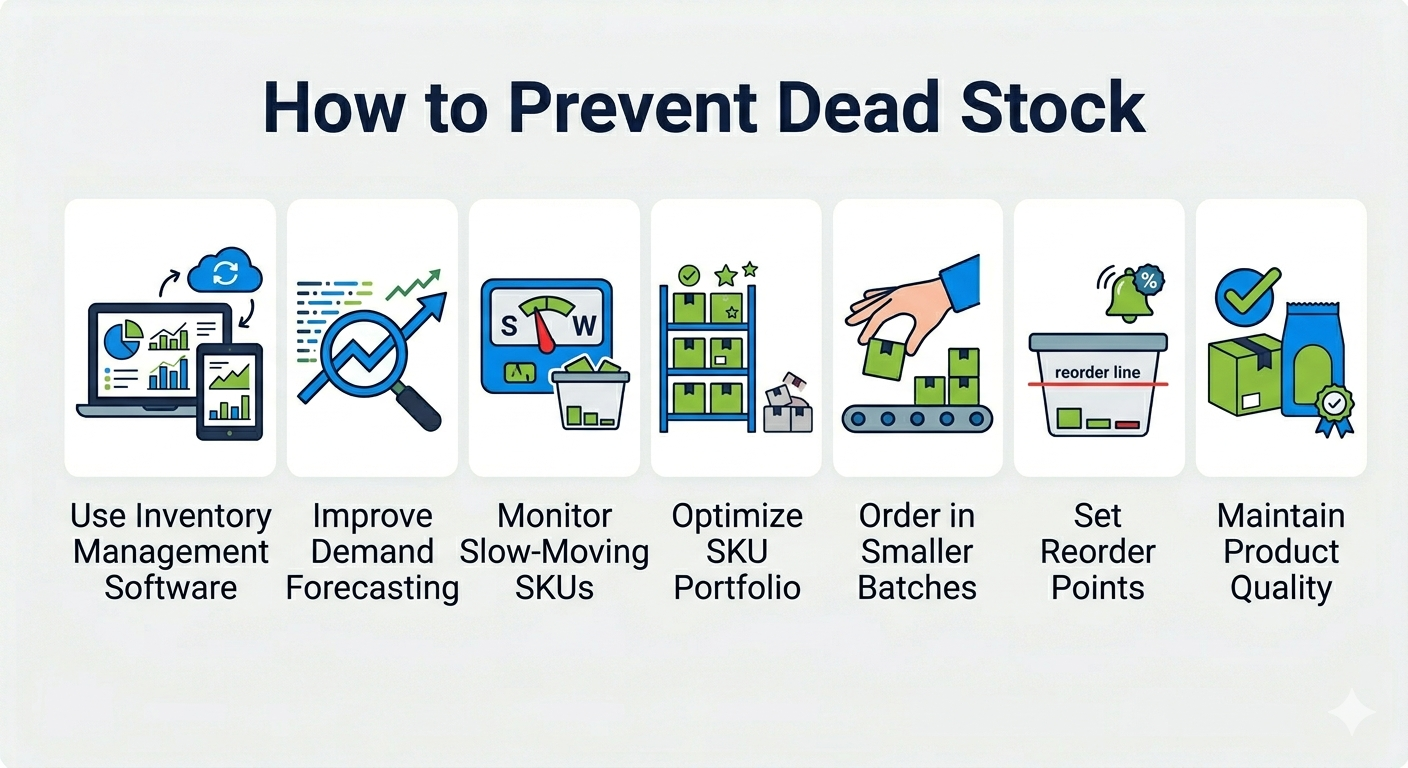
1. Use Inventory Management Software:
Real-time visibility into stock levels helps you avoid overordering and stock imbalances. It ensures better control across warehouses and sales channels.
2. Improve Demand Forecasting:
Leverage historical data, seasonality, and sales trends to make smarter purchasing decisions. Accurate forecasting reduces the risk of excess inventory.
3. Monitor Slow-Moving SKUs:
Track product performance regularly to identify slow-moving items early. Taking action sooner helps prevent them from turning into dead stock.
4. Optimize SKU Portfolio:
Continuously analyze and remove underperforming SKUs. A focused product catalog is easier to manage and reduces inventory risk.
5. Order in Smaller Batches:
Start with smaller quantities to test product demand before scaling up. This minimizes the chances of overstocking.
6. Set Reorder Points:
Define minimum stock levels and reorder only when needed. This keeps inventory aligned with actual demand.
7. Maintain Product Quality:
Ensure consistent product quality to avoid returns and poor sales. High-quality products are less likely to become unsold inventory.
How to Get Rid of Dead Stock
If you already have dead stock, here are practical ways to recover value:
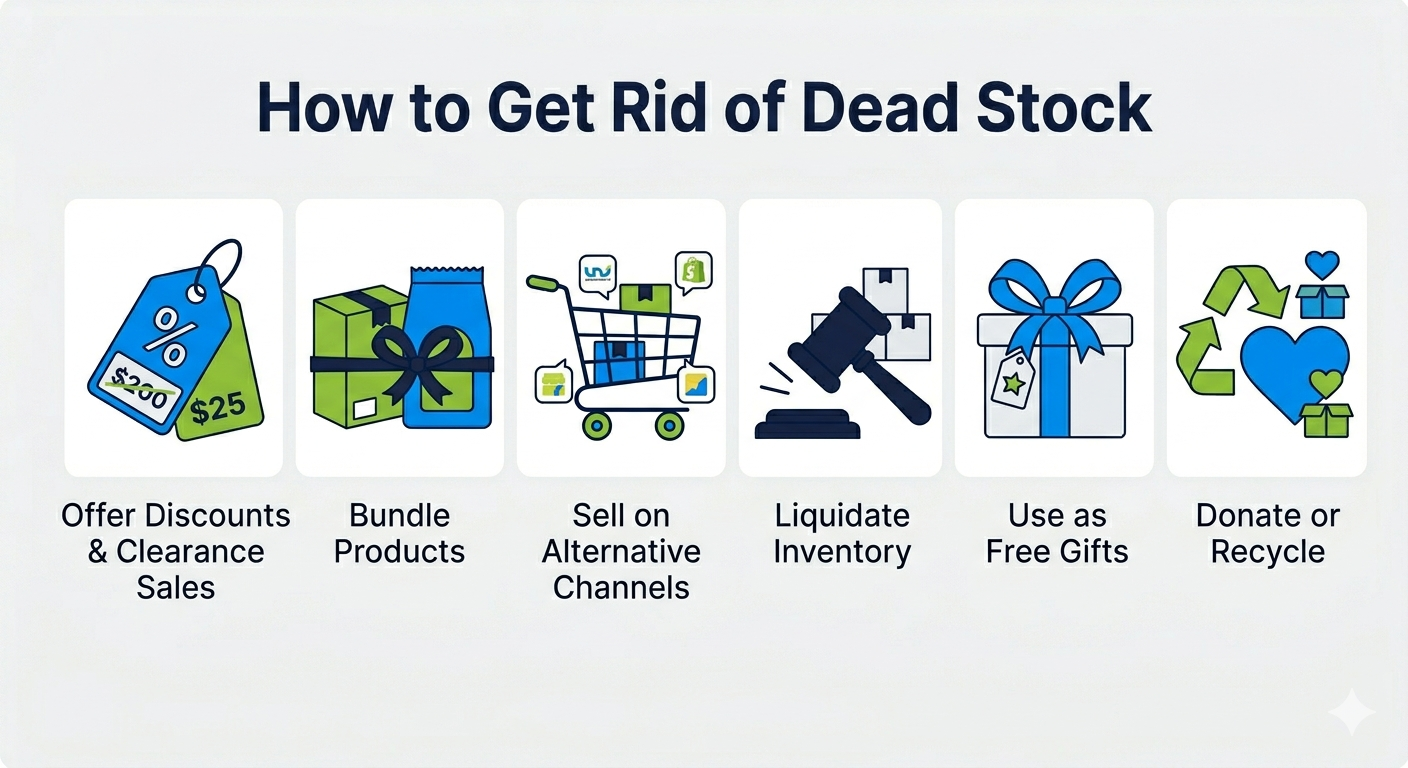
1. Offer Discounts & Clearance Sales:
Reduce prices to quickly move unsold inventory and free up warehouse space. Even at lower margins, it helps recover cash flow.
2. Bundle Products:
Pair dead stock with fast-selling items to increase overall value. This makes the purchase more attractive to customers.
3. Sell on Alternative Channels:
List products on marketplaces or B2B platforms to reach a wider audience. New channels can help unlock hidden demand.
4. Liquidate Inventory:
Sell bulk inventory to liquidation companies for faster clearance. While margins are lower, it helps free up capital quickly.
5. Use as Free Gifts:
Offer dead stock as a complimentary item with purchases. This can improve conversions and customer satisfaction.
6. Donate or Recycle:
For unsellable goods, consider donating or recycling responsibly. This can create brand goodwill and potential tax benefits.
How Unicommerce Helps Reduce Dead Stock & Obsolete Inventory
Dead stock isn’t just a product problem it’s usually caused by poor visibility, delayed decisions, and disconnected systems. That’s where Unicommerce becomes critical. Instead of reacting when inventory is already unsellable, it helps you prevent, identify, and act early.
1. Real-Time Inventory Visibility (No More Blind Spots):
Unicommerce provides a centralized, real-time view of inventory across all warehouses and sales channels. You can track SKU-level movement and stock updates instantly. This helps you clearly identify what’s selling, what’s slowing down, and what’s at risk of becoming dead stock so you can act before it’s too late.
2. Identify Slow-Moving SKUs Early:
Dead stock usually starts as slow-moving inventory. Unicommerce tracks SKU performance and highlights low-demand products early. This allows you to take proactive steps like running discounts, stopping reorders, or reallocating stock before it becomes obsolete inventory.
3. Smart Inventory Allocation & Stock Rotation:
Poor stock movement often leads to aging inventory. Unicommerce supports FIFO, FEFO, and LIFO methods along with smart warehouse allocation. This ensures older inventory is sold first, reducing expiry risk and improving overall stock utilization.
4. Multi-Channel Inventory Sync:
Inventory often gets stuck when it’s not visible across channels. Unicommerce syncs stock across platforms like marketplaces and websites in real time. This improves sell-through rates, accelerates inventory movement, and reduces the chances of stock sitting idle.
5. Returns & Reverse Logistics Management:
Unmanaged returns can quickly turn into dead stock. Unicommerce automates return handling, quality checks, and restocking workflows. This minimizes inventory loss, reduces waste, and ensures returned items are quickly made sellable again.
6. Data-Driven Decision Making:
Preventing dead stock requires better insights. Unicommerce provides detailed reports on sales trends, SKU performance, and channel-wise demand. This empowers brands to forecast accurately, optimize inventory, and reduce obsolete inventory risk.
7. End-to-End Automation Across Operations:
Manual processes often lead to delays and inefficiencies. Unicommerce automates order processing, inventory updates, and warehouse workflows. Businesses can significantly reduce manual effort, improve accuracy, and make faster decision keys to preventing dead stock.
Final Thoughts
Dead stock is more than just unsold inventory; it’s a silent drain on your profitability, efficiency, and growth. What starts as a small forecasting mistake can quickly turn into blocked capital, rising costs, and missed opportunities.
In today’s fast-moving ecommerce landscape, relying on guesswork is no longer sustainable. Preventing obsolete inventory requires a disciplined approach built on:
- Data-driven decisions to align inventory with real demand
- Smart inventory planning to avoid overstocking and inefficiencies
- Continuous monitoring to catch slow-moving SKUs before they turn into dead stock
The goal isn’t just to manage inventory, it’s to optimize it for faster movement, better margins, and long-term growth.
Brands that treat inventory as a strategic asset not just an operational task will be the ones that scale efficiently and stay competitive.
FAQs
1. What is dead stock in inventory?
Dead stock refers to inventory that has not been sold for a long time and is unlikely to sell in the future.
2. What is the difference between dead stock and obsolete inventory?
Both terms are often used interchangeably, but obsolete inventory usually refers to items that are outdated or unusable.
3. What causes dead stock?
Common causes include poor forecasting, overstocking, changing demand, and poor inventory management.
4. Why is dead stock bad for business?
It blocks cash flow, increases storage costs, and reduces profitability.
5. How can businesses prevent dead stock?
By using inventory software, improving forecasting, and monitoring slow-moving products.
6. How do you calculate dead stock?
Multiply the number of unsold units by the cost per unit.
7. Can dead stock be sold?
Yes, through discounts, bundling, liquidation, or alternative sales channels.
8. What industries face dead stock issues?
Retail, ecommerce, fashion, electronics, and FMCG industries commonly face dead stock challenges.
9. Is dead stock the same as excess inventory?
No. Excess inventory can still sell, while dead stock is unlikely to sell.
10. How does inventory software reduce dead stock?
It provides real-time visibility, demand forecasting, and better stock control.