
Is your order management system actually working for you, or are you just used to working around it? Most businesses trust their order management system without ever questioning whether it’s the one for them. If you are managing thousands of orders daily and facing order fulfillment issues due to inaccuracies, maybe it is time to start questioning the efficiency of your system.
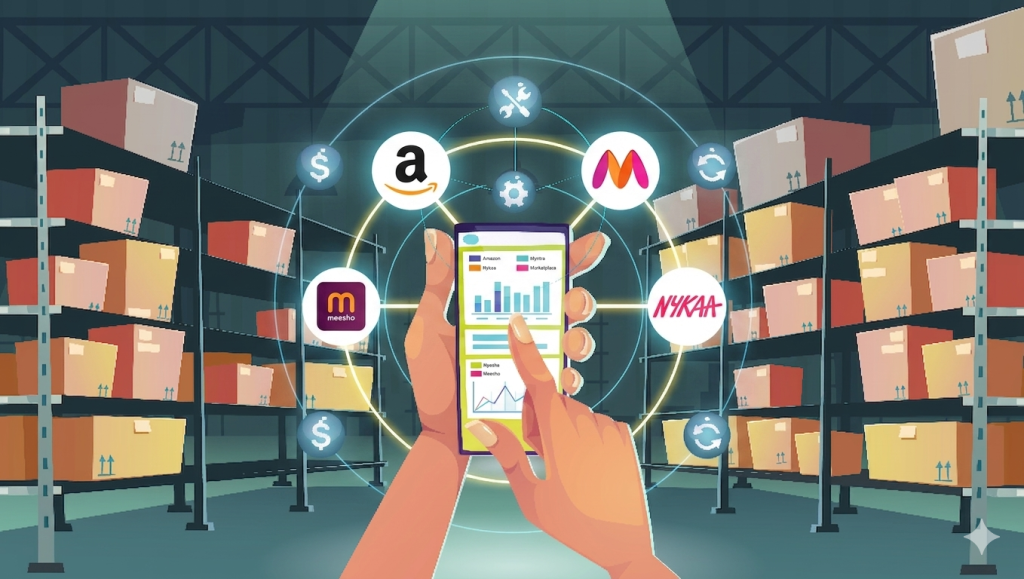
What Are the Signs of Order Inaccuracy in Your System?
Every brand aims for 99% order fulfillment accuracy. If you’re at 95%, that’s not close enough; that’s a red flag. At 95% accuracy, 5 out of every 100 orders go wrong. Now, at the level where you process 1500 orders a day, that’s 50 errors. That results in the wrong items being shipped and the start of the return trap!
It all starts with a lack of proper tracking across every platform you sell on, including Amazon, Myntra, Flipkart, your own website, and more. Ideally, your OMS should give you visibility of all these channels on a single dashboard, so you’re not logging into different seller panels, and there is one source of truth. If you already have that one dashboard or a single seller panel, you still need to ask yourself, is your single source of truth reliable enough?
Does Your Seller Panel Dashboard Show the True Numbers Across Every Sales Channel?
Your dashboard is only useful if it shows you what is actually happening, not what happened two hours ago. Let’s say, if 100 orders are still being packed and 200 have already been dispatched, your dashboard should show exactly that. But if it’s showing 300 orders in processing, that’s a problem. You’re making decisions on wrong numbers without even realizing it.
The more platforms you sell on, the bigger this gap gets. And the bigger the gap, the more errors slip through without you ever knowing where they started. Most of the time, this happens simply because the right system is not in place. So let’s dive deep!
Note:
What is Order Accuracy and How to Calculate it?
Order accuracy is the percentage of orders fulfilled correctly, right product, right quantity, right customer, on time.
Order Accuracy Rate = (Total Orders Fulfilled Correctly ÷ Total Orders Shipped) × 100
For example, if you shipped 10,000 orders in a month and 9,700 were fulfilled without any error, your order accuracy rate is 97%. The remaining 300 orders, wrong items, missing quantities, and delayed deliveries are quietly eating into your revenue and customer trust.
11 Mistakes Your Current Order Management System May Not Be Catching
From inventory mishaps to delayed deliveries, here’s what your order management system might be missing.
1. Is Your Inventory Updating the Moment a Sale Happens?
When you’re processing thousands of orders a day, your inventory needs to update the moment a sale happens, not 5 minutes later. That lag is enough to oversell a product, cancel confirmed orders, and frustrate customers who were promised a delivery.
During a Big Billion Day or Diwali sale, that 5-minute window can mean hundreds of bad orders.
- Overselling across channels
- Order cancellations spike
- Marketplace ratings drop
- Team stuck firefighting manually
If your system isn’t updating live, you’re always one sale rush away from a fulfillment breakdown.
2. Are All Your Sales Channels Actually Talking to Each Other?
When you’re selling across Amazon, Flipkart, Myntra, and your own website, every channel needs to feed into one system, instantly. If your integrations are weak, orders don’t flow in cleanly, shipping updates don’t reflect in time, and returns on one channel don’t update your inventory on another.
- Orders stuck in manual entry
- Shipping status not updating across channels
- Returns are not reflected in the inventory
- New channel onboarding takes weeks
If your system struggles to keep all your channels in sync, you’re not running one business; you’re managing five separate ones.
3. Do You Know How Much Revenue Is Sitting Locked in Your Returns?
For an established brand processing 10,000 orders a day, returns are not an exception; they are a daily operation. At an industry average return rate of 20-30%, that is 2,000 to 3,000 units coming back every single day. If your system isn’t processing these in real time, that stock sits in limbo, received by the warehouse, invisible to your system, and completely unsellable. At ₹800 average order value, that is up to ₹24 lakh worth of inventory stuck in your own warehouse every day. After a festive sale, when returns double, so does that number.
- Returned stock was not added back to inventory
- Resellable units blocked from the next order
- Refunds are delayed, and customers don’t return
- Inventory count wrong across all channels
- Warehouse space eaten up by stock, your system hasn’t touched
You already paid for that inventory. Your system is just stopping you from selling it again.
4. How Fast Is Your Cancelled Stock Getting Released?
During a sale, cancelled orders are constant. But if your system isn’t releasing that stock back into available inventory immediately, customers keep seeing “out of stock” on items physically sitting in your warehouse, unsold and uncounted, that’s the problem.
- Cancelled stock is staying locked in the system
- Available inventory is not visible to incoming orders
- Lost sales during the highest-demand window
- Team is manually releasing stock instead of processing new orders
At high volume, a 30-minute delay in releasing canceled stock isn’t a technical lag; it’s real orders going to your competition.
5. Are Your SKU Codes Consistent Across All Platforms?
When the same product has different SKU formats across your website, Amazon, and Flipkart, your system reads them as separate products. Inventory never consolidates, the same unit gets sold on two platforms simultaneously, and your stock numbers are wrong before the day even starts.
- Same product treated as multiple entries across channels
- Inventory count split and never accurate
- Overselling on one channel while another shows out of stock
- Manual reconciliation is eating up team bandwidth daily
If your SKUs aren’t standardized, your OMS isn’t managing one business; it’s managing three, badly.
6. Does Your OMS Warn You Before Things Go Wrong?
If your system has no alerts configured, orders stuck in processing sit quietly on the dashboard. By the time anyone notices, dozens of orders have already missed dispatch timelines, and the customer has already lost trust.
- No alerts for orders stuck beyond processing time
- SLA breaches invisible until customers complain
- Dispatch delays are compounding across the day
- Team reacting to failures instead of preventing them
An OMS should not just show you what happened; it should stop things from going wrong in the first place.
7. Is Every Order Going to the Right Courier?
When your system assigns a single default courier to all orders regardless of location, shipments to Tier 2 and Tier 3 cities get delayed, because that courier simply doesn’t have reliable coverage there. And no one in the system flags it until the complaints start coming in.
- Single courier handling all pin codes regardless of coverage
- Tier 2 and Tier 3 deliveries are consistently delayed
- Delivery SLAs are being missed without any system alert
- Customer experience varies wildly by location
If your OMS isn’t matching orders to the right courier based on pin code and SLA, you’re leaving delivery performance to chance, and your customers are feeling it.
8. Are the Right People Seeing the Right Data?
When your entire team operates on a single OMS login, everyone sees everything, and nobody owns anything. Warehouse staff miss dispatch alerts. Support has no clear order visibility. Errors only surface when customers complain, because there was no one specifically responsible for catching them earlier.
- Single login shared across multiple functions
- Warehouse, support, and ops are seeing the same cluttered dashboard
- Critical alerts are getting lost in the noise
- No accountability because no one has a defined view
When everyone sees everything, nothing gets actioned. Role-based access isn’t a nice-to-have; it’s what keeps your operations from becoming one big grey area.
9. Are Your Promotions Reflecting Across All Channels?
When a discount goes live on your website, but your OMS doesn’t sync pricing across platforms, customers buying the same product at full price on Amazon find out, and they don’t stay quiet about it. A promotion that wasn’t managed across channels becomes a brand problem.
- Discounts live on one channel, full price on another
- Customers comparing prices across platforms in real time
- Negative reviews due to pricing inconsistency
- Brand trust is taking a hit from a problem that wasn’t product-related
A promotion that doesn’t reflect across every channel isn’t a campaign; it’s a customer complaint waiting to happen.
10. How Well Does Your OMS Handle Returns?
When there is no structured return workflow, returned inventory piles up, received by the warehouse, but invisible to the system. It doesn’t get restocked, it doesn’t get written off, and by the end of the quarter, your numbers don’t add up because no one reconciled what came back.
- Returns received but not updated in inventory
- Resellable stock sitting idle for weeks
- Refunds are delayed with no status visibility
- Quarter-end numbers are off because returns were never reconciled
If your OMS manages forward orders with discipline but treats returns as an afterthought, you’re only running half a system and losing money on the other half.
11. When Did You Last Audit Your OMS?
A system configured for 1,000 orders a day will not perform the same at 8,000. Automations that worked at lower volumes start creating bottlenecks as you scale. The system isn’t broken it was just never updated for where your business is today.
- Automations configured for old order volumes
- Bottlenecks are building up silently as volume grows
- Team working around system limitations instead of through them
- A setup that made sense at launch is actively slowing growth now
A system that isn’t revisited as your business grows doesn’t stay neutral; it slowly becomes the thing holding you back. If you recognized even three of these eleven order fulfillment challenges, your current system isn’t working hard enough for you.
How Unicommerce Helps Established and Growing Brands Achieve 99.9% Fulfillment Rate
Unicommerce brings every part of your order fulfillment into a single system that updates in real time. So whether you’re processing 1,000 orders or 50,000, nothing slips, nothing lags, and nothing goes unaccounted for.
Brands processing thousands of orders daily have used Unicommerce to bring down fulfillment errors, reduce RTOs, and finally get a single source of truth across all their selling channels.
Want to see how it works in practice? Read how this brand achieved 99.9% order fulfillment with Unicommerce.
1. Real-time Inventory Sync
Unicommerce updates your inventory the moment a sale, return, or cancellation happens, across every channel, simultaneously. For brands processing thousands of orders a day, that means no overselling, no stock mismatches, and no manual reconciliation eating into your team’s time.
2. Single Seller Panel
Chasing order status across five different platform dashboards is a workday killer. With Unicommerce, everything, every order, every channel, every inventory movement, sits in one place. You open one dashboard, and you know exactly where things stand.
3. Strong Integrations
Unicommerce already has strong integrations with top marketplaces and platforms, including Amazon, Flipkart, Myntra, Meesho, Shopify, and WooCommerce, so whether you’re selling on two channels or ten, your orders, inventory, and returns are all talking to each other in real time.
4. Unique Barcoding System
Its unique barcoding system takes this a step further on the warehouse floor. Every item coming in and going out is scanned and tracked, which means picking errors, inventory mismatches, and unverified returns get caught before they become a problem, not after. And at the dashboard level.
Nothing Slips Through Because Our System Tells You First
- Order Alerts: Pending orders, SLA breached orders, unverified and failed orders
- Product Alerts: Failed and disabled inventory that needs immediate attention
- Channel Alerts: Broken connectors and channels pending configuration
Unicommerce is built to catch what your system isn’t. A unified dashboard with real-time inventory sync and much more. Book a Free Demo.
FAQs
1. What is order fulfillment and why is it critical for ecommerce brands?
Order fulfillment is the complete process from receiving an order to delivering it to the customer. For high-volume ecommerce businesses, efficient ecommerce fulfillment ensures faster deliveries, fewer errors, and better customer retention. A weak order fulfillment process directly leads to delays, returns, and revenue loss.
2. How do you calculate order accuracy in the order fulfillment process?
Order accuracy is calculated using this formula:
Order Accuracy Rate = (Total Orders Fulfilled Correctly ÷ Total Orders Shipped) × 100
Even a small drop in order accuracy can create major order fulfillment challenges, especially for brands processing thousands of orders daily.
3. What are the most common order fulfillment challenges businesses face?
Some major order fulfillment challenges include:
- Inventory not updating in real time
- Poor channel integration
- Returns not being processed properly
- Incorrect courier allocation
These issues disrupt the entire order fulfillment process and impact customer experience.
4. Why is real-time inventory important in ecommerce fulfillment?
Real-time inventory ensures that stock levels are updated instantly after every sale, return, or cancellation. Without it, brands face overselling, order cancellations, and poor order accuracy, which are critical failures in ecommerce fulfillment.
5. What are the different order fulfillment models used by ecommerce brands?
Common order fulfillment models include:
- In-house fulfillment
- Third-party logistics (3PL)
- Dropshipping
- Hybrid fulfillment
Choosing the right model depends on order volume, scalability, and control over the order fulfillment process.
6. How does poor system integration affect order fulfillment?
If your sales channels aren’t integrated, your order fulfillment process becomes fragmented. This leads to manual errors, delayed updates, and reduced order accuracy, making ecommerce fulfillment inefficient and hard to scale.
7. Why are returns a major challenge in order fulfillment?
Returns are one of the biggest order fulfillment challenges because:
- Inventory may not be updated instantly
- Resellable stock remains blocked
- Refund delays impact customer trust
A poor returns workflow weakens your entire ecommerce fulfillment system.
8. How can inconsistent SKUs impact order accuracy?
When SKU codes differ across platforms, the system treats the same product as multiple items. This leads to stock mismatches, overselling, and poor order accuracy, disrupting the entire order fulfillment process.
9. What role does automation play in improving ecommerce fulfillment?
Automation improves ecommerce fulfillment by:
- Updating inventory in real time
- Assigning the right courier automatically
- Triggering alerts for delays
It reduces manual effort and minimizes order fulfillment challenges, especially at scale.
10. How often should businesses audit their order fulfillment system?
Brands should regularly audit their system as they scale. An outdated setup can create hidden inefficiencies in the order fulfillment process, reducing order accuracy and increasing operational costs. Reviewing your system ensures it aligns with your current order fulfillment models and business needs.