
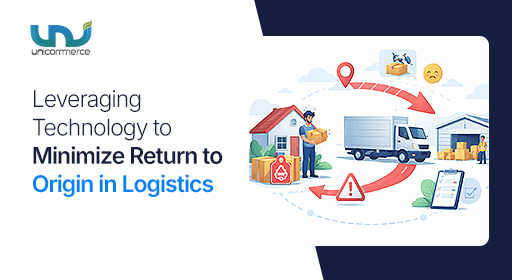
Every missed delivery is a missed opportunity! Every time a delivery doesn’t make it to your customer, it’s not just a lost sale but it is also a hit to your profits and an extra cost you didn’t plan for. Also, when these products are sent back to the warehouse, you end up dealing with more handling, shipping costs, and potential damage.
So what’s the solution?
The answer lies in technology! Return to Origin (RTO) happens when products are sent back to you instead of reaching your customers. We will now learn how using technology can turn these RTO challenges into opportunities for smoother e-commerce operations. Let us see how tech can make your delivery process hassle-free!
What is Return to Origin (RTO)?
Return to Origin (RTO) is a logistics scenario where an order that was shipped to a customer fails to get delivered and is sent back to the seller’s warehouse or origin location.
This typically happens after multiple failed delivery attempts or when the order is refused, unreachable, or undeliverable due to incorrect details. Instead of completing the delivery cycle, the shipment reverses its journey, creating additional operational and financial overhead for the business.
RTO is more than just a returned package it directly impacts profitability, inventory planning, and customer experience. Every RTO order adds reverse logistics costs, increases handling efforts, and delays the availability of that inventory for future sales.
For e-commerce businesses, managing and reducing RTO is critical because high RTO rates can:
- Increase logistics and operational costs
- Block working capital in returned inventory
- Affect delivery performance metrics on marketplaces
- Lead to poor customer experience and lower trust
That’s why understanding RTO and addressing its root causes is essential for building a more efficient and scalable fulfillment process.
What Causes Packages to Be Returned to Origin (RTO)?
But before discussing the solutions, you should understand why RTO (Return to Origin) occurs in the first place. Knowing what’s behind these returns can help you tackle them head-on.

So, why do packages sometimes end up back at the warehouse? Here are a few common reasons:
1. Incorrect Address Details:
This is one of the most common reasons for delivery failures. A small typo in the pin code, missing house number, incorrect street name, or vague landmark can make it difficult for delivery agents to locate the address. In many cases, incomplete contact details further complicate the situation, leaving no way to confirm the correct location. Even minor errors can result in multiple failed attempts, ultimately leading to the shipment being returned to origin.
2. Failed Delivery Attempts:
Delivery partners typically make multiple attempts to deliver a package, but success depends on customer availability and accessibility. If the customer is unavailable, unreachable, or unable to receive the order during delivery windows, the shipment remains undelivered. Issues like restricted entry in gated societies, incorrect timing preferences, or difficulty locating the address can also contribute. After repeated unsuccessful attempts, the package is marked undeliverable and sent back to the warehouse.
3. Refused Deliveries:
In some cases, customers intentionally refuse to accept the order at the time of delivery. This can happen if they change their mind after placing the order, find a better price elsewhere, or no longer need the product. Sometimes, refusal is triggered by mismatched expectations, such as product differences, delayed delivery, or concerns about quality. High Cash-on-Delivery (COD) orders are especially prone to this behavior, making refused deliveries a significant contributor to RTO rates.
Other instances, such as blocked driveways, bad weather, or unexpected challenges like road closures or accidents, can also cause packages to be sent back.
Now that we have an understanding of these issues let’s see how tech can help you keep those deliveries on track and minimize RTOs.
How Technology Can Help You Reduce Return to Origin (RTO) Issues?

Here is how you can use technology to keep your deliveries on track and your customers happy:
1. Smart Address Verification
Delivery address mistakes are very common, but they can be easily handled with smart address verification. Here is what you can do to make a big difference:
- Address Auto-fill: Invest in a solution that automatically fills in address fields for your customers using postal codes or landmark references. This system helps reduce errors and speeds up the checkout process.
- Double-Check Details: It’s essential to double-check the details to ensure every order is genuine and to build trust with your customers. For high-value orders, a quick call via a call center phone solution can work wonders. A quick chat ensures the address is correct and that everything’s in order before the package hits the road. As sellers scale these confirmation calls into automated IVR flows, a speech-to-text API that handles Hindi and other regional languages accurately becomes essential, since most Tier 2 and Tier 3 customers don’t confirm orders in English.
2. Advanced Delivery Tracking and Notifications
Next, you can use an advanced logistics tracking solution to reduce RTO instances. With solutions like these, you can easily track your shipment’s journey in real-time. Now, you won’t have to guess where your package is and when it will be delivered. Real-time tracking provides updates every step of the way, so you and your customers always know exactly where the package is.
You should also use real-time notifications. By sending timely updates about the shipment’s status, estimated delivery times, and any unexpected delays, you keep your customers informed and engaged. This means they are less likely to miss their delivery, which reduces returns and enhances their overall experience.
3. Automated NDR Management
When a delivery doesn’t go as planned, like when a package can’t be delivered or ends up back at your warehouse, it creates a Non-Delivery Report (NDR). This report explains what went wrong, whether the address was incorrect or the receiver was not at home.
Now, instead of manually sorting through these reports and finding a solution for each issue, your automated system makes the process efficient. It logs and organizes each NDR so you get the root cause of failed deliveries and what actions you can take to correct it.
What’s even cooler? This system sends you real-time updates, so you’re always in the loop. You’ll know immediately if there is a problem and can quickly take action to resolve it. With automated NDR management, you tackle delivery problems faster, prevent packages from being returned to origin, and keep your customers happy.
[Read in detail: How NDR Management Helps in Efficient Handling of Unsuccessful Deliveries?]
4. Automated Return Management Systems
We know that technology is here to make life easier, and that’s exactly what automated Return Management Systems are doing for sellers. These systems streamline the entire returns process, making it smoother for both you and your customers.
When a customer decides to return a product, the automated system handles everything from processing the return request to updating inventory and managing the return shipment.
So, how does this help with RTO?
Well, it reduces the chances of errors. Since everything is managed automatically, there’s less room for mistakes that could lead to returns going back to origin. Also, the system collects and analyzes return data, which provides insights into return patterns and reasons and helps sellers make informed decisions to reduce returns further.
Advanced Logistics Tracking and Returns Management Platform
Shipway simplifies e-commerce logistics tracking, shipping tracking, returns, exchange management, ensuring a seamless post-purchase journey.
Let’s Minimize E-commerce Returns!
Returns are an unavoidable part of the e-commerce business model and there’s no denying that, right? However, that doesn’t mean we can not work on reducing them.
With the right technology, you can turn this challenge into an opportunity for improvement. You should invest in the right tech to minimize Return to Origin (RTO) rates and enhance overall efficiency. This not only helps you tackle returns more effectively but also transforms them into a smoother and more manageable aspect of your business.
So why wait? Leverage technology today!
FAQs
1. What is Return to Origin (RTO) in e-commerce?
Return to Origin (RTO) is when an order fails to be delivered to the customer and is sent back to the seller’s warehouse.
2. Why do RTO orders happen in e-commerce?
RTO orders happen due to incorrect addresses, failed delivery attempts, customer refusal, or unreachable customers.
3. How does RTO impact e-commerce businesses?
RTO increases logistics costs, blocks inventory, reduces profits, and affects customer satisfaction.
4. How can I reduce RTO in e-commerce?
You can reduce RTO by using address verification, real-time tracking, NDR management, and customer confirmation before shipping.
5. What is NDR in logistics?
NDR (Non-Delivery Report) is a report generated when a delivery attempt fails, explaining the reason for failure.
6. How does address verification reduce RTO?
Address verification ensures accurate delivery details, reducing failed deliveries caused by incorrect or incomplete addresses.
7. What role does real-time tracking play in reducing RTO?
Real-time tracking keeps customers informed, helping them prepare for delivery and reducing missed delivery attempts.
8. Can automated systems help manage RTO?
Yes, automated systems handle NDRs, returns, and tracking efficiently, reducing manual errors and improving delivery success rates.
9. What is the difference between RTO and customer returns?
RTO happens when delivery fails, while customer returns occur after successful delivery when customers send products back.
10. Why is reducing RTO important for scaling e-commerce?
Reducing RTO improves profitability, optimizes inventory flow, and enhances overall customer experience, enabling better scalability.
11. Why is courier claim management so complicated in e-commerce?
Courier claim management is complex because of multiple courier partners, missing shipment proofs, delayed updates, and inconsistent tracking data. Without automation, brands struggle to verify damage, loss, or return disputes, leading to revenue leakage and slower claim settlements.
12. Where does courier claim management take the most time for marketplace sellers?
Courier claim management takes the most time during dispute verification, documentation submission, and approval follow-ups with logistics partners. Multiple courier systems and lack of proof slow down resolution. Tools like Unicommerce UniCapture help speed up claims using structured video evidence and automation.
Related read:
- How Shipping Notifications Can Benefit Your E-commerce Business?
- Tips for Choosing the Best Shipping Automation Solution in Tier 3 Markets!