

The Indian footwear industry has evolved far beyond being a basic necessity-driven sector. Today, it sits at the intersection of fashion, functionality, and fast-growing digital commerce. With millions of consumers shopping across marketplaces and brand websites, the demand for footwear is not just increasing, it’s becoming more dynamic and unpredictable.
But behind this growth lies a complex operational reality.
Footwear brands are managing multiple warehouses, handling high return rates due to size and fit issues, and trying to maintain accurate inventory across online and offline channels. What looks like a simple sale on the surface often involves multiple moving parts in the backend, from inventory allocation to order fulfillment and returns management.
This is where many businesses struggle, not because of lack of demand, but due to lack of visibility and control over their operations.
In this blog, we’ll break down how the Indian footwear industry is evolving, the key challenges brands face, and how the right systems and processes can help businesses scale efficiently while maintaining profitability.
Indian Footwear Industry – Overview
Indian footwear industry is one of the top employment generating industries in the nation. While it holds an important position in the Indian Government’s drive, the sector dramatically contributes to the nation’s economic growth. As per Statista, the footwear market amounts to US$9,352m in 2022 and is predicted to expand annually by 13.53% (CAGR 2022-2025).
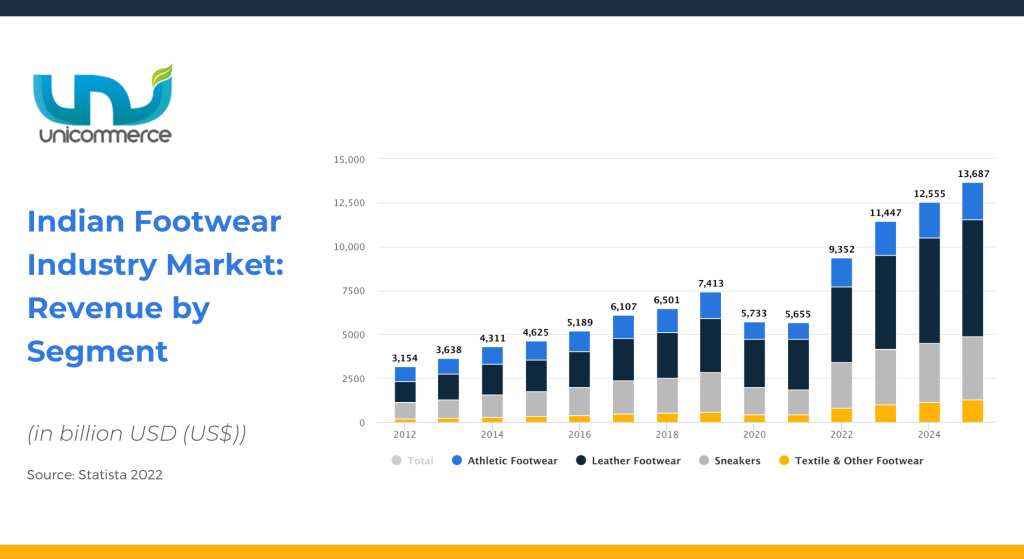
The footwear industry in India is a combination of both the traditional and modern sectors, manufacturing both leather and non-leather footwear. India is the second-highest producer of footwear in the world, making it one of the leading providers of footwear and leather products.
Coming over to the future growth and predictions, as per an article by News On Air, the fast-growing industry of footwear is expected to expand at 11% in the next five years.
Evolution of Indian Footwear with E-commerce
As mentioned above, India is one of the largest producers of footwear and is only behind China in the world. As per Invest India, India’s contribution to global footwear production is 10.7%.
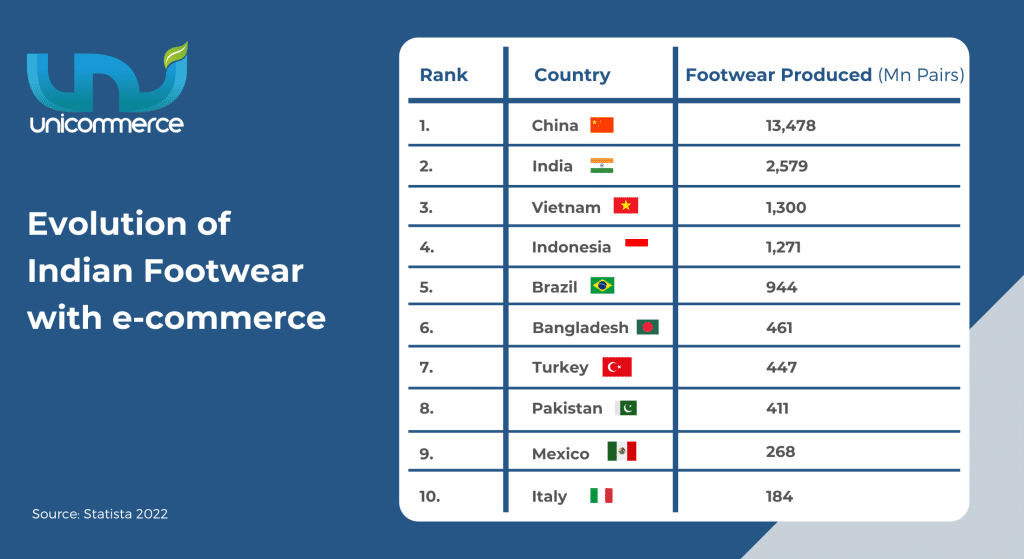
The growth in the Indian fashion and lifestyle market has given a spur to the footwear industry as well. It has developed as a fashion and style category from a basic need-based industry. Currently, a major part of India’s fashion market is digitally influenced.
Due to the increasing demand, the e-commerce model has penetrated the footwear industry, providing ample opportunities for the SME sectors, especially in tier II and III cities. Furthermore, the e-commerce ecosystem per se provided many enterprises and premium footwear brands an ease to tap into the market.

Online retailing has enabled SMEs and enterprises across the country to target national consumers rather restricting themselves as regional retailers. This has opened the gates for new possibilities of online retailing i.e. multichannel, omnichannel, and D2C.
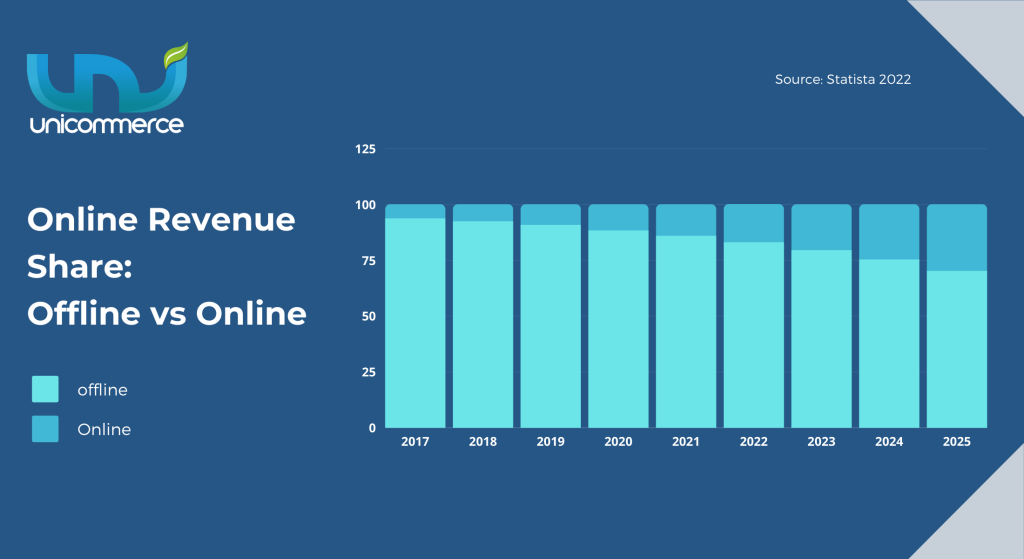
Indian footwear industry is emerging as the most demanded shopping category brands, such as Bata, Campus Shoes, Action Shoes, Puma is going online and creating a niche market and opportunities for the other footwear retailers.
Challenges in the Footwear Industry in India
The footwear industry has been largely unorganized and scattered in different parts of the country. Uttar Pradesh and Tamil Nadu, are the biggest footwear-related market. Though technology has marked its presence in the modernization of the footwear industry, most of the production is still handmade. Major challenges in the Footwear Industry:

1. Timely and Efficient Delivery of Products
Delivering footwear products on time is a major challenge due to fragmented supply chains and dependency on multiple vendors. Delays in inventory updates or warehouse processing can lead to late shipments. This directly impacts customer satisfaction and marketplace ratings. Brands need streamlined logistics and real-time visibility to ensure faster deliveries.
2. No Stock Rotation Leads to Outdated Stock
Without proper stock rotation practices like FIFO, older inventory often remains unsold. In the footwear industry, trends change quickly, making outdated stock harder to sell. This leads to dead inventory and blocked working capital. Efficient inventory management is essential to keep stock fresh and relevant.
3. Higher Percentage of Customer Initiated Returns (CIR)
Footwear sees high return rates due to size mismatches, comfort issues, or unmet expectations. Customer Initiated Returns increase operational complexity and reverse logistics costs. Frequent returns also impact profitability and inventory accuracy. Brands must improve product information and sizing accuracy to reduce returns.
4. Increased Cost of Reverse Logistics
Handling returns involves pickup, quality checks, repackaging, and restocking, all of which add to operational costs. In footwear, where returns are frequent, this becomes a significant expense. Inefficient reverse logistics can delay resale of returned items. Optimizing return workflows is crucial to control costs.
5. Managing Multiple Warehouses and Stores
Footwear brands often operate across multiple warehouses and retail stores to meet demand. Maintaining accurate stock levels across locations becomes difficult without a centralized system. This can lead to stock imbalances, overstocking in one location, and stockouts in another. Real-time multi-location visibility is key to solving this challenge.
6. Easy Transition to Present Taxation Policies
Adapting to evolving taxation systems like GST can be complex for footwear businesses, especially those operating across states. Compliance requires accurate invoicing, reporting, and stock tracking. Errors in tax handling can lead to penalties and financial discrepancies. A structured system helps ensure compliance and smooth operations.
7. Managing Multichannel and Offline Sales
Selling across marketplaces, D2C websites, and offline stores creates challenges in maintaining consistent inventory data. Without proper synchronization, businesses risk overselling or stock mismatches. Each channel may have different demand patterns, making management more complex. Integrated systems help unify operations across all channels.
8. Effective Utilization of Stock
Poor visibility and planning often lead to underutilized inventory sitting idle in warehouses. At the same time, high-demand products may go out of stock. This imbalance affects both revenue and customer experience. Smart allocation and demand-based planning help maximize stock utilization.
9. Seamless Management of Returns and Cancellations
Handling returns and cancellations efficiently is critical in the footwear industry. Delays in processing can affect inventory accuracy and resale opportunities. Poor coordination between systems leads to confusion and customer dissatisfaction. Automated workflows can streamline returns and ensure faster resolution.
Unicommerce – The solution to overcome challenges
Unicommerce, the leading e-commerce supply chain solution is focused is on a mission to automate the largely scattered footwear industry to make it technology-driven. Its Order and Warehouse Management System (WMS) solutions automate client’s supply chain operations for online and offline businesses (Both B2B and B2C). Unicommerce comes pre-integrated with 80+ marketplaces & carts, 50+ logistics partners, and 10+ ERP & POS systems with support for offline channels as well to manage the needs of wholesalers, distributors, retail chains, individual store owners, and e-commerce sellers to increase revenue and save operations costs.
- Advanced Warehouse Management – Handheld, FIFO & FEFO-based stock picking, Cycle Count, etc.
- Robust Omnichannel Solution – Route online orders to a nearest offline store
- Unified Vendor Panels – Manage suppliers via centralized login
- ERP/POS Management – Seamless integration with any ERP (SAP, Oracle, Navision, etc.) and POS (Logicbricks, Logic, Wondersoft, etc.)
- Logistics & Marketplaces Integration – Pre-integrated with the best-in-class logistics (Delhivery, FedEx, UPS, and more) and marketplaces (Flipkart, Amazon, Myntra, Meesho, and more)
- Simplified Fulfillment – Dispatch orders in bulk
- Centralized Inventory Management Software – Inventory visibility & accuracy
- Progress Report Tracking – Schedule reports to track daily/weekly sales analytics
- Returns Management – Centrally manage RTO and CIR
FAQs
1. What is the current size of the Indian footwear industry?
The Indian footwear industry is one of the largest globally, valued at over USD 9 billion and growing steadily. It is driven by rising demand, fashion trends, and increasing e-commerce adoption across urban and semi-urban markets.
2. Why is the footwear industry important for India’s economy?
The footwear industry is a major employment generator, especially in manufacturing hubs like Uttar Pradesh and Tamil Nadu. It also contributes significantly to exports and supports MSMEs, making it vital for economic growth.
3. How has e-commerce impacted the footwear industry in India?
E-commerce has transformed the footwear industry by enabling brands to reach customers across the country. It has allowed SMEs and D2C brands to scale faster and adopt multichannel and omnichannel selling strategies.
4. What are the biggest challenges in the footwear industry in India?
Key challenges include high return rates, inefficient inventory management, rising reverse logistics costs, and difficulty managing multiple warehouses and sales channels. These issues directly impact profitability and customer experience.
5. Why does the footwear industry have a high return rate?
Footwear products often face returns due to size mismatch, comfort issues, or differences in customer expectations. This leads to increased operational costs and makes efficient returns management crucial.
6. How can footwear brands improve inventory management?
Brands can improve inventory management by implementing systems that offer real-time stock visibility, demand forecasting, and automated stock allocation. This helps reduce stockouts and avoid excess inventory.
7. What is the role of technology in the footwear industry?
Technology helps automate supply chain operations, improve order accuracy, and enhance inventory tracking. Solutions like warehouse management systems (WMS) and order management systems (OMS) enable better control and efficiency.
8. How do multi-channel sales affect footwear businesses?
Selling across marketplaces, websites, and offline stores increases complexity in managing inventory and orders. Without proper synchronization, it can lead to overselling, stock mismatches, and operational inefficiencies.
9. What is reverse logistics in the footwear industry?
Reverse logistics refers to the process of handling returned products, including pickup, inspection, and restocking. In footwear, this is a major cost center due to high return volumes and requires efficient management.
10. How can Unicommerce help footwear brands overcome these challenges?
Unicommerce provides end-to-end supply chain automation with features like real-time inventory tracking, multi-channel integration, warehouse management, and returns handling. This helps brands reduce operational costs, improve efficiency, and scale their business effectively.
Explore our platforms:
Related read –
- How does Warehouse Management System Works?
- Challenges of the Toys E-commerce Industry in India
- Role of Warehouse Management in the FMCG Industry in India
- E-commerce Apparel Industry: Trends, Challenges, Opportunities & Solutions
Discover Unicommerce’s Success Story with Leading Brands –
- Mamaearth Attained 99.99% Order Fulfillment Rate
- Dhani Healthcare Streamlined Operations Across 166 Facilities
- Urban Company Achieved 8X Growth in Sales Volume
- Plum Goodness Streamlined Inventory Operations with 69% Growth Rate in Sales
- Marico Achieved 100% Growth in Sales
- Bulbul Simplified Selling Across 200+ Vendors
- Chumbak Lifestyle Boost Sales Across 58+ Retail Stores
- TCNS Achieved 9X Growth in Sales
- Hamilton Housewares Attained 96%+ Pick Accuracy Rate